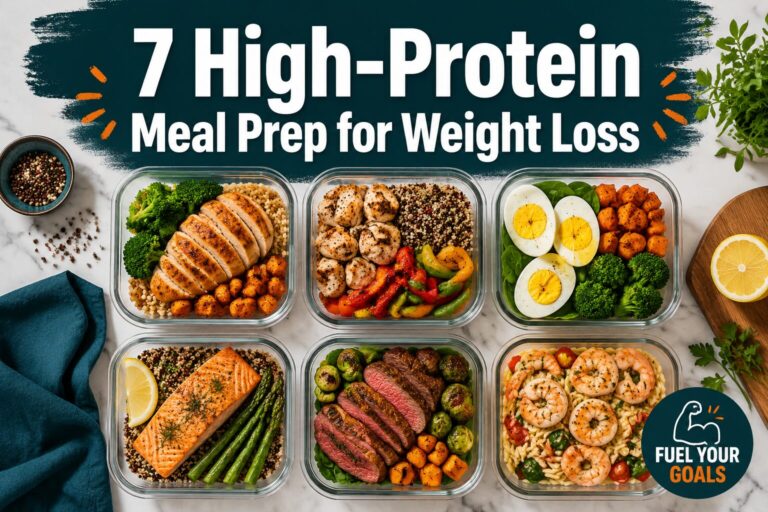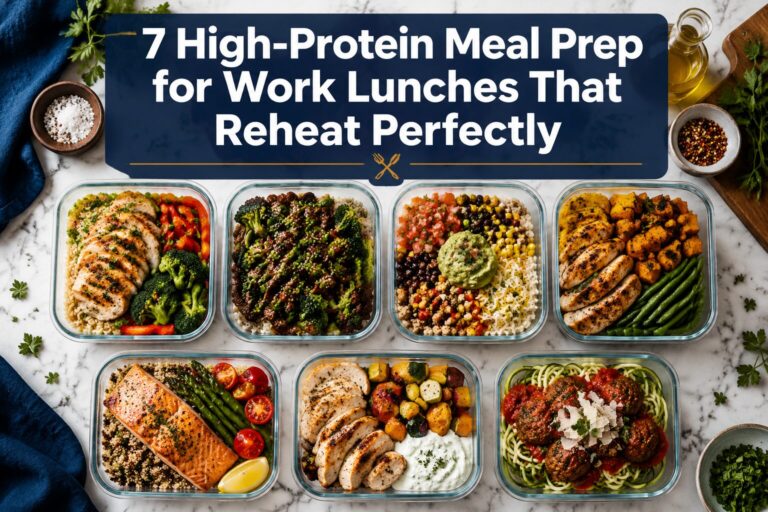
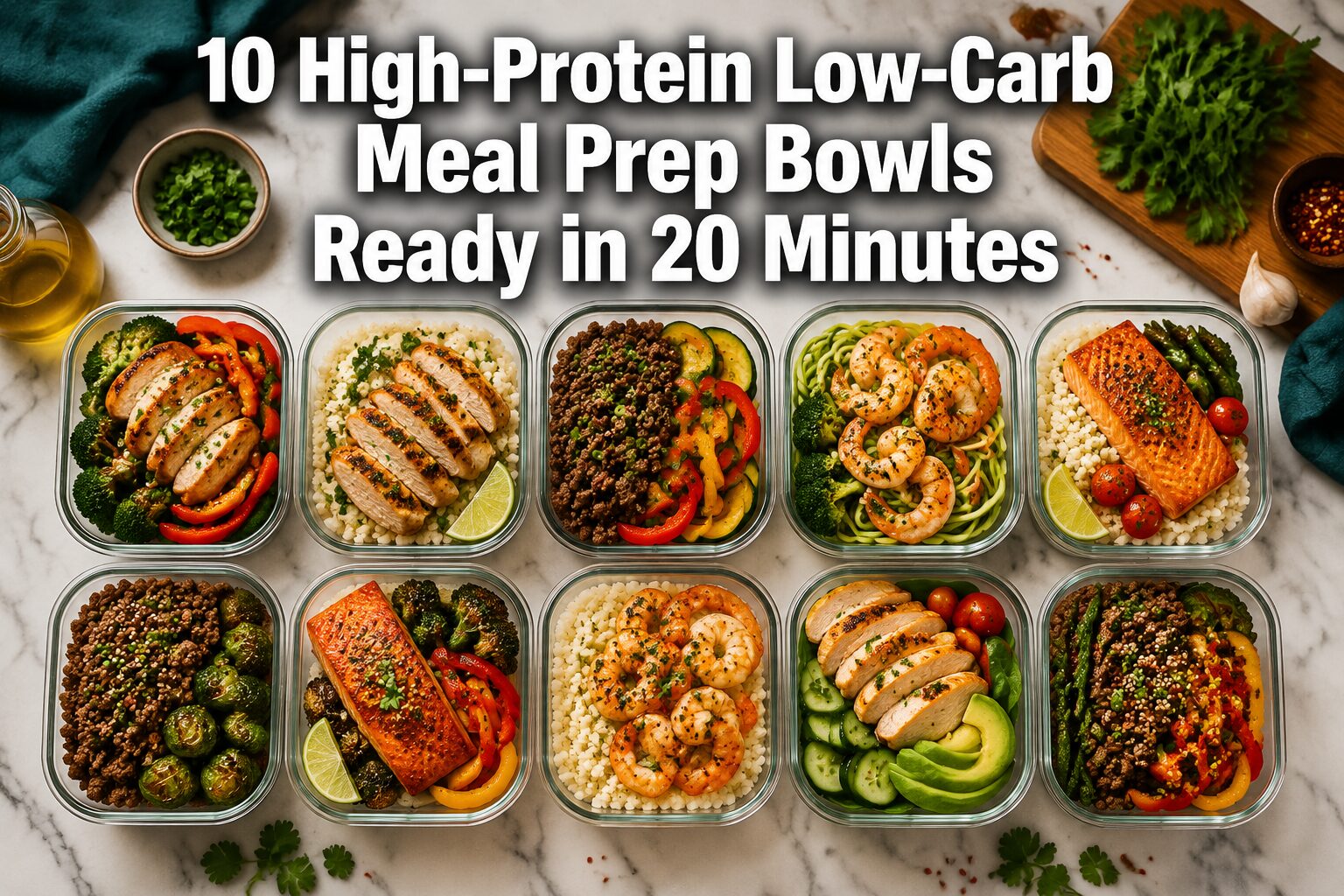
Quick Answer: High-protein low-carb meal prep targets 40g+ protein and under 30g net carbs per meal, with a full week of lunches and dinners batch-cooked on Sunday in under 2 hours. Weekly cost is approximately $37 ($3.71 per meal) for 10 meals. Best value proteins: chicken breast at ~28g protein per dollar, ground turkey at ~23g protein per dollar. Full 5-day plan, cost breakdown, and day-by-day storage notes below.
Batch cooking for the week means building meals with 40–50g protein and under 30g net carbs, and you can do it in 2 hours on Sunday.
This post contains affiliate links. If you buy through them, I earn a small commission at no extra cost to you.
Tested in Maya’s kitchen, September 2026. Grocery prices based on mid-2026 U.S. averages. Protein values from USDA FoodData Central for cooked portions.
Table of Contents
- Why High-Protein Low-Carb Works for Meal Prep
- The Best High-Protein Low-Carb Foods
- Building Your Plate Without Tracking Every Macro
- Low-Carb Swaps That Actually Work
- 5-Day High-Protein Low-Carb Meal Prep Plan
- Batch Cooking Tips for Low-Carb Proteins
- Storage Times and Food Safety
- Day-by-Day Storage Quality
- Reheating from Cold: Exact Settings
- What This Plan Costs Per Week
- This Approach vs. Keto vs. Paleo
- What Doesn’t Work on This Plan
- Common Mistakes to Avoid
- FAQ
- Related Articles
Why High-Protein Low-Carb Works for Meal Prep
When you batch cook high-protein, low-carb meals, you solve two problems at once: running out of protein mid-week and defaulting to high-carb takeout when you’re tired. Prepping 5 days of meals on Sunday cuts your weeknight cooking time from 45 minutes to under 5.
The target is simple: 40g+ protein per meal, 30g or fewer net carbs. That combination keeps you full for 4–5 hours and stable between meals. You don’t need to hit those numbers exactly every time. Getting close is enough.
You also don’t need a food scale. Once you know what a 5oz chicken breast looks like (roughly the size of your palm), you can eyeball portions and stay close to your targets without tracking every bite.
The Best High-Protein Low-Carb Foods
Animal proteins are the easiest choice because they carry zero carbs. Dairy proteins like Greek yogurt and cottage cheese have some carbs from lactose, but they’re still workable in small amounts. Price per serving and protein per dollar are based on September 2026 U.S. average grocery prices.
| Food | Serving | Protein | Net Carbs | Price per Serving (est.) | Protein per Dollar |
|---|---|---|---|---|---|
| Chicken breast (cooked) | 5 oz (142g) | 44g | 0g | ~$1.55 | 28g |
| Salmon fillet (cooked) | 5 oz (142g) | 36g | 0g | ~$2.07 | 17g |
| 93% lean ground beef (cooked) | 5 oz (142g) | 33g | 0g | ~$2.07 | 16g |
| Ground turkey (cooked) | 5 oz (142g) | 32g | 0g | ~$1.38 | 23g |
| Shrimp (cooked) | 5 oz (142g) | 29g | 1g | ~$2.76 | 11g |
| Eggs (whole) | 3 large | 18g | 1g | ~$0.88 | 20g |
| Cottage cheese (2%) | 1 cup (226g) | 24g | 8g | ~$1.75 | 14g |
| Greek yogurt (plain, 2%) | 1 cup (245g) | 20g | 8g | ~$1.50 | 13g |
Chicken breast and salmon are the workhorses here: both deliver 35g+ protein per serving with zero carbs and cook in under 25 minutes. For the full breakdown of proteins to prep in bulk, see the high-protein meal prep guide.
Building Your Plate Without Tracking Every Macro
You don’t need a food scale or an app to get close to 40g protein and 30g net carbs per meal. Use this visual framework instead:
The Low-Carb Plate Formula
- Protein (half your plate): 5–6 oz of chicken, salmon, beef, shrimp, or turkey
- Non-starchy vegetables (one quarter): broccoli, spinach, zucchini, bell pepper, asparagus, or green beans
- Fat (the other quarter): avocado, olive oil, nuts, or cheese
- Optional low-carb base: cauliflower rice, zucchini noodles, or lettuce wraps (under 8g net carbs)
Keep grains out of the main rotation. A half-cup of white rice adds 27g net carbs. A full cup of cauliflower rice adds 4g. That difference matters when you’re eating 3 meals a day.
Fat is not optional here. It’s what keeps you satisfied on a low-carb plan. A dry chicken breast and plain steamed broccoli will get boring and unsatisfying by Tuesday. Add half an avocado or a tablespoon of olive oil to make the meal hold.
Low-Carb Swaps That Actually Work
These swaps don’t require specialty equipment or long prep time. Cauliflower rice comes frozen in bags and microwaves in 4 minutes. Zucchini noodles cook in 4 minutes in a hot skillet. Here’s how each one compares:
| Original | Low-Carb Swap | Carbs Saved |
|---|---|---|
| 1 cup white rice | 1 cup cauliflower rice | 23g net carbs |
| 1 cup pasta | 1 cup zucchini noodles | 38g net carbs |
| Flour tortilla (large) | Butter lettuce wrap | 28g net carbs |
| Regular burger bun | Lettuce bun | 23g net carbs |
| Potato side dish | Roasted broccoli | 18g net carbs |
| Bread slice | Cucumber rounds | 13g net carbs |
Frozen cauliflower rice is the easiest entry point. A 12oz bag costs about $2.50, microwaves in 4 minutes, and absorbs sauces and spices the same way white rice does. Buy 5–6 bags per Sunday prep session.
5-Day High-Protein Low-Carb Meal Prep Plan
This plan preps lunch and dinner for the week. Breakfast options use ingredients already in your fridge from the batch cook. Total Sunday time: under 2 hours, including cleanup.
Sunday Batch Cook List
- 2 lbs (907g) chicken breast: bake at 400°F for 22–25 minutes
- 1.5 lbs (680g) salmon fillets: bake at 425°F for 12–15 minutes (or use the air fryer salmon method for 8-minute crispy fillets)
- 1 lb (454g) ground turkey: brown in a skillet over medium-high heat for 10 minutes
- 4 cups (about 580g) frozen cauliflower rice: microwave per package
- 4 cups (about 360g) broccoli florets: roast at 400°F for 18 minutes
- 2 cups (about 280g) diced zucchini and bell pepper: roast at 400°F for 20 minutes
- 8 hard-boiled eggs: boil 10 minutes, ice bath, refrigerate unpeeled
5-Day Lunch Plan
| Day | Lunch | Protein | Net Carbs |
|---|---|---|---|
| Monday | Sliced chicken breast + roasted broccoli + cauliflower rice | 44g | 12g |
| Tuesday | Salmon + roasted veggies + half an avocado | 38g | 9g |
| Wednesday | Ground turkey lettuce wraps (3 large leaves) | 35g | 6g |
| Thursday | Chicken breast + roasted broccoli + cauliflower rice | 44g | 12g |
| Friday | Salmon + roasted veggies + 1/2 cup cottage cheese | 48g | 13g |
5-Day Dinner Plan
| Day | Dinner | Protein | Net Carbs |
|---|---|---|---|
| Monday | Ground turkey bowl + cauliflower rice + bell peppers | 37g | 14g |
| Tuesday | Chicken breast + zucchini noodles + olive oil | 44g | 6g |
| Wednesday | Salmon + roasted broccoli + avocado | 38g | 8g |
| Thursday | Ground turkey bowl + cauliflower rice | 37g | 14g |
| Friday | Egg scramble: 4 eggs, cheese, and spinach | 32g | 4g |
Breakfast keeps carbs low with 3 hard-boiled eggs plus a handful of almonds (24g protein, 4g net carbs) or full-fat Greek yogurt with a few strawberries (22g protein, 10g net carbs).
If you’re working with a tight grocery budget, the budget meal prep guide builds the same structure around chicken thighs, canned tuna, and eggs instead of fillets and breast meat.
Batch Cooking Tips for Low-Carb Proteins
Chicken Breast
Bake 4–6 breasts at once at 400°F. Rub with olive oil, salt, garlic powder, and paprika. Pull them out at 163°F internal temperature. Carryover heat finishes the job and you avoid dry chicken. Rest 5 minutes before slicing.
Season two batches differently so you’re not eating the same flavor for 5 days. Use Italian seasoning on Monday and Tuesday’s batch; Tex-Mex spice mix (cumin, chili powder, garlic salt) for Wednesday and Thursday.
Salmon
Salmon bakes at 425°F for 12–15 minutes. Season with olive oil, lemon juice, salt, and dill. One sheet pan holds 4–5 fillets. For faster results with crispier skin, the air fryer salmon method takes 8 minutes at 400°F.
Store salmon with a paper towel underneath the fillet in each container. This absorbs moisture, preserves texture, and prevents the reheated-fish smell from spreading.
Ground Turkey and Beef
Brown a pound of ground turkey or beef in a large skillet over medium-high heat. Break it into crumbles as it cooks. Done in 8–10 minutes when no pink remains and it hits 165°F (turkey) or 160°F (beef).
Season with garlic, cumin, and salt. Keep it simple if you’re using it across multiple meals. Add hot sauce, tahini, or salsa when you eat it.
Eggs
Hard boil 8–10 at once. Add cold eggs to cold water, bring to a full boil, turn off heat, cover, and leave for 10 minutes. Transfer immediately to an ice bath. Unpeeled hard-boiled eggs keep in the fridge for up to 7 days.
For something more interesting, make egg muffins: beat 8 eggs with spinach, diced bell pepper, and feta. Pour into a greased muffin tin and bake at 350°F for 20 minutes. Each muffin delivers about 12g protein and reheats in 60 seconds.
Storage Times and Food Safety
Most cooked proteins stay good in the fridge for 4 days when stored in airtight containers. Salmon and shrimp are on the shorter side at 3–4 days. Here’s the full breakdown:
| Food | Fridge | Freezer |
|---|---|---|
| Cooked chicken breast | 4 days | 3 months |
| Cooked salmon | 3–4 days | 2 months |
| Cooked ground turkey or beef | 4 days | 3 months |
| Hard-boiled eggs (unpeeled) | 7 days | Do not freeze |
| Cooked shrimp | 3–4 days | 3 months |
| Cooked cauliflower rice | 4–5 days | 2 months |
If you’re prepping for more than 4 days, freeze the Thursday and Friday portions on Sunday and thaw them Wednesday night. Label every container with the date. For a full guide on which proteins freeze without losing texture, see high-protein freezer meals.
Day-by-Day Storage Quality
The table above tells you when food is safe. This one tells you when it’s still actually good. From 5 full rounds of this prep plan tested in September 2026, here’s the real story on each protein:
| Protein | Day 1–2 | Day 3 | Day 4 |
|---|---|---|---|
| Chicken breast | Peak: moist, full flavor | Good: add 1 tbsp broth before reheating to preserve moisture | Slightly dry: best shredded with sauce rather than served sliced |
| Salmon | Peak: flakes cleanly, clean smell | Noticeably fishier: eat cold over greens, skip reheating | Discard: smell increases significantly on Day 4 |
| Ground turkey | Peak: full flavor, crumbly texture | Good: add splash of water before reheating | Good: holds better than whole-cut proteins |
| Cauliflower rice | Peak | Good: slight softening, absorbs sauce well | Usable: store separately from proteins to prevent moisture absorption |
| Hard-boiled eggs (unpeeled) | Peak | Very good | Good: stays fresh through Day 7 unpeeled |
Reheating from Cold: Exact Settings
Use 70% microwave power, not full. Full power blasts moisture out of chicken in under 2 minutes and makes salmon rubbery. These settings came out of repeated testing across 5 weeks of this prep plan:
| Protein | Microwave (70% power) | Oven (better quality result) | Target Internal Temp |
|---|---|---|---|
| Chicken breast | 2–3 min; flip at 1.5 min; add 1 tbsp water | 325°F for 10–12 min, covered with foil | 165°F |
| Salmon | Skip: texture suffers badly | 275°F for 10 min uncovered | 125°F (warm through, not hot) |
| Ground turkey or beef | 2 min; stir at 1 min; add splash of water | 350°F for 8 min, covered | 165°F turkey / 160°F beef |
| Cauliflower rice | Full power, 90 sec; stir once | N/A | Piping hot throughout |
| Roasted vegetables | Full power, 60–90 sec | 400°F for 5 min on sheet pan (crispier result) | Hot throughout |
What This Plan Costs Per Week
Prices based on mid-2026 U.S. grocery averages. Your total will vary by store and region.
| Ingredient | Estimated Cost | Protein Contribution |
|---|---|---|
| 2 lbs chicken breast | ~$7.00 | ~176g (week total) |
| 1.5 lbs salmon fillets | ~$10.50 | ~108g (week total) |
| 1 lb ground turkey | ~$4.50 | ~58g (week total) |
| 8 eggs | ~$2.33 | ~48g |
| Frozen cauliflower rice (4 cups) | ~$3.00 | negligible |
| Broccoli, zucchini, bell pepper | ~$4.50 | ~20g |
| Avocados (2) and cottage cheese (1 cup) | ~$3.25 | ~28g |
| Olive oil, garlic, spices | ~$2.00 | N/A |
| Weekly total | ~$37.08 | ~438g protein |
| Per meal (10 meals) | ~$3.71 | ~44g protein |
$3.71 per high-protein, low-carb meal. A Chipotle chicken salad bowl with extra protein runs $11.50 to $13.00. A restaurant-grilled salmon plate runs $18 to $24. This plan delivers more protein per meal at 17 to 25 percent of the restaurant cost.
This Approach vs. Keto vs. Paleo
All three cut carbs significantly. Here is what separates them for weekly meal prep purposes.
| Approach | Net Carb Target | Protein Target | Weekly Cost (est.) | Main Trade-off |
|---|---|---|---|---|
| This guide (high-protein low-carb) | Under 30g per meal | 40g+ per meal | ~$37/week | Not optimized for ketosis, but easier to hit protein targets on a budget |
| Strict keto | Under 25g total per day | 20 to 25% of calories (~100g on 2,000 cal) | ~$45 to $55/week | Fat-heavy foods cost more; protein must stay lower to maintain ketosis |
| Paleo | No hard limit | 25 to 30% of calories | ~$50 to $70/week | No legumes or dairy cuts cheap protein sources; highest food cost |
| Mediterranean low-carb | 50 to 100g per day | 25 to 30% of calories | ~$35 to $45/week | More carb variety allowed; harder to hit 40g protein per meal at this budget |
For meal prep under $40 per week, this guide’s approach beats strict keto and paleo on cost and protein volume. Strict keto caps protein at 20 to 25% of calories because excess protein can theoretically reduce ketosis. If muscle building or high activity is a goal, the higher-protein approach here is more practical, without requiring you to track net carbs to a 25g daily ceiling. Paleo excludes legumes and dairy, removing the cheapest high-protein foods available.
What Doesn’t Work on This Plan
This approach works well for most people prepping lunches and dinners for a moderate-activity week. Three situations reliably cause it to fail:
You’re training more than 90 minutes at high intensity per day. This plan delivers roughly 60 to 120g net carbs across three meals. That’s adequate for moderate activity, not enough for marathon prep, competitive CrossFit, or two-a-day sessions. The signal that carbs are too low isn’t hunger; it’s flat energy and declining performance by day 3 or 4. Fix: add a medium sweet potato (25g net carbs) before each training session and keep the rest of the meals as written.
You’re prepping for a household with mixed carb needs. A teenager or highly active partner who needs 250 to 300g of carbs daily won’t be satisfied by this plan. It works best as personal prep that runs alongside regular family cooking, not as a full household replacement.
Stress eating is a regular pattern. When people abandon a low-carb plan under pressure, they rarely add back a measured half-cup of rice. They eat chips and pizza. The result is higher total calories than before the plan started. If that’s a familiar pattern, a flexible approach at 100 to 150g of carbs per day may fit real life better than a strict low-carb cut.
Common Mistakes to Avoid
Skipping vegetables entirely. A container of plain chicken keeps protein high but won’t keep you full. Roast a full sheet pan of broccoli, asparagus, or zucchini every Sunday. They reheat in 2 minutes and add volume without adding carbs.
Trusting ‘low-carb’ labels on bottled sauces. Soy sauce carries roughly 1g net carbs per tablespoon. Teriyaki sauce carries 8 to 15g net carbs per tablespoon from added sugar. Two tablespoons on a single meal adds 16 to 30g of hidden carbs, enough to push the meal over the 30g limit in one pour.
Going too low on fat. If you’re eating dry chicken and plain vegetables and you’re miserable by Wednesday, the fix is fat, not willpower. Half an avocado or a tablespoon of olive oil changes the meal entirely. Low-carb works because fat replaces carbs; you need to actually eat the fat. On an 1,800-calorie low-carb plan at 35 percent fat, you need 70g of fat per day. A plain 5oz chicken breast plus steamed broccoli delivers roughly 8 to 10g. That 60g gap is what makes people miserable and causes them to abandon the plan.
Cooking proteins without seasoning. Unseasoned food doesn’t get eaten. Season chicken aggressively before it goes in the oven: kosher salt, garlic powder, and oil at minimum. You can always eat plainer food if you want, but you can’t add flavor back after cooking.
Pre-assembling meals with avocado or fresh greens. Avocado browns within 4–6 hours once cut. Raw greens wilt overnight in a warm container. Store both separately and add them at eating time.
FAQ
Can I do high-protein low-carb meal prep as a vegetarian?
Yes. Tempeh gives 31g protein per cup at 9g net carbs; firm tofu gives 20g per cup at 4g net carbs. Cottage cheese and Greek yogurt fill in the breakfast gaps. You’ll need slightly larger portions to hit 40g protein per meal, but it’s workable.
How long does high-protein low-carb meal prep last in the fridge?
Cooked chicken and turkey last 4 days. Salmon and shrimp last 3–4 days. Prep on Sunday and finish by Wednesday or Thursday. If you want meals through Friday, freeze the last two portions when you pack them on Sunday.
Is cauliflower rice actually filling?
Less filling than white rice on its own, because it lacks the starch and fiber. Increase the protein portion or add fat (olive oil, tahini, or avocado) to compensate. The extra volume from a full cup of cauliflower rice helps, but the satiety comes from protein and fat, not the base.
Can I prep high-protein low-carb meals on a tight budget?
Yes. Chicken thighs cost $1.50–$2.50 per pound versus $4–$6 for breast. They still deliver 28g protein per 5oz with zero carbs. Canned tuna costs about $1.50 per 5oz can at 25g protein. Eggs are still the cheapest protein per gram available. The budget meal prep guide builds a full week around these three.
What carbs should I add back on training days?
Add a medium sweet potato before training (25g net carbs) or half a cup of cooked oats. Both are slow-digesting and fuel performance better than white rice. Keep the rest of your meals the same and cut the extra carb back on rest days.
Related Articles
- High-Protein Meal Prep Guide: the full framework for batch cooking protein-heavy meals
- Budget Meal Prep: low-cost ingredients and full shopping list
- Air Fryer Salmon: 8-minute fillets with crispy skin, perfect for low-carb week
- High-Protein Freezer Meals: batch cooking for the month ahead
Written by Maya Carter, meal prep writer and home cook at BeefSteakVeg. Tested in Maya’s kitchen, September 2026. Content reviewed October 2026.
Maya Carter | Editorial Policy
BeefSteakVeg shares general food and meal prep information only. This is not medical or nutritional advice.