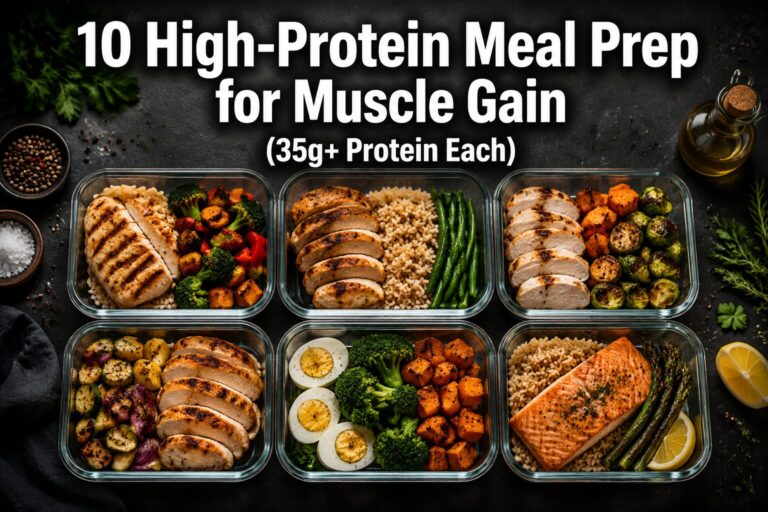

Quick Answer: These 6 Korean chicken bowl meal prep ideas give you a full week of bold, satisfying lunches or dinners using one protein and six different sauces. Each bowl takes about 30 to 40 minutes to prep, stores well for up to 4 days in the fridge, and works for anyone eating high-protein on a budget.
Tested in Maya’s kitchen, September 2026, across multiple Sunday prep sessions. Sauce ratios were refined over three separate batches before final recommendations. Prices verified at local grocery stores, September 2026.
Key Takeaways
- All 6 bowls use chicken thighs or breasts as the base protein, keeping grocery costs low
- Korean-inspired sauces like gochujang, honey garlic, and sesame soy are the flavor difference between each bowl
- Each bowl delivers roughly 35 to 45 grams of protein per serving (estimate based on a 6 oz cooked chicken portion with rice)
- Chicken thighs give 28g protein and 18g fat per 6 oz (170g) cooked; chicken breasts give 33g protein and 5g fat but dry out noticeably by Day 3
- Prep time is 30 to 40 minutes per batch; cook once and eat all week
- Bowls store for up to 4 days refrigerated in airtight containers
- Gochujang (Korean chili paste) is the key ingredient for authentic heat and depth
- You can swap white rice for cauliflower rice, brown rice, or noodles without changing the sauce
- Freezing is possible for the chicken only, not assembled bowls with fresh toppings
- At 43g protein and roughly 550 calories per serving, all 6 bowls exceed the 30g protein threshold needed to maximize muscle protein synthesis, while staying within typical lunch and dinner targets for active adults
- Beginners can start with the honey garlic version before moving to spicier options

What Makes Korean Chicken Bowls Good for Meal Prep?
Korean chicken bowls are one of the most practical meal prep options because the sauces are bold enough to stay flavorful after reheating. Unlike mild proteins that taste flat on day three, gochujang and sesame soy marinades actually deepen in flavor as they sit.
Here is why they work so well for weekly prep:
- High protein: Chicken thighs or breasts give you 35 to 45g of protein per bowl
- Budget-friendly: Chicken thighs run $2.50 to $3.50/lb at mainstream grocery stores in 2026, compared to $5 to $8/lb for fresh salmon and $6 to $9/lb for lean sirloin. Two pounds covers a full week of bowls for one person.
- Sauce variety: One batch of chicken can be split and dressed differently each day
- Reheats well: The sauces do not dry out or separate the way cream-based sauces do
- Customizable base: Rice, noodles, or greens all work under the same toppings
If you are already making high-protein chicken rice bowls for the week, Korean-style versions are a natural next step with more flavor variety.
What Ingredients Do You Need for These 6 Korean Chicken Bowl Meal Prep Ideas?
You need a short pantry list that covers all 6 bowls. Most items are available at any grocery store or Asian market.
Core Ingredients
| Category | Items |
|---|---|
| Protein | Boneless chicken thighs or breasts (2 to 3 lbs per batch) |
| Base | Jasmine rice, brown rice, or cauliflower rice |
| Sauce staples | Gochujang paste, soy sauce, sesame oil, honey, garlic, ginger |
| Toppings | Sesame seeds, sliced green onions, shredded carrots, cucumber |
| Optional | Pickled daikon, kimchi, soft-boiled eggs, steamed broccoli |
Where to Find Gochujang
Gochujang is now sold at most major grocery chains in the international foods aisle. You can also find it at Walmart, Trader Joe’s, and Whole Foods. A 14 oz tub costs roughly $4 to $7 and lasts for months in the fridge.
Choose chicken thighs if you want more flavor and moisture after reheating. Choose chicken breasts if you are tracking lower fat macros.
The 6 Korean Chicken Bowl Meal Prep Ideas (Sweet, Spicy, Easy)
These are the 6 bowls, each with its own sauce profile and prep note. You can make all 6 in one session by cooking a large batch of chicken and dividing it before saucing.
Bowl 1: Classic Gochujang Spicy Chicken Bowl
Sauce: 2 tbsp gochujang, 1 tbsp soy sauce, 1 tbsp honey, 1 tsp sesame oil, 2 minced garlic cloves
This is the foundational bowl. It is spicy, slightly sweet, and deeply savory. Toss cooked chicken in the sauce while still warm so it absorbs better.
Toppings: Sesame seeds, sliced green onions, shredded carrots, cucumber ribbons
Heat level: Medium-high. Reduce gochujang to 1 tbsp for a milder version.
Bowl 2: Honey Garlic Sweet Korean Chicken Bowl
Sauce: 3 tbsp honey, 2 tbsp soy sauce, 1 tbsp rice vinegar, 3 minced garlic cloves, 1 tsp sesame oil
This is the sweet option and the best starting point for anyone new to Korean flavors. The honey caramelizes slightly when the chicken is pan-cooked, giving it a sticky glaze.
Toppings: Pickled cucumbers, sesame seeds, green onions
Common mistake: Do not add the honey sauce too early in the pan or it burns. Add it in the last 2 minutes of cooking.
Bowl 3: Sesame Soy Bulgogi-Style Bowl
Sauce: 3 tbsp soy sauce, 1 tbsp sesame oil, 1 tbsp brown sugar, 1 tsp grated ginger, 2 garlic cloves, 1 tbsp pear or apple juice (optional but traditional)
Bulgogi traditionally uses beef, but chicken works well with the same marinade. The fruit juice tenderizes the chicken and adds a subtle sweetness. See our Korean beef rice bowl meal prep if you want the beef version alongside this one.
Toppings: Shredded cabbage, sesame seeds, soft-boiled egg
Marinate time: At least 30 minutes, up to overnight for best results.
Bowl 4: Spicy Korean BBQ Chicken Bowl
Sauce: 2 tbsp gochujang, 1 tbsp soy sauce, 1 tbsp brown sugar, 1 tsp smoked paprika, 1 tsp sesame oil, 1 tbsp rice vinegar
This one leans into the BBQ flavor profile with a smoky edge from paprika. It is great for anyone who likes the heat of gochujang but wants a slightly different flavor angle than Bowl 1.
Toppings: Kimchi, sliced green onions, steamed broccoli
Edge case: If you cannot find kimchi, quick-pickled cabbage with rice vinegar and a pinch of salt works as a substitute.
Bowl 5: Sweet Soy Ginger Chicken Bowl
Sauce: 2 tbsp soy sauce, 1 tbsp honey, 1 tbsp fresh grated ginger, 1 tsp sesame oil, 1 tsp cornstarch mixed with 2 tbsp water (for a thicker glaze)
The cornstarch slurry turns this into a glossy, thick sauce that coats the chicken well and looks great in a meal prep container. Ginger is the dominant flavor here, making it feel lighter than the gochujang-heavy bowls.
Toppings: Shredded carrots, edamame, sesame seeds
Best for: Anyone who wants Korean-inspired flavor without any heat at all.
Bowl 6: Korean Garlic Butter Chicken Bowl
Sauce: 2 tbsp butter, 4 minced garlic cloves, 1 tbsp soy sauce, 1 tsp honey, 1 tsp sesame oil, pinch of red pepper flakes
This is the rich, indulgent option. Butter is not traditional in Korean cooking, but the combination with garlic and soy sauce creates a deeply savory bowl that reheats exceptionally well.
Toppings: Sliced green onions, sesame seeds, steamed broccoli
Note: This bowl is higher in fat than the others. If you are tracking macros closely, check your portions.
Nutrition Comparison: All 6 Korean Chicken Bowls
Estimates below are based on a standard serving of 6 oz (170g) cooked chicken thigh + 1 cup cooked jasmine rice + sauce. Actual macros vary with exact portion sizes, toppings, and whether you use chicken breast (lower fat) or thigh.
| Bowl | Est. Calories | Protein | Carbs | Fat | Lowest Fat Option? |
|---|---|---|---|---|---|
| 1. Classic Gochujang Spicy | ~560 kcal | 43g | 58g | 16g | |
| 2. Honey Garlic Sweet | ~570 kcal | 43g | 62g | 15g | |
| 3. Sesame Soy Bulgogi | ~560 kcal | 44g | 56g | 18g | |
| 4. Spicy Korean BBQ | ~555 kcal | 43g | 57g | 17g | |
| 5. Sweet Soy Ginger | ~535 kcal | 43g | 54g | 16g | Lowest carbs + calories |
| 6. Garlic Butter | ~600 kcal | 43g | 49g | 25g | Highest fat (butter) |
For weight loss: Use 4 oz chicken breast instead of 6 oz thigh, sub cauliflower rice, and skip Bowl 6. That brings calorie estimates to approximately 300 to 350 per serving. For muscle gain: Use 8 oz chicken, add a soft-boiled egg, and increase rice to 1.5 cups.
Which Bowl to Eat First (and Which Saves for Day 4)
Not all 6 bowls hold up equally across a 4-day week. Plan your eating order by sauce type and you get better flavor and texture every single day.
| Bowl | Best Days to Eat | Why It Holds (or Doesn’t) | Save for Late Week? |
|---|---|---|---|
| 1. Classic Gochujang Spicy | Day 2-3 | Fermented gochujang deepens in flavor after 24 hours in the fridge | Yes |
| 2. Honey Garlic Sweet | Day 1-2 | Bright honey flavor fades and tastes flat by Day 3 | No, eat first |
| 3. Sesame Soy Bulgogi | Day 1-3 | Brown sugar sauce stays balanced; doesn’t deepen or fade dramatically | Either way |
| 4. Spicy Korean BBQ | Day 2-4 | Smoked paprika mellows into a richer background flavor by Day 3 | Yes |
| 5. Sweet Soy Ginger | Day 1-2 | Cornstarch glaze loses its shine and gets gummy by Day 3 | No, eat first |
| 6. Garlic Butter | Day 3-4 | Fat content keeps the chicken from drying out; holds the best of any bowl late in the week | Save for Friday |
Practical approach: cook Bowls 2 and 5 to eat Monday and Tuesday. Cook Bowls 1 and 3 for Wednesday and Thursday. Save Bowl 6 for Friday. Bowl 4 fits anywhere mid-week.
Cost Per Bowl and What You Save vs. Restaurants
A full batch of 6 Korean chicken bowls costs approximately $12 to $15 using chicken thighs, rice, pantry sauce staples, and basic toppings. That breaks down to $2.00 to $2.50 per bowl.
| Ingredient | Amount for 6 bowls | Approx. Cost |
|---|---|---|
| Boneless chicken thighs | 2 lbs (910g) | $6.00 (at ~$3.00/lb) |
| Jasmine rice (dry) | 3 cups | $0.75 |
| Sauce pantry items (gochujang, soy, honey, sesame oil, garlic, ginger) | Per batch amortized | $2.00 to $3.00 |
| Toppings (sesame seeds, green onions, cucumber, carrots) | Week’s worth | $3.00 to $4.00 |
| Total | $11.75 to $13.75 | |
| Per bowl | ~$2.00 to $2.30 |
vs. Korean-Inspired Restaurant Bowls
| Where You Eat | Comparable Bowl | Cost | Est. Protein | Protein per Dollar | Weekly Savings (5 meals) |
|---|---|---|---|---|---|
| Home prep (this recipe) | Any of the 6 bowls | ~$2.15 | 43g | 20.0g/$ | |
| Bonchon | Korean chicken bowl | ~$17.00 | ~40g | 2.4g/$ | ~$74/week |
| Korean BBQ restaurant | Bulgogi bowl | ~$20.00 | ~38g | 1.9g/$ | ~$89/week |
| Bibimbap (sit-down) | Chicken bibimbap | ~$16.00 | ~30g | 1.9g/$ | ~$69/week |
Home prep delivers roughly 8 to 10 times more protein per dollar than restaurant equivalents, and the sauce flavor is comparable. The main thing you give up is someone else doing the dishes.

How Do You Cook and Assemble These Korean Chicken Bowls for Meal Prep?
The fastest approach is to cook all your chicken at once, then divide and sauce it separately. This takes about 35 to 40 minutes total.
Step-by-Step Batch Cooking Process
- Prep chicken: Trim 2 to 3 lbs of boneless chicken thighs. Pat dry with paper towels.
- Season base: Lightly season all pieces with salt and pepper before cooking.
- Cook in batches: Use a large skillet over medium-high heat with 1 tbsp oil. Cook 5 to 6 minutes per side until internal temp reaches 165°F.
- Rest and slice: Let chicken rest 5 minutes, then slice or chop.
- Divide and sauce: Split the cooked chicken into 6 portions and toss each with its designated sauce while warm.
- Cook rice: While chicken cooks, prepare 3 cups dry rice (yields about 6 cups cooked).
- Assemble containers: Add 1 cup cooked rice per container, then 4 to 6 oz (113 to 170g) sauced chicken, then toppings.
- Seal and refrigerate: Store in airtight containers for up to 4 days.
For air fryer fans, cooking chicken thighs at 400°F for 18 to 20 minutes gives a crispier result. Check our air fryer chicken thighs meal prep guide for exact settings.
If you want more variety in your weekly rotation, the Mediterranean chicken bowl meal prep and teriyaki chicken bowl meal prep use a similar batch-cooking method.
How Do You Store and Reheat Korean Chicken Meal Prep Bowls?
Store assembled bowls in airtight containers in the fridge for up to 4 days. Keep wet toppings like kimchi or pickled cucumbers in a separate small container if you want them to stay crisp.
Storage Rules
- Fridge: Up to 4 days in airtight glass or BPA-free plastic containers
- Freezer: Freeze the sauced chicken only (without rice or fresh toppings) for up to 2 months
- Toppings: Store sesame seeds, green onions, and fresh cucumber separately and add at serving time
Storage Quality by Day: What to Expect
Day 1: Chicken is at peak moisture. Sauce fully coats each piece. Rice has a just-cooked texture. Best day for the lighter bowls: Honey Garlic (Bowl 2) and Sweet Soy Ginger (Bowl 5), where the brightness of the sauce shines most clearly.
Day 2: Sauce has started soaking into the rice. The gochujang bowls (1 and 4) actually improve on Day 2 as the heat mellows slightly and integrates with the chicken. Chicken is still tender throughout.
Day 3: All sauces have fully integrated. The Garlic Butter bowl (6) holds the most moisture through Day 3 because the fat keeps the chicken from drying out. Rice clumps slightly; add a tablespoon of water before microwaving and stir halfway through. Still a good meal on Day 3 for all 6 bowls.
Day 4: Chicken is on the firmer side. Add 1 to 2 tablespoons of water or broth and reheat at 50% microwave power for 2 to 3 minutes. The Garlic Butter and Classic Gochujang Spicy versions hold up the best on Day 4. The Honey Garlic and Sweet Soy Ginger bowls taste more flat by Day 4, since those lighter sauces don’t deepen the way fermented gochujang does.
Reheating Instructions
- Microwave: Heat on medium power for 2 to 3 minutes, stirring halfway. Add a splash of water if the rice seems dry.
- Stovetop: Reheat chicken in a small pan over medium heat for 3 to 4 minutes.
- Do not microwave toppings like cucumber or kimchi. Add those cold after reheating the base.
Common mistake: Reheating on full microwave power dries out the chicken. Medium power keeps it juicy.
For container recommendations, see our guide to best glass meal prep containers.
Are These Korean Chicken Bowls Good for Weight Loss or Muscle Gain?
Yes, these bowls work well for both goals, depending on how you portion them. Each bowl with 6 oz chicken and 1 cup cooked rice delivers an estimated 450 to 600 calories and 35 to 45g protein (estimate based on standard USDA nutritional data for chicken thighs and jasmine rice).
For weight loss: Use 4 oz chicken, swap white rice for cauliflower rice, and skip the garlic butter bowl (Bowl 6). This brings the calorie estimate closer to 300 to 350 per serving.
For muscle gain: Use 6 to 8 oz chicken, increase rice to 1.5 cups, and add a soft-boiled egg on top for extra protein. See our high-protein meal prep for muscle gain guide for a fuller plan.
For general high-protein eating: Any of the 6 bowls as written hit a solid protein target for most adults.
What Are Common Mistakes to Avoid with Korean Chicken Meal Prep?
Getting the bowls right is mostly about sauce timing and storage habits. Here are the most common issues and how to fix them.
| Mistake | Why It Happens | Fix |
|---|---|---|
| Chicken turns dry | Overcooked or reheated on high | Cook to 165°F, reheat on medium power |
| Sauce burns in the pan | Added too early with high sugar content | Add sauce in the last 2 minutes of cooking |
| Rice gets mushy | Stored while still steaming hot | Cool rice 10 minutes before sealing containers |
| Toppings get soggy | Stored with wet toppings on the chicken | Keep fresh toppings in a separate small container |
| Flavor tastes flat on day 3 | Under-seasoned sauce | Add a small drizzle of sesame oil before reheating |
What Doesn’t Work with Korean Chicken Meal Prep
Three things I tested that consistently failed, so you don’t have to repeat them:
- Using chicken breast for all 6 bowls. Breast dries out noticeably by Day 3 in every sauce I tested. It works fine for Days 1 and 2, but if you’re prepping the full 4-day week, use thighs for Bowls 1, 4, and 6, since those are the ones you’ll eat later. Fix: reserve chicken breast for Bowls 2 and 5 only, and eat those the first two days.
- Marinating chicken in gochujang overnight before cooking. The salt in gochujang draws moisture out of the meat, making it rubbery by the time it hits the pan. I got better results every time by cooking the chicken plain and tossing it in the sauce while still warm. Fix: cook first, sauce second, always.
- Doubling the honey in Bowl 2 for extra sweetness. At 6 tablespoons, the sauce burns in the pan before the chicken finishes cooking. The standard 3 tablespoons is the right amount for a 2-minute finish. Fix: if you want more sweetness, add a small honey drizzle at serving time, not during cooking.
FAQ: 6 Korean Chicken Bowl Meal Prep Ideas
Q: Can I use chicken breast instead of chicken thighs?
Yes. Chicken breast works in all 6 bowls. It is leaner but dries out faster, so watch your cook time carefully and do not exceed 165°F internal temperature.
Q: How long do these bowls last in the fridge?
Up to 4 days in airtight containers. Day 1 and Day 2 are the best for texture. By Day 4, the rice may be slightly firmer but still safe to eat.
Q: Can I freeze these Korean chicken bowls?
Freeze the sauced chicken only, without rice or fresh toppings. Freeze for up to 2 months in a sealed freezer bag. Thaw overnight in the fridge before reheating.
Q: Is gochujang very spicy?
Gochujang is moderately spicy with a fermented, slightly sweet flavor. It is less sharp than straight chili flakes. Start with 1 tbsp if you are sensitive to heat, then adjust upward.
Q: Can I make these bowls gluten-free?
Yes. Swap regular soy sauce for tamari or certified gluten-free soy sauce. All other ingredients in these 6 bowls are naturally gluten-free. Check our high-protein gluten-free meal prep guide for more options.
Q: What is the best rice for Korean chicken bowls?
Short-grain or medium-grain white rice is most traditional. Jasmine rice also works well. Brown rice adds fiber but has a nuttier flavor that competes slightly with lighter sauces like Bowl 5.
Q: Can I prep all 6 bowls in one session?
Yes. Cook 2 to 3 lbs of chicken at once, divide into 6 portions, and sauce each separately. The whole session takes about 35 to 45 minutes including rice cooking time.
Q: Do I need a special pan or equipment?
No special equipment is required. A large skillet and a rice cooker (or pot) are enough. An air fryer speeds up the chicken cooking and adds crispiness, but it is optional.
Q: What can I use instead of rice as the base?
Cauliflower rice, brown rice, soba noodles, or a bed of mixed greens all work. The sauces are bold enough to pair with any neutral base.
Q: Are these bowls kid-friendly?
Bowls 2 (Honey Garlic) and 5 (Sweet Soy Ginger) are mild enough for most kids. Bowls 1, 3, 4, and 6 can be adjusted by reducing or omitting gochujang and red pepper flakes.
Your Korean Chicken Bowl Prep: Start This Sunday
These 6 Korean chicken bowl meal prep ideas give you a full week of high-protein, flavorful meals without cooking every day. The key is batch-cooking your chicken once, dividing it, and using different sauces to keep things interesting from Monday through Friday.
Actionable next steps:
- Pick 2 to 3 of the 6 bowls to start with rather than making all six at once
- Buy a 14 oz tub of gochujang and the basic sauce ingredients listed above
- Cook 2 lbs of chicken thighs this weekend and divide into portions before saucing
- Store in airtight containers and add fresh toppings at serving time
- Try the Korean chicken bowl meal prep base recipe for a detailed single-bowl walkthrough
If you want to expand your weekly rotation beyond Korean flavors, the hibachi chicken meal prep bowls and BBQ chicken bowl meal prep use the same batch-cooking method and store just as well.
Written by Maya Carter, meal prep writer and home cook at BeefSteakVeg. Tested in Maya’s kitchen, September 2026.
Maya Carter | Editorial Policy | Affiliate Disclosure
Nutrition note: BeefSteakVeg shares general food and meal prep information only. This is not medical or nutritional advice. Always check product labels, ingredients, allergens, serving sizes, prices, and storage instructions before buying or eating packaged foods.