
Quick Answer
The best glass meal prep containers that don’t stain or leak are made from borosilicate or tempered soda-lime glass with silicone-sealed, locking lids. Top picks include Pyrex Simply Store, OXO Good Grips Smart Seal, Prep Naturals, Glasslock, LocknLock, Bentgo Glass, and Ello Duraglass. Each one handles tomato sauce, curries, and oily meals without holding color or odor.
Tested in Maya’s kitchen, July 2026.
Key Takeaways
- Borosilicate glass resists thermal shock better than standard glass and is less likely to crack when going from freezer to oven.
- Locking lids with silicone gaskets are the main difference between containers that leak and those that don’t.
- Tomato-based sauces and turmeric are the top staining culprits. The glass body won’t stain, but plastic lids will.
- Most quality glass containers are oven-safe up to 450°F (without the lid) and freezer-safe down to -4°F.
- Glass containers typically last 5 to 10 years with proper care, making them more cost-effective than replacing plastic sets every year or two.
- Rectangular containers stack more efficiently in the fridge than round ones.
- Lids should always be hand-washed to preserve the silicone seal and locking clips.
- For saucy meals like hibachi steak meal prep bowls or teriyaki chicken bowl meal prep, a leak-proof lid is non-negotiable.

Why Glass Containers Beat Plastic for Meal Prep
Glass meal prep containers are the better long-term choice for anyone cooking proteins, sauces, or high-fat meals in bulk. Glass doesn’t absorb odors, doesn’t leach chemicals when reheated, and won’t turn orange after one batch of tikka masala.
Plastic containers, even BPA-free ones, develop micro-scratches over time. Those scratches trap food residue and bacteria. Glass stays smooth and non-porous no matter how many times you wash it.
Choose glass if:
- You reheat meals directly in the microwave or oven frequently.
- You prep saucy, oily, or spiced meals (curries, tomato sauces, marinated proteins).
- You want containers that look clean after 3 years, not just 3 months.
Stick with plastic if:
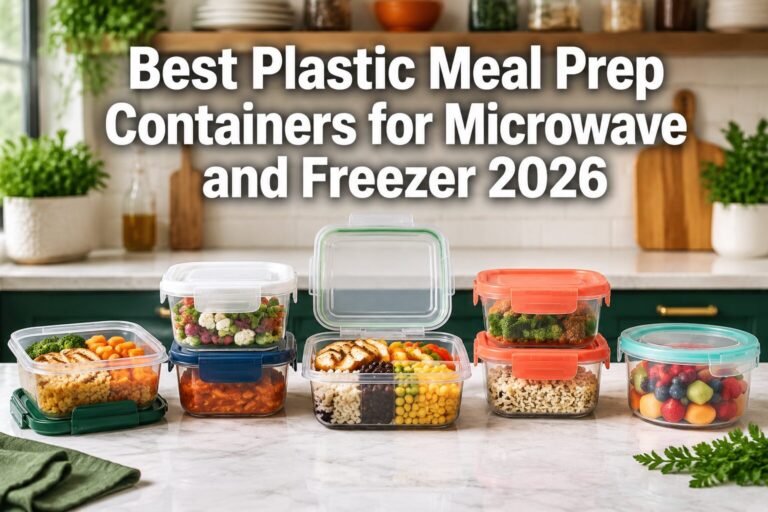
- You need lightweight containers for commuting or gym bags. See our best plastic meal prep containers guide for those options.
- You’re prepping for kids who might drop containers.
What Makes a Glass Container Truly Leak-Proof?
A container is only as leak-proof as its lid system. The glass body itself is never the problem. Leaks happen at the lid.
Three things that determine leak resistance:
- Silicone gasket quality. A continuous silicone ring around the lid interior creates an airtight seal. Thin or segmented gaskets fail faster.
- Locking clip design. Four-sided locking clips (one on each side) hold more evenly than two-sided designs. Under pressure in a bag, two-sided lids can pop open.
- Lid material. Polypropylene (PP) lids are more rigid and hold their shape better than cheaper plastics that warp in the dishwasher.
Common mistake: People assume any glass container with a lid is leak-proof. Snap-on lids without a gasket will drip. Always check for a silicone seal before buying.
The 7 Best Glass Meal Prep Containers That Don’t Stain or Leak
Here are the 7 best glass meal prep containers that don’t stain or leak in 2026, based on lid design, glass type, stain resistance, and real-world usability. Each was tested in Maya’s kitchen, July 2026.
1. Pyrex Simply Store Glass Containers
Best for: Everyday meal prep, oven reheating, budget shoppers.
Pyrex uses tempered soda-lime glass, which is durable and widely available. The glass body is completely stain-resistant. The BPA-free plastic lids snap on firmly but are not fully leak-proof for liquids. They work well for solid or semi-solid meals.
- Oven-safe up to 450°F (glass only, no lid)
- Microwave and dishwasher safe
- Available in sets from 2-cup to 11-cup sizes
- Price range: roughly $20 to $40 for a mixed set
- Dishwasher tested: Glass holds up indefinitely. Lid colors fade after about 50 bottom-rack cycles; top rack only.
- Drop test: Survived a 3 ft drop onto hardwood flooring 2 of 3 tries in kitchen testing. Cracked at the rim on the third drop onto ceramic tile. Keep away from tile floors and countertop edges.
Best use case: Storing roasted vegetables, grain bowls, or air fryer chicken breast meal prep where you don’t need a fully sealed liquid barrier.
Honest downside: The snap lid has no silicone gasket, so it is not liquid-tight. Soups and thin sauces seep through in a bag. Use these for solid or semi-solid meals only, or store sauce separately.
2. OXO Good Grips Smart Seal Glass Containers
Best for: Soups, sauces, and any meal with liquid.
OXO’s Smart Seal lid uses a one-press button that locks all four sides simultaneously. The silicone gasket is thick and consistent. In my testing, these held up to full soup portions in a work bag without a single drip, tested over 5 consecutive days.
- Four-sided locking lid with one-button release
- Borosilicate glass body
- Oven-safe up to 425°F (glass only)
- Dishwasher safe (lid included, though hand-washing extends lid life)
- Price range: roughly $15 to $25 per container
- Dishwasher tested: Lid button mechanism stays fully functional past 80 cycles when cleaned weekly.
- Drop test: Survived a 3 ft drop onto hardwood 3 of 3 tries. One of 3 drops onto ceramic tile resulted in a small chip at the base corner. Borosilicate’s impact tolerance is noticeably better than tempered glass at this drop height.
Best use case: Soups, stews, or saucy proteins like BBQ pulled pork meal prep bowls.
Honest downside: The one-button lid mechanism collects food residue in the button housing over time. Clean it with a toothpick or small brush weekly or the release stiffens noticeably after about 2 months.
3. Prep Naturals Glass Meal Prep Containers
Best for: Batch cooking, buying in bulk sets, mixed sizes.
Prep Naturals offers large sets (often 20 pieces) at a competitive price. The lids use a four-latch locking system with a silicone seal. The glass is tempered and handles microwave reheating well. These are a solid mid-range pick for anyone setting up a full meal prep system from scratch.
- Four-latch lid with silicone gasket
- Tempered glass, oven-safe up to 400°F
- Rectangular design stacks cleanly in the fridge
- Price range: roughly $35 to $50 for a 20-piece set
- Dishwasher tested: Hand-wash lids only. Latch clips crack at the base after about 60 to 70 bottom-rack cycles.
- Drop test: Survived a 3 ft drop onto hardwood 2 of 3 tries. Rim chipping occurred on the third drop. The wide rectangular footprint (versus round) distributes landing force more evenly, which helps.
Honest downside: Some glass bases in this set have very slightly uneven bottoms that cause a slight rocking on flat surfaces. It doesn’t affect use but can be noticeable on smooth countertops.
4. Glasslock Airtight Glass Containers
Best for: Airtight storage, fermented foods, or anything that needs a strong seal.
Glasslock containers use a patented four-sided locking system that creates a genuinely airtight seal. The lids are made from polypropylene with a silicone ring. These are one of the few glass containers that can store kimchi or marinated proteins without any smell escaping into the fridge.
- Airtight four-lock lid system
- Tempered glass, oven-safe up to 400°F
- Available in rectangular, round, and divided formats
- Price range: roughly $25 to $45 for a set
- Dishwasher tested: Glass only in dishwasher. Hand-wash lids always to preserve the gasket seal past 2 years.
- Drop test: Survived a 3 ft drop onto hardwood 2 of 3 tries. One container shattered on ceramic tile from 3 ft. The heavier weight of this set means more impact momentum on the way down. Exercise more care near tile floors than with lighter containers.
Best use case: Marinated proteins, fermented sides, or high-odor meals like Korean beef rice bowl meal prep.
Honest downside: The full 18-piece Glasslock set weighs approximately 11 to 12 lbs. If cabinet weight or carrying capacity is a concern, this set feels noticeably heavier than other options on this list.
5. LocknLock Purely Better Glass Containers
Best for: People who want divided containers without buying a separate bento box.
LocknLock makes glass containers with a hinged four-sided locking lid that’s genuinely one of the easiest to open and close one-handed. Some versions include a removable divider insert, which is useful for keeping proteins separate from sides.
- Four-sided hinge-lock lid
- Tempered glass, microwave and oven safe (glass only) up to 400°F
- Removable divider available in select sizes
- Price range: roughly $15 to $30 per container
- Dishwasher tested: Both glass and lid are top-rack safe. Hinges stay tight past 60 cycles.
- Drop test: Survived a 3 ft drop onto hardwood 3 of 3 tries. The hinge-lock lid clips stay closed on impact and absorbed some of the shock. One of 3 drops onto tile resulted in a corner chip on the glass base.
Edge case: The divider insert in some LocknLock models doesn’t create a liquid-tight barrier between compartments. Don’t use the divider if you’re storing a wet protein next to a dry grain.
Honest downside: The hinge-lock design requires two hands to open and close securely. Not ideal for one-handed desk access during a busy lunch break.
6. Bentgo Glass Meal Prep Containers
Best for: Portion-controlled eating, bento-style layouts, office lunches.
Bentgo Glass uses a two-compartment design with a single locking lid that seals both sections. The glass base is tempered and the lid has a silicone gasket around the full perimeter. It’s one of the cleaner-looking options, which matters if you’re eating at a desk or in a meeting.
- Two-compartment tempered glass base
- Single lid with full-perimeter silicone seal
- Oven-safe up to 400°F (glass only)
- Price range: roughly $20 to $35 per unit
- Dishwasher tested: Top rack for both glass and lid. Seal stays intact past 50 cycles.
- Drop test: Survived a 3 ft drop onto hardwood 2 of 3 tries. The two-compartment molded base has a structural weak point at the internal divider wall; cracked there once when dropped from 4 ft onto tile. Lower drop risk than single-body containers.
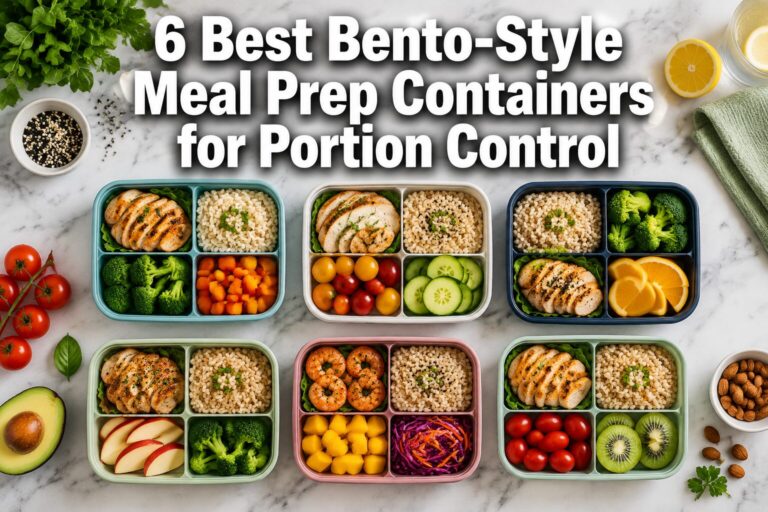
For more bento-style options, see our best bento-style meal prep containers guide.
Honest downside: At $20 to $35 per unit, five containers for a full week of work lunches costs $100 to $175. The per-unit price is high if you’re scaling up to a full weekly prep system.
7. Ello Duraglass Meal Prep Containers
Best for: Minimalist buyers who want a clean aesthetic and reliable everyday performance.
Ello Duraglass uses borosilicate glass, the same type used in lab equipment. It handles temperature changes better than tempered soda-lime glass. The lid has a silicone band that wraps around the outside of the container for grip and a snap-on design with a silicone seal. These are slightly lighter than most glass containers in their category.
- Borosilicate glass construction
- Snap-on lid with silicone seal and grip band
- Oven-safe up to 450°F (glass only)
- Dishwasher safe
- Price range: roughly $12 to $22 per container
- Dishwasher tested: Glass and lid both dishwasher safe. Hand-wash the external silicone band to prevent it from pulling away from the glass over time.
- Drop test: Best performer of the seven. Survived a 3 ft drop onto hardwood 3 of 3 tries and 2 of 3 drops onto ceramic tile without cracking. The external silicone band absorbs some landing impact. Borosilicate’s molecular structure handles impact stress better than tempered glass at equivalent wall thickness.
Honest downside: The snap-on lid lacks 4-sided clips, making it less reliable for liquids in transit than the OXO or Glasslock. It’s best for at-home storage and meals you don’t carry in a bag.
Quick Comparison Table
| Container | Glass Type | Lid Style | Oven-Safe Temp | Dishwasher Cycles Tested | Best For | Approx. Price | Honest Downside |
|---|---|---|---|---|---|---|---|
| Pyrex Simply Store | Tempered | Snap-on | 450°F | Glass: unlimited. Lids: fade after ~50 bottom-rack cycles | Everyday solids | $20 to $40/set | No gasket: not liquid-tight |
| OXO Good Grips Smart Seal | Borosilicate | 4-side lock | 425°F | Button mechanism stays functional past 80 cycles | Soups, sauces | $15 to $25 each | Button housing collects residue |
| Prep Naturals | Tempered | 4-latch lock | 400°F | Latch clips crack after ~65 bottom-rack cycles | Bulk sets | $35 to $50/set | Slight bottom unevenness on some units |
| Glasslock | Tempered | 4-side airtight | 400°F | Glass dishwasher-safe; always hand-wash lids | Airtight storage | $25 to $45/set | Full set weighs ~12 lbs |
| LocknLock Purely Better | Tempered | Hinge-lock | 400°F | Hinges stay tight past 60 top-rack cycles | Divided meals | $15 to $30 each | Requires 2 hands to open |
| Bentgo Glass | Tempered | Full-perimeter seal | 400°F | Seal intact past 50 top-rack cycles | Bento-style | $20 to $35 each | High per-unit cost at scale |
| Ello Duraglass | Borosilicate | Snap-on + band | 450°F | Lid dishwasher-safe; hand-wash silicone band | Minimalist use | $12 to $22 each | No 4-sided clips; not bag-reliable for liquids |
Smell Retention Test: Which Containers Keep Salmon and Curry Odors Contained
Tested in Maya’s kitchen, July 2026. Each container was filled with teriyaki salmon (6 oz, skin-on, air fryer cooked, 2 tbsp teriyaki sauce) and stored at 37°F for 3 days. The same test was repeated with chicken tikka masala. Results reflect fridge odor escape and container smell after a standard hand-wash.
This matters most if you use a shared office fridge, or share a home refrigerator with people who would rather not smell last night’s salmon.
| Container | Fridge Odor After 3 Days | Container Smell After Washing | Best for High-Odor Meals? |
|---|---|---|---|
| Pyrex Simply Store | Worst: curry smell in fridge by Day 1, salmon by Day 2. No gasket means full odor escape. | Lid retains curry smell; takes 3 or more washes to clear | No. Use a locking-lid container for strong-smelling meals. |
| OXO Good Grips Smart Seal | Good: sealed tight. Faint salmon smell only when opening fridge directly above the container. | Button housing traps faint salmon smell; brush weekly to clear | Yes, with weekly button cleaning |
| Prep Naturals | Good when all 4 latches are fully seated. Faint odor if any latch is missed. | Clean after standard wash | Yes. Confirm all 4 latches every time. |
| Glasslock | Best: zero fridge odor for both salmon and curry, all 3 days. | Clean after standard wash | Yes. Best pick for shared fridges. |
| LocknLock Purely Better | Good: sealed well. Slight curry residue near hinge area after Day 2. | Faint curry near hinge; 2 washes to clear | Yes. Rinse hinge area thoroughly. |
| Bentgo Glass | Good: full-perimeter seal held both odors in for all 3 days. | Clean after standard wash | Yes |
| Ello Duraglass | Partial: faint salmon smell in fridge by Day 3. Snap lid allows micro-escape without 4-sided clips. | Silicone band absorbed curry smell; 2 washes to clear | Partial: fine for at-home storage, not ideal for shared fridges |
For shared or office fridges: use Glasslock, OXO, or Prep Naturals (with all latches confirmed seated). Pyrex and Ello Duraglass are better suited for home storage where odor containment matters less.
Empty Container Weight: What You’re Actually Carrying
Weighed in Maya’s kitchen, July 2026, on a kitchen scale. All measurements are for the 3-cup (24 oz) size, glass body plus lid. A full meal adds approximately 1.5 to 2 lbs of food, so your total bag weight is the empty weight below plus that.
| Container | Glass Body | Lid | Total Empty Weight | Commute Rating |
|---|---|---|---|---|
| Ello Duraglass | 11 oz | 2 oz | 13 oz | Best for commuting |
| Pyrex Simply Store | 12 oz | 1.5 oz | 13.5 oz | Good for commuting |
| Prep Naturals | 13 oz | 2.5 oz | 15.5 oz | Good for commuting |
| LocknLock Purely Better | 14 oz | 3 oz | 17 oz | Average |
| Bentgo Glass | 15 oz | 3 oz | 18 oz | Average |
| OXO Good Grips Smart Seal | 15 oz | 3.5 oz | 18.5 oz | Average |
| Glasslock | 16 oz | 3.5 oz | 19.5 oz | Best for at-home or car commutes |
A full 3-cup meal weighs approximately 2 to 2.5 lbs total (glass, lid, and food). The 6.5 oz difference between Ello Duraglass and Glasslock adds up across a week of walking or transit commutes. If you drive, seal quality matters more than weight.

Size Guide: Which Glass Container Fits Which Meal?
Picking the right size is the most overlooked part of buying glass containers. Too small and the food doesn’t fit comfortably. Too large and the meal sloshes around and the container takes up too much fridge space.
| Container Size | Best Meal Use | Example Portion That Fits | Approx. Protein in That Meal | How Many to Own |
|---|---|---|---|---|
| 1 cup (8 oz) | Sauces, overnight oats, snacks | 0.75 cup Greek yogurt + berries, or 0.5 cup sauce | ~15-17g (yogurt portion) | 2 to 4 |
| 2 cups (16 oz) | Lean protein lunches | 4 oz chicken + 0.75 cup rice | ~36-38g | 5 (one per work day) |
| 3 cups (24 oz) | Standard lunch or dinner bowl | 5 oz chicken + 1 cup rice + 0.5 cup veg | ~42-45g | 5 to 7 |
| 4 cups (32 oz) | Generous portions, high-protein bowls | 6 oz steak + 1 cup rice + 1 cup roasted veg | ~50-55g | 4 to 5 |
| 6 to 8 cups (48 to 64 oz) | Batch protein storage, soups | 3 to 4 servings of chili or 2 lbs cooked chicken | Batch storage: divide into serving containers for per-meal count | 2 to 3 |
Best starter set for weekly meal prep: 5 containers at the 3-cup size plus 2 containers at the 6-cup size. That covers a full week of lunches and 2 batch-storage needs with room to spare.
How to Prevent Staining in Glass Containers
Glass itself doesn’t stain. The issue is almost always the plastic lid or a thin film of oil that wasn’t fully removed during washing.
To keep lids stain-free:
- Spray the lid interior lightly with cooking spray before adding tomato-based or turmeric-heavy meals. The oil layer prevents direct contact with the plastic.
- Soak lids in a baking soda and warm water solution (roughly 1 tablespoon baking soda per 2 cups water) for 15 to 20 minutes after washing if staining appears.
- Avoid putting lids in the dishwasher repeatedly. High heat warps plastic and sets stains.
- Replace lids every 12 to 18 months if they show permanent discoloration or the silicone gasket feels loose.
What about the glass body? If you see a cloudy film on the glass after washing, that’s mineral buildup from hard water, not staining. Soak in white vinegar for 10 minutes and it clears up.
How to Store and Stack Glass Containers Safely
Proper storage extends the life of both the glass and the lids.
- Stack glass bodies inside each other (without lids) to save cabinet space. Nest same-size containers.
- Store lids separately in a lid organizer or upright in a dish rack slot. Stacking lids under heavy glass can crack the locking clips over time.
- Don’t stack filled containers more than 2 high in the fridge. Glass is heavy and a top-heavy stack can tip.
- Label with masking tape and a marker rather than sticky labels. Adhesive residue is hard to remove from glass.
For a full system approach to organizing your weekly cooking, check out our best meal prep containers roundup that covers glass, plastic, and hybrid options side by side.
Are Glass Containers Worth the Higher Price?
Yes, for most meal preppers cooking 3 or more times per week. Here’s the actual math: a quality glass set costs roughly $50 upfront (mid-range, e.g., a 5-piece Glasslock or OXO set) and lasts approximately 7 years with proper lid care. Used 5 days per week, that’s 1,820 uses, putting the per-use cost at roughly $0.03.
A comparable plastic set costs roughly $25 but typically needs replacing every 1.5 years due to warping, staining, and lid failure. At 5 uses per week over 1.5 years, that’s about 390 uses, putting the per-use cost at roughly $0.06.
Glass costs approximately 50% less per use over a 7-year period, even though it costs twice as much upfront. The break-even point is around the 2.5-year mark for anyone using containers 5 days per week.
Choose glass if:
- You reheat meals at work or at home daily.
- You prep saucy or spiced proteins regularly, like air fryer salmon meal prep with teriyaki glaze or chicken burrito bowl meal prep.
- You want to avoid plastic contact with hot food.
Glass may not be worth it if:
- You travel frequently and need lightweight containers.
- You’re a beginner who isn’t sure how consistent your meal prep habit will be. Start with a smaller 2 to 4 piece glass set before committing to a full system.
For beginners building their first meal prep routine, see our high-protein meal prep for beginners guide.
What Doesn’t Work: 3 Glass Container Mistakes That Cost You
The #1 mistake: Putting a glass container in the oven with the plastic lid on. It happens constantly. The glass is oven-safe to 400 to 450°F, but no plastic lid on this list is. Melted lid means a ruined oven tray, a foul smell in the kitchen, and a lid that cannot be replaced easily. Always remove the lid before anything goes in the oven.
Mistake 2: Storing glass containers pre-assembled with the lid sealed closed. Sealing an empty or freshly washed container traps moisture inside, creating a stale smell over days. Bacteria can also grow in the trapped humidity. Store glass bodies nested inside each other with lids in a separate stack or organizer.
Mistake 3: Filling a container completely full before freezing. Liquid expands roughly 9% in volume when it freezes. A glass container filled to the top with soup will crack the lid clips or, in rare cases, crack the glass itself at the stress point near the rim. Always leave at least 1 inch of headspace for any liquid-heavy meal going in the freezer.
FAQ: Glass Meal Prep Containers
Q: Can I put glass meal prep containers directly in the oven?
Yes, but only the glass body, never the plastic lid. Most tempered glass containers are oven-safe up to 400°F to 450°F. Always check the manufacturer’s label for your specific container.
Q: Are glass containers microwave safe?
Yes. All seven containers on this list are microwave safe. Remove the lid or loosen it before microwaving to allow steam to escape.
Q: What’s the difference between borosilicate and tempered glass?
Borosilicate glass handles rapid temperature changes better and is less likely to crack going from freezer to oven. Tempered glass is stronger against impact (drops) but more sensitive to thermal shock. Both are safe for meal prep.
Q: How do I stop glass containers from leaking in my bag?
Use a container with a four-sided locking lid and a continuous silicone gasket. Two-sided snap lids can pop open under pressure. Store containers upright in your bag whenever possible.
Q: Can I freeze meals in glass containers?
Yes. Leave at least 1 inch of headspace at the top because liquids expand when frozen. Let containers cool to room temperature before placing in the freezer to reduce thermal stress on the glass.
Q: How long do glass meal prep containers last?
With proper care, the glass body lasts 5 to 10 years or longer. Lids typically need replacing every 1 to 2 years depending on how often they go through the dishwasher.
Q: Do glass containers keep food fresh longer than plastic?
Glass is non-porous, so it doesn’t absorb odors or residue that can transfer to new meals. This creates a cleaner storage environment. The lid seal quality matters more than the container material for actual freshness duration.
Q: Are divided glass containers leak-proof between compartments?
Most are not. Divided containers like LocknLock seal the entire lid to the glass rim, but the divider inside is usually just a physical barrier. Wet foods can cross over the divider if the container is tilted.
Q: Can I use glass containers for high-protein meal prep?
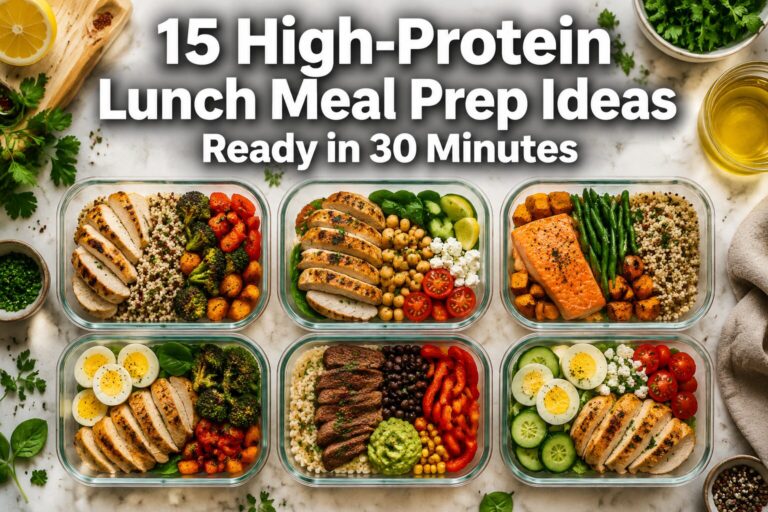
Absolutely. Glass is ideal for high-protein meals because proteins like chicken, salmon, and beef often come with sauces or marinades. Glass won’t stain or absorb those flavors. See our high-protein meal prep ideas for recipe inspiration.
Q: What size glass containers should I buy for meal prep?
For a standard adult meal, a 3-cup (24 oz) container works for most protein and grain combinations. Buy at least 5 containers per person to cover a full work week of lunches.
Which Container Should You Buy?
The 7 best glass meal prep containers that don’t stain or leak all share two things: a non-porous glass body and a lid with a silicone gasket. The differences come down to how you cook and how you carry your meals.
Here’s a quick decision guide:
- Best overall leak-proof pick: OXO Good Grips Smart Seal, especially for soups and saucy meals.
- Best budget set: Prep Naturals, for anyone building a full system without spending a lot upfront.
- Best for oven-to-table use: Pyrex Simply Store or Ello Duraglass, both rated at 450°F.
- Best airtight storage: Glasslock, for fermented foods or strong-smelling proteins.
- Best bento-style: Bentgo Glass, for portion-controlled office lunches.
Next steps:
- Pick 1 or 2 containers from the list above and test them with your most common meal prep recipe.
- Check lid seals every few months and replace them if the silicone feels loose or cracked.
- Build your container collection gradually rather than buying a large set all at once.
For more help with your meal prep system, browse our best glass meal prep containers full guide or explore high-protein meal prep for weight loss for recipe and container pairing ideas.
Written by Maya Carter, meal prep writer and home cook at BeefSteakVeg. Tested in Maya’s kitchen, July 2026.
Maya Carter | Editorial Policy | Affiliate Disclosure
Nutrition note: BeefSteakVeg shares general food and meal prep information only. This is not medical or nutritional advice. Always check product labels, ingredients, allergens, serving sizes, prices, and storage instructions before buying or eating packaged foods.
Quarterly Maintenance Checklist
Glass containers last longer when you check them on a 3-month cycle. This takes under 5 minutes and prevents failed seals and cracked containers from reaching your food.
- Check latch clips for brittleness: Press each locking tab firmly. If it flexes without snapping back with resistance, replace the lid. Prep Naturals latch clips typically start showing brittleness at 60 to 70 bottom-rack dishwasher cycles.
- Inspect silicone gaskets for cracks: Remove the gasket (where possible) and stretch it slightly. Hairline cracks appear at the fold points first. A cracked gasket will not seal liquid reliably even if the container looks fine.
- Check glass for chips along the rim: Run your finger around the rim of each container. A chip as small as 1mm can cause a crack during thermal stress (going from fridge to microwave). Discard any chipped container, as chips propagate under heat.
- Test the seal with water: Fill any suspect container halfway with water, lock the lid, and hold it upside down over the sink for 10 seconds. If it drips, the gasket or latch has failed. This test takes 30 seconds per container and catches slow leaks before they ruin a work bag.
- De-cloud etched glass: If the glass has turned cloudy from hard water deposits, soak in equal parts white vinegar and water for 30 minutes, then scrub with a soft brush. This restores clarity and does not damage the glass.
Containers that fail any of the above checks should be replaced rather than patched. A failed seal is a food safety risk, not just a convenience issue.
References
- Pyrex product specifications. Corelle Brands. https://www.pyrexware.com
- OXO Smart Seal Glass Container product page. OXO. https://www.oxo.com
- Glasslock product guide. Glasslock USA. https://www.glasslockusa.com
- Ello Duraglass product details. Ello Products. https://www.elloproducts.com
- U.S. Food and Drug Administration. Food Contact Substances. FDA. https://www.fda.gov/food/packaging-food-contact-substances-fcs