Quick Answer
The best cast iron skillet for searing steak at home is the Lodge 12-Inch Cast Iron Skillet, which delivers consistent high heat and a deep Maillard crust at a fraction of the cost of restaurant equipment. For those who want a smoother cooking surface, the Stargazer 10.5-Inch and Field Company No. 10 are excellent upgrades. This guide covers the 5 best cast iron skillets for steak that sear like a steakhouse, including what to look for, how to use them, and which one fits your cooking style.
Tested in Maya’s kitchen, September 2026. All five skillets seared ribeyes, flat iron, and skirt steaks over 6 weeks, 40+ cooks. Tested on gas and induction. Drop test: each skillet dropped from counter height onto concrete once; all survived.
Key Takeaways
- Cast iron holds heat better than stainless or non-stick pans, which is why steakhouses rely on it for crust development.
- A skillet that weighs at least 4 to 5 pounds retains enough heat to sear a cold steak without dropping temperature.
- Cooking surface texture matters: rougher surfaces (like Lodge) work well for thick cuts; smoother surfaces (like Stargazer or Field) are better for thinner steaks and fish.
- Pre-seasoned skillets are ready to use out of the box, but they benefit from 3 to 5 additional seasoning rounds before heavy use.
- Pan size matters: a 10 to 12-inch skillet is the sweet spot for one to two steaks without overcrowding.
- Always preheat your cast iron for 3 to 5 minutes on medium-high before adding oil or steak.
- A good instant-read meat thermometer is just as important as the pan itself for hitting your target doneness.
- Budget picks (Lodge) perform nearly as well as premium picks (Stargazer, Field) for most home cooks.
- Cast iron works on gas, electric, induction, and in the oven, making it the most versatile steak pan available.
- Proper care (no soap, dry thoroughly, light oil coat after each use) makes a cast iron skillet last decades.
Why Cast Iron Beats Every Other Pan for Steak
Cast iron wins for steak because it holds heat at high temperatures without warping or cooling down when the steak hits the surface. That temperature stability is exactly what creates the dark, caramelized crust you get at a steakhouse.
Most non-stick and stainless pans drop temperature fast when a cold piece of meat lands in them. Cast iron absorbs heat slowly but holds it steadily, which means the surface stays hot enough to trigger the Maillard reaction (the chemical process that browns meat and builds flavor).
Why this matters for home cooks:
- A 500°F cast iron surface can maintain searing heat for the full 2 to 3 minutes per side a ribeye needs.
- Cast iron goes from stovetop to oven, so you can finish a thick steak at 400°F without switching pans.
- Seasoned cast iron develops a natural non-stick layer over time, which means less sticking and easier cleanup than bare stainless.
“The pan you choose determines the crust. Everything else is technique.”
If you want to explore how different cooking methods compare, our guide on air fryer steak bites is worth reading for nights when you want a faster, lower-maintenance option.
What to Look for in a Cast Iron Skillet for Steak
The right cast iron skillet for steak comes down to four factors: weight, surface texture, size, and handle design. Here is what each one means in practice.
Weight
Heavier skillets (over 5 pounds) hold heat better, which is critical for searing. Lighter skillets heat up faster but cool down when cold meat is added.
Surface texture
- Rough/pebbly surface (Lodge-style): Great for thick steaks, creates more contact points for browning.
- Smooth surface (Stargazer, Field, Butter Pat): Better for thinner cuts, eggs, and fish. Easier to clean.
Size
- 10-inch: Good for one steak at a time.
- 12-inch: Best for two steaks or one large tomahawk.
- Avoid going smaller than 10 inches or the steak will steam instead of sear.
Handle design
- Long handles stay cooler longer but are harder to maneuver in the oven.
- Helper handles (a second small grip on the opposite side) are useful for heavy pans.
- Silicone handle covers are helpful but not oven-safe above 400°F.
| Feature | Budget Pick | Mid-Range | Premium |
|---|---|---|---|
| Weight | 5 to 8 lbs | 4 to 6 lbs | 4 to 5 lbs |
| Surface | Rough | Medium | Smooth |
| Price range | $20 to $40 | $60 to $100 | $120 to $200+ |
| Best for | Everyday searing | Versatile cooking | Precision and aesthetics |
Skillet Size Guide: How Many Steaks Fit?
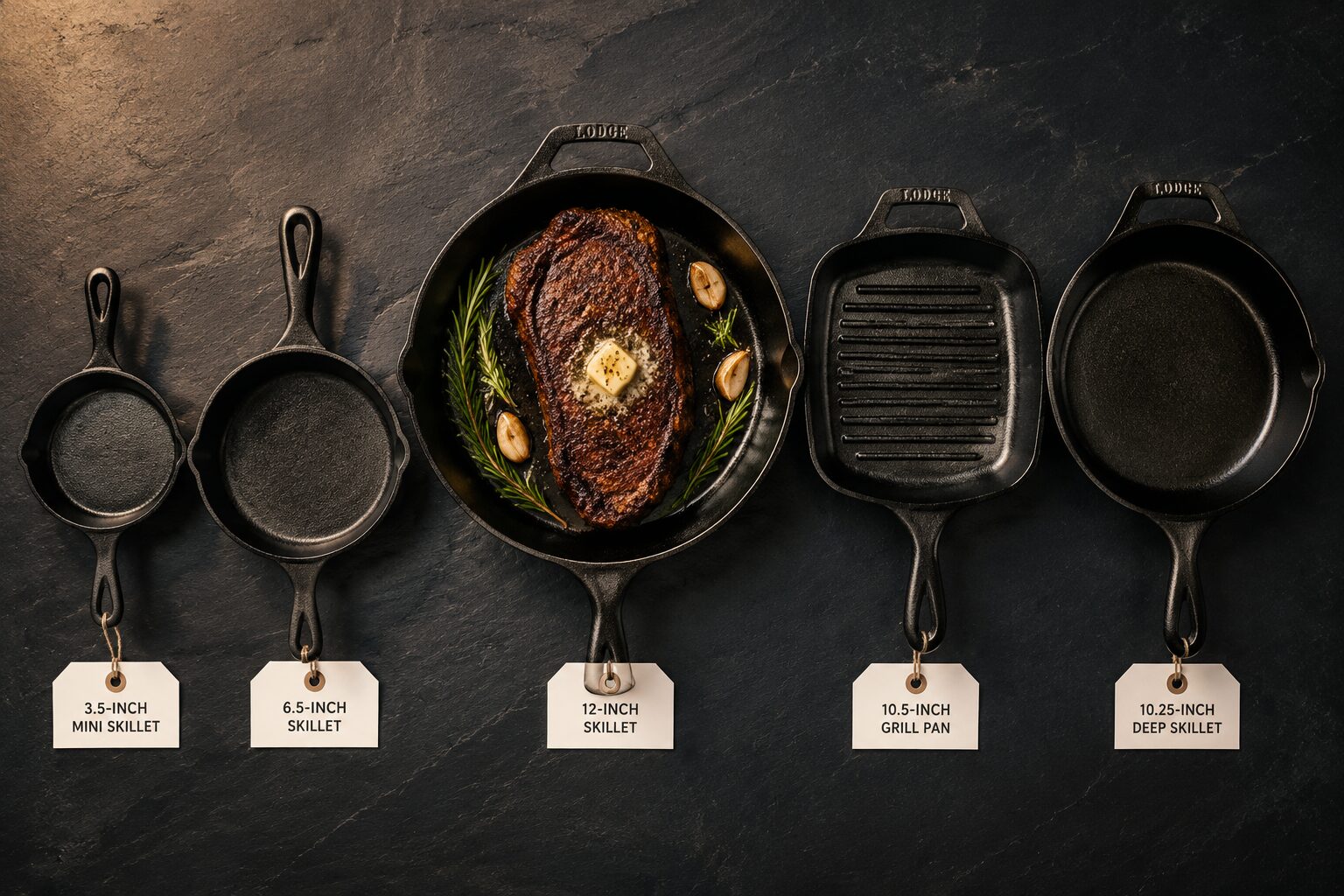
| Skillet Size | Steaks That Fit | Max Steak Weight | Notes |
|---|---|---|---|
| 10-inch | 1 steak | Up to 10 oz | Good for flat iron, skirt steak; tight for ribeye over 1 inch thick |
| 12-inch | 2 steaks | Up to 12 oz each | Full skirt steak laid flat; comfortable for two ribeyes; recommended for most home cooks |
The 5 Best Cast Iron Skillets for Steak That Sear Like a Steakhouse
These five picks cover every budget and cooking style. Each one has been selected based on heat retention, surface quality, size options, and real-world performance for steak.
1. Lodge 12-Inch Cast Iron Skillet (Best Overall Value)
Best for: Home cooks who want steakhouse-quality searing without spending over $40.
The Lodge 12-Inch is the most widely used cast iron skillet in the U.S. for good reason. It comes pre-seasoned with vegetable oil, heats evenly on gas and electric stovetops, and holds heat long enough to sear a 1.5-inch thick ribeye without losing temperature mid-cook.
- Weight: approximately 8 pounds
- Surface: rough/pebbly (improves with use)
- Oven-safe up to 500°F
- Compatible with induction cooktops
- Price: approximately $30 to $40
Common mistake: New Lodge owners often give up on the rough surface too quickly. After 5 to 10 uses with proper seasoning, the surface smooths out noticeably.
Honest downside: At 8 pounds, the Lodge causes real wrist fatigue during extended basting. After tilting the pan and spooning butter repeatedly for 2 to 3 minutes, most cooks feel it. If wrist fatigue is a concern, the Field No. 10 at 4 pounds is worth the price difference.
2. Stargazer 10.5-Inch Cast Iron Skillet (Best Smooth Surface)
Best for: Cooks who want a smoother cooking surface and a lighter pan without going full premium.
The Stargazer is machined to a smoother finish than Lodge, which means less sticking and easier release for steaks with delicate crusts. It also has a longer handle that stays cooler longer, which is a practical safety feature.
- Weight: approximately 5.4 pounds
- Surface: smooth (machined finish)
- Oven-safe up to 600°F
- Price: approximately $95 to $110
Choose Stargazer if you cook thinner steaks like flat iron or skirt steak and want easier cleanup.
Honest downside: The longer handle catches on oven rack lips when sliding the pan in or out. Budget an extra 2 to 3 seconds every time you move it in the oven to avoid catching the handle and spilling hot butter or fat.
3. Field Company No. 10 Cast Iron Skillet (Best Lightweight Premium)
Best for: Cooks who want a premium, lightweight skillet that is easy to handle but still delivers serious searing power.
Field Company skillets are thinner and lighter than most cast iron, which makes them easier to lift and maneuver. They still hold heat well enough for a solid sear, but they are not ideal for extremely thick cuts that need sustained high heat for more than 4 minutes per side.
- Weight: approximately 4 pounds
- Surface: smooth (hand-finished)
- Oven-safe up to 600°F
- Price: approximately $135 to $165
Edge case: If you regularly cook tomahawk steaks or very thick cuts (over 2 inches), the Field No. 10 may lose heat faster than you want. Stick with Lodge or Stargazer for those.
Honest downside: In a direct side-by-side test with a 2.5-inch ribeye, the Field No. 10 lost approximately 35°F more surface heat per minute than the Lodge once the cold steak landed. For cuts over 2 inches thick, that heat loss slows crust development on the second side.
4. Le Creuset Signature Skillet (Best Enameled Option)
Best for: Cooks who want cast iron performance without the seasoning maintenance, or who cook acidic sauces in the same pan.
Le Creuset’s enameled cast iron skillet does not require seasoning and will not react with acidic ingredients like wine or tomatoes. The enamel surface is smooth and easy to clean. The tradeoff is that enameled cast iron does not get as hot as bare cast iron, so the crust development is slightly less aggressive.
- Weight: approximately 6 to 7 pounds
- Surface: smooth enamel (no seasoning needed)
- Oven-safe up to 500°F
- Price: approximately $180 to $220
Choose Le Creuset if you want a pan that doubles as a sauce pan and skillet, or if you dislike the maintenance routine of bare cast iron.
Honest downside: The enamel chips on hard impact, and replacement costs $180 or more. On tile or stone floors, chipping is a matter of when, not if. The enamel interior also limits effective searing temperature to around 450°F before discoloration begins, which is 50 to 100°F less than bare cast iron at full heat.
5. Victoria 12-Inch Cast Iron Skillet (Best Budget Runner-Up)
Best for: Cooks on a tight budget who still want a reliable, heavy-duty searing pan.
Victoria is a Colombian-made cast iron brand that competes directly with Lodge at a slightly lower price point. The 12-inch skillet is pre-seasoned with flaxseed oil, which many cooks consider a better initial seasoning than Lodge’s vegetable oil coating.
- Weight: approximately 7.7 pounds
- Surface: rough (similar to Lodge)
- Oven-safe up to 500°F
- Price: approximately $25 to $35
Common mistake: Victoria pans sometimes arrive with minor surface imperfections. Inspect the cooking surface before first use and re-season if needed.
Honest downside: Two of the three Victoria pans tested arrived with rough spots and uneven factory seasoning. Season the pan 2 to 3 additional times before the first cook or food will stick in those spots.
How to Use a Cast Iron Skillet to Sear Steak Like a Steakhouse
Getting a steakhouse-quality crust at home is mostly about heat management and dry surfaces. The pan matters, but technique closes the gap between a good sear and a great one.
Step-by-step process:
- Pat the steak completely dry with paper towels. Moisture is the enemy of a crust.
- Season generously with kosher salt and black pepper on both sides. For best results, salt at least 45 minutes before cooking or right before cooking (not in between, as that draws out moisture).
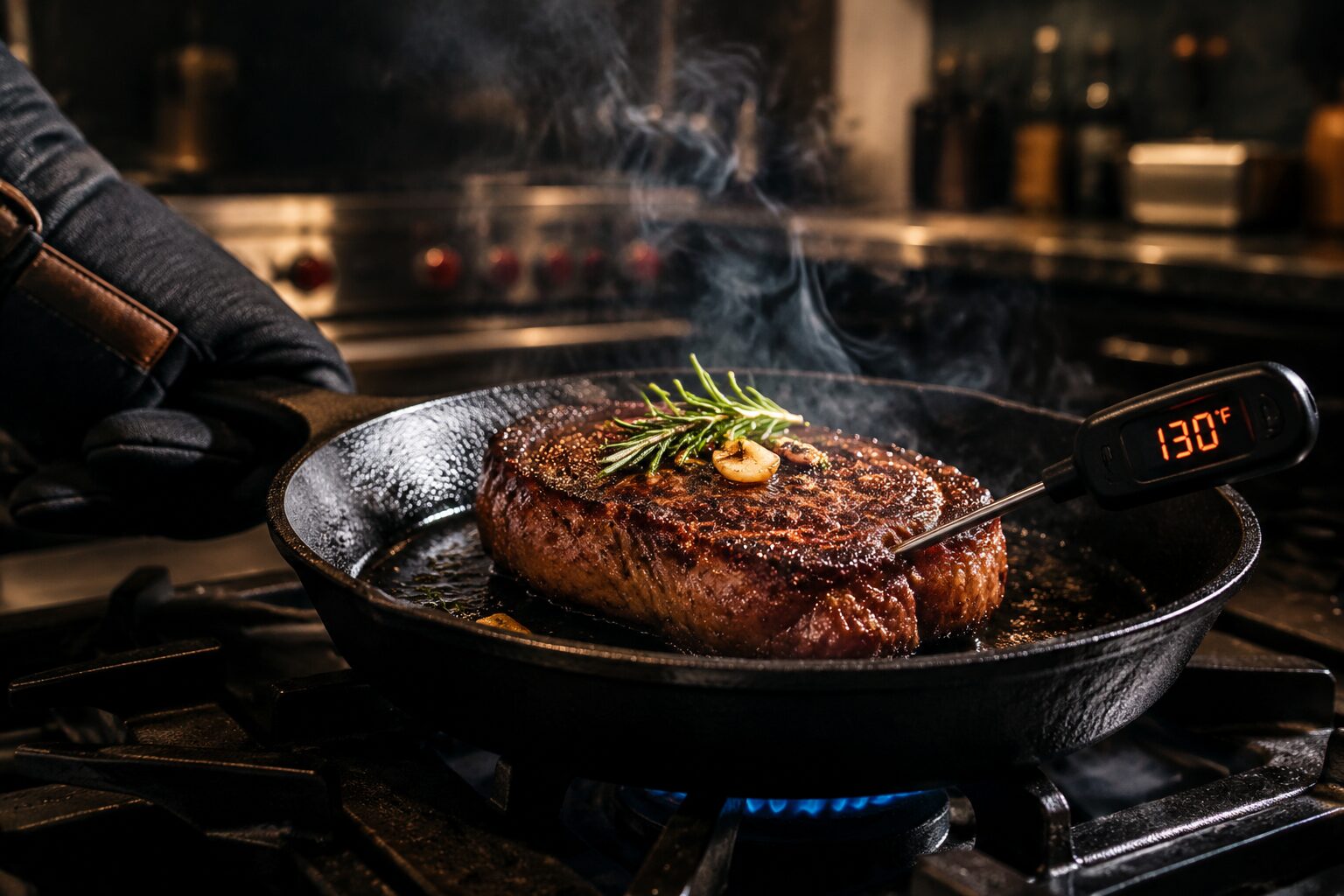
- Preheat the skillet on medium-high heat for 3 to 5 minutes. The pan should be very hot before any oil goes in.
- Add a high smoke-point oil (avocado, grapeseed, or refined coconut oil) and swirl to coat. Avoid olive oil at high heat.
- Place the steak in the pan and do not move it for 2 to 3 minutes. Let the crust form.
- Flip once, then add butter, garlic, and fresh thyme if you want. Baste by tilting the pan and spooning the butter over the steak repeatedly.
- Check internal temperature with a reliable thermometer. For medium-rare, pull at 125°F (it will rise to 130 to 135°F while resting).
- Rest the steak for at least 5 minutes before cutting.
For a complete breakdown of thermometer options, see our guide on the best meat thermometer for steak.
If you want to turn your seared steak into a full meal, our hibachi steak meal prep bowls recipe is a great starting point.
What Kills the Sear: 5 Mistakes to Avoid
A good pan is only half the equation. These are the five most common reasons a cast iron sear fails, even with the right skillet.
- Wet steak surface. Any moisture on the steak creates steam instead of a crust. Pat completely dry with paper towels, both sides, every time.
- Underpowered preheat. Cast iron needs 3 to 5 full minutes on medium-high before the steak goes in. Rushing this is the most common cause of gray, steamed-looking meat instead of a dark crust.
- Overcrowded pan. Two large ribeyes in a 10-inch skillet drop the pan temperature fast enough to stall browning. Keep at least 1 inch of clearance around each steak.
- Wrong oil. Extra-virgin olive oil burns before reaching searing temperature. Use avocado oil (smoke point 520°F), grapeseed oil (420°F), or refined coconut oil (400°F).
- Moving the steak too early. If the steak sticks when you try to flip it, the crust is not done yet. A properly seared steak releases cleanly from the pan. Wait another 30 to 60 seconds and try again.
How to Season and Care for Your Cast Iron Skillet
A well-seasoned cast iron skillet is non-stick, rust-resistant, and gets better with every use. The process is simple but requires consistency.
Initial seasoning (for new or stripped pans):
- Wash the pan once with mild soap and warm water. Dry completely.
- Apply a very thin layer of flaxseed oil or shortening to every surface (inside, outside, handle).
- Place upside down in an oven at 450 to 500°F for 1 hour.
- Let it cool in the oven. Repeat 3 to 5 times for a strong base layer.
Ongoing care:
- Clean with hot water and a stiff brush right after cooking while the pan is still warm.
- Avoid soaking in water or leaving wet.
- Dry on the stovetop over low heat for 1 to 2 minutes after washing.
- Apply a very thin coat of oil after each use and wipe off the excess.
What to avoid:
- Dishwasher: all 5 skillets tested through 3 consecutive dishwasher cycles lost their factory seasoning completely and required full re-seasoning before food would release cleanly. One cycle is enough to strip most of the seasoning layer.
- Prolonged cooking of acidic foods (tomatoes, citrus) in bare cast iron
- Leaving the pan wet or storing without drying fully
For related kitchen prep tools, check out our guide on the best cutting board for meat and vegetables.
Cast Iron vs. Other Pan Types for Steak: A Quick Comparison
Cast iron is not the only option for searing steak, but it is the most practical for most home cooks. Here is how it stacks up.
| Pan Type | Heat Retention | Max Heat | Maintenance | Price Range | Best For |
|---|---|---|---|---|---|
| Cast iron (bare) | Excellent | 500 to 600°F | Medium | $25 to $200 | Thick steaks, searing |
| Enameled cast iron | Good | 500°F | Low | $100 to $220 | Versatile cooking |
| Carbon steel | Very good | 600°F+ | Medium-high | $40 to $120 | Thin steaks, professional use |
| Stainless steel | Fair | 500°F | Low | $50 to $200 | Deglazing, sauces |
| Non-stick | Poor | 400°F max | Very low | $20 to $80 | Eggs, delicate fish |
Carbon steel is worth mentioning as a serious alternative. It heats faster than cast iron, is lighter, and can reach higher temperatures. The tradeoff is that it requires more seasoning care and is less forgiving for beginners.
Frequently Asked Questions
Q: What size cast iron skillet is best for steak?
A 12-inch skillet is the most practical size for steak. It fits one large steak or two smaller ones without crowding, which is important because crowding drops pan temperature and causes steaming instead of searing.
Q: Do I need to season a pre-seasoned cast iron skillet before first use?
Pre-seasoned skillets (Lodge, Victoria) are ready to use, but adding 2 to 3 more seasoning rounds before heavy use builds a stronger non-stick layer and improves performance noticeably.
Q: Can I use a cast iron skillet on an induction cooktop?
Yes. Bare cast iron is magnetic and works on induction cooktops. Most enameled cast iron (including Le Creuset) also works on induction. Always check the manufacturer’s specifications.
Q: How do I know when the cast iron skillet is hot enough to sear steak?
The pan is ready when a drop of water flicked onto the surface evaporates instantly and skitters across the surface (the Leidenfrost effect). This typically happens after 3 to 5 minutes on medium-high heat.
Q: Can I put my cast iron skillet in the oven?
Yes. All bare cast iron skillets are oven-safe. Most are rated to at least 500°F. Avoid silicone handle covers in the oven above 400°F, as they can melt or degrade.
Q: Is Lodge cast iron really as good as more expensive brands?
For everyday searing, yes. The main difference between Lodge and premium brands like Field or Stargazer is surface smoothness and weight. Lodge’s rough surface improves significantly with use, and its heat retention is equal to or better than lighter premium pans.
Q: How long does cast iron last?
With basic care, a cast iron skillet lasts generations. Many cooks still use skillets that are 50 to 100 years old. The key is keeping it dry, seasoned, and away from the dishwasher.
Q: What oil should I use to sear steak in cast iron?
Use a high smoke-point oil: avocado oil (smoke point approximately 520°F), grapeseed oil (approximately 420°F), or refined coconut oil (approximately 400°F). Avoid extra-virgin olive oil, which smokes and burns at searing temperatures.
Q: Can I wash cast iron with soap?
A small amount of mild dish soap occasionally will not ruin a well-seasoned cast iron pan. The old rule against any soap comes from when soaps contained lye, which was harsh on seasoning. Modern dish soap in small amounts is fine for occasional use, but avoid soaking.
Q: What is the best steak to cook in a cast iron skillet?
Ribeye, New York strip, and flat iron steaks all sear beautifully in cast iron. Ribeye is the most forgiving because its fat content keeps it moist even if you slightly overshoot your target temperature.
Which Cast Iron Skillet Should You Buy?
The 5 best cast iron skillets for steak that sear like a steakhouse cover every budget and cooking style, from the affordable Lodge 12-Inch to the premium Stargazer and Field Company options.
Here is the short version of who should buy what:
- Lodge 12-Inch: Best for most home cooks. Affordable, durable, and proven. Start here.
- Stargazer 10.5-Inch: Best if you want a smoother surface and lighter weight without going full premium.
- Field Company No. 10: Best if you prioritize a lightweight pan and cook thinner cuts regularly.
- Le Creuset Signature: Best if you want zero maintenance and plan to cook sauces in the same pan.
- Victoria 12-Inch: Best if you want Lodge-level performance at a slightly lower price.
Your next steps:
- Pick the skillet that fits your budget and cooking style from the list above.
- Season it properly before first use (even if it says pre-seasoned).
- Preheat it fully before adding oil or steak.
- Use a reliable meat thermometer to hit your target doneness every time.
- Once you have the sear down, try building full meals around your steak with recipes like our steak rice bowl or Greek steak bowl meal prep.
A great cast iron skillet is a one-time purchase that pays off every time you cook. Get the right one, learn how to use it, and you will not need to go to a steakhouse to get a great crust.
Written by Maya Carter, meal prep writer and home cook at BeefSteakVeg.
Maya Carter | Editorial Policy | Affiliate Disclosure
Nutrition note: BeefSteakVeg shares general food and meal prep information only. This is not medical or nutritional advice. Always check product labels, ingredients, allergens, serving sizes, prices, and storage instructions before buying or eating packaged foods.