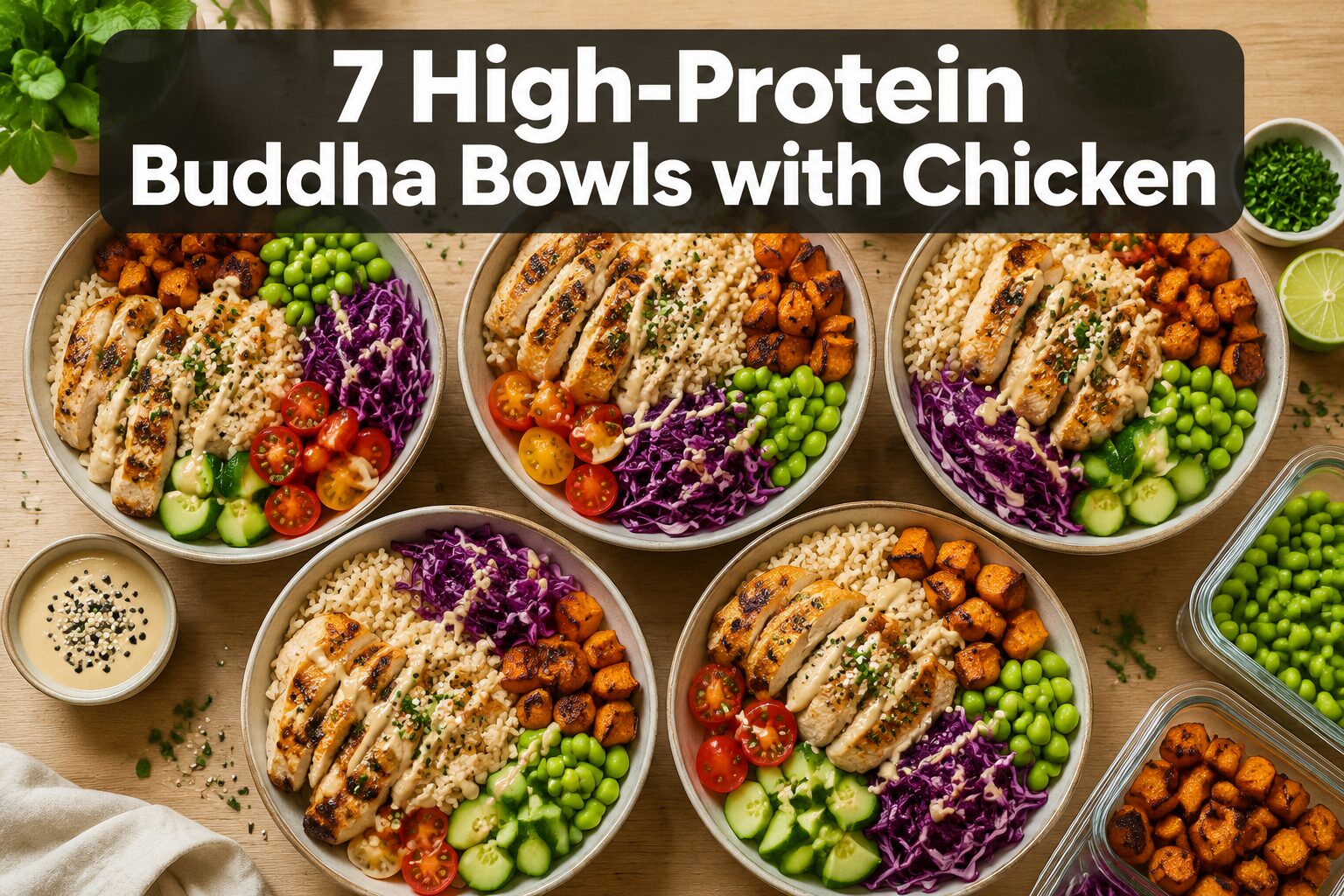
A chicken buddha bowl builds 42 grams of protein per serving from roasted chicken thighs, a grain base, and tahini sauce. You can prep 5 bowls in under 45 minutes; store the components separately and they hold in the fridge for 4 days ready to assemble.
This post contains affiliate links. If you buy through them, I earn a small commission at no extra cost to you.
Table of Contents
- What Makes a Buddha Bowl
- Chicken Buddha Bowl Recipe
- Tahini Sauce Recipe
- Macro Breakdown Per Bowl
- Meal Prep Instructions
- How Long It Keeps
- Buddha Bowl Variations
- Reheating Tips
- Common Mistakes to Avoid
- What This Bowl Costs vs. Eating Out
- FAQ
- Related Articles
What Makes a Buddha Bowl
A buddha bowl has four parts: a grain base, a protein, roasted or raw vegetables, and a sauce. That structure is what makes it ideal for meal prep: each component stores separately and holds its texture through the week.
For this chicken version, the components are: quinoa base, roasted chicken thighs, roasted broccoli and sweet potato, and tahini dressing. Toppings like sesame seeds and shredded red cabbage add texture without any extra prep time. For more bowl builds, check the full collection of protein bowl recipes.
Chicken Buddha Bowl Recipe
This recipe makes 5 servings. Prep time: 15 minutes. Cook time: 28 minutes. Tested in Maya’s kitchen, August 2026.
Ingredients
| Ingredient | Amount | Weight | Notes |
|---|---|---|---|
| Boneless chicken thighs | 2 lbs | 907g | Thighs stay juicier than breast in the fridge |
| Quinoa (dry) | 1.5 cups | 270g | Makes about 3 cups cooked |
| Broccoli florets | 4 cups | ~360g | About 1 large head |
| Sweet potato (diced) | 2 medium | ~400g | Optional; adds ~20g carbs per bowl |
| Tahini | 5 tbsp | 75g | For sauce |
| Lemon juice | 3 tbsp | 45ml | Fresh or bottled |
| Garlic (minced) | 2 cloves | ~10g | For sauce |
| Olive oil | 3 tbsp | 45ml | For roasting |
| Sesame seeds | 2 tbsp | 18g | Topping |
| Red cabbage (shredded) | 1 cup | ~70g | Raw topping, added at serving |
Instructions
- Preheat oven to 400°F. Line two sheet pans with foil or parchment.
- Toss chicken thighs with 2 tbsp olive oil, 1 tsp garlic powder, 1 tsp paprika, salt, and pepper. Spread on one sheet pan in a single layer.
- Toss broccoli florets and diced sweet potato with 1 tbsp olive oil and salt. Spread on the second sheet pan.
- Roast chicken for 25–28 minutes until internal temperature reaches 165°F. Roast vegetables for 20–22 minutes until edges are browned.
- While protein and vegetables roast, rinse 1.5 cups dry quinoa under cold water for 30 seconds. Cook in 3 cups water: bring to a boil, reduce to low, cover, and cook 15 minutes. Fluff with a fork and let cool.
- Make tahini sauce: whisk 5 tbsp tahini, 3 tbsp lemon juice, 2 minced garlic cloves, 3–5 tbsp warm water, and 1/4 tsp salt until smooth and pourable. Adjust water for consistency.
- Let everything cool for 20 minutes before packing into containers.
Tahini Sauce Recipe
This sauce takes 3 minutes to make and keeps in the fridge for 1 week. It thickens as it chills; add 1 tablespoon of warm water and stir before each use.
| Ingredient | Amount |
|---|---|
| Tahini | 5 tbsp |
| Fresh lemon juice | 3 tbsp |
| Garlic (minced) | 2 cloves |
| Warm water | 3–5 tbsp |
| Salt | 1/4 tsp |
| Cumin (optional) | 1/4 tsp |
The ratio that works: 1 part lemon juice to 1.5 parts tahini. Too little lemon and it tastes heavy. Too much water and it goes runny. Whisk until smooth and taste; adjust with salt or lemon.
Macro Breakdown Per Bowl
| Version | Protein | Net Carbs | Fat | Calories |
|---|---|---|---|---|
| Chicken thighs + quinoa + sweet potato | 42g | 58g | 19g | 520 |
| Chicken thighs + quinoa only (no sweet potato) | 42g | 38g | 18g | 470 |
| Chicken thighs + cauliflower rice (low-carb) | 42g | 8g | 18g | 360 |
Swap to cauliflower rice if you’re watching carbs: it saves 30g net carbs per bowl and brings calories down to 360. The tahini sauce and chicken carry the flavor regardless of base. For the full low-carb approach, see the meal prep guide.
Meal Prep Instructions: Store Components Separately
Do not assemble the bowls and pour tahini over them before packing. The sauce soaks into the grains overnight and makes everything soft and mushy by lunch. Store each component in its own container.
What to store separately:
- Cooked quinoa: 1 container, divided into 5 portions
- Roasted chicken thighs: 1 container
- Roasted vegetables: 1 container
- Tahini sauce: 1 small jar or squeeze bottle
- Raw toppings (red cabbage, sesame seeds): 1 small container
In the morning, pack a scoop of quinoa, a piece of chicken, and a portion of vegetables into your lunch container. Pour tahini over the bowl when you’re ready to eat, not an hour before. Stackable meal prep containers make transporting components without mixing much easier.
How Long It Keeps
| Component | Fridge Life | Day 1–2 Quality | Day 3–4 Quality | Day 5+ |
|---|---|---|---|---|
| Roasted chicken thighs | 4 days | Excellent: juicy, full flavor, firm texture | Very good: slightly firmer, drizzle 1 tsp olive oil when packing Day 4 portion to retain moisture | Do not push past Day 4. Freeze the 5th portion on Sunday and thaw Thursday night. |
| Cooked quinoa | 5 days | Fluffy, slightly firm; flavors not yet merged with other components | Peak texture: softened, absorbs dressing flavors well | Still good through Day 5; texture becomes softer but holds in assembled bowls |
| Roasted vegetables | 4 days | Best texture: slight crispness at edges, concentrated roasted flavor | Good: fully tender, flavor deepens, no remaining crispness | Do not go past Day 4. By Day 5 vegetables are too soft to eat standalone; fold into egg scrambles or grain soups instead. |
| Tahini sauce | 7 days | Pourable; shake or stir before using | Thickens considerably in the fridge; add 1 tbsp warm water and stir before each use | Still good through Day 7; flavor mellows slightly after Day 5 |
| Shredded raw cabbage | 4–5 days | Crisp, bright, fresh crunch; best raw texture | Slightly less crisp but still good; color stays vibrant | Still safe through Day 5; texture is softer. Best mixed into the assembled bowl rather than used as a topping. |
Don’t go past day 4 for the chicken. If you’re prepping for 5 full days, freeze Friday’s chicken portion on Sunday and thaw it Thursday night.
Buddha Bowl Variations
This recipe works with other proteins and bases. The tahini sauce pairs well with almost anything:
| Protein Swap | Protein Per Bowl | Notes |
|---|---|---|
| Salmon (baked, 5 oz / 142g) | 38g | Same roast temp; 15 min at 425°F |
| Canned tuna (5 oz / 142g) | 28g | Budget option; drain and season with lemon |
| Hard-boiled eggs (3 large) | 18g + add feta for more | Quick vegetarian option |
| Extra-firm tofu (roasted, 5 oz / 142g) | 18g | Press and bake at 400°F for 25 min |
For a Tex-Mex flavor profile with a similar batch-cook structure, the chicken burrito bowl uses black beans and lime instead of tahini and quinoa.
Reheating Tips
Reheat quinoa and chicken together in the microwave for 90 seconds on high. Add 1 tablespoon of water before microwaving to keep the quinoa from drying out.
Add cold raw toppings (cabbage, sesame seeds, fresh herbs) after heating. Do not microwave tahini sauce. It breaks and separates when heated. Drizzle it cold over the warm bowl right before eating.
Common Mistakes to Avoid
The #1 mistake: Assembling bowls fully before storing. Once tahini hits warm quinoa and sits overnight, the whole thing turns to mush. Always store sauce in a separate small container.
Using cold tahini sauce straight from the fridge. It’s too thick to drizzle. Let it sit out 10 minutes or stir in 1 tablespoon of warm water to loosen it before pouring.
Overcooking the chicken thighs. They’re forgiving, but they dry out past 170°F. Pull at 165°F and rest for 5 minutes. They stay juicy on day 4 if you don’t overdo the heat.
Skipping the quinoa rinse. Unrinsed quinoa tastes bitter from its natural coating. Run it under cold water for 30 seconds before cooking; this one small step makes a noticeable difference in flavor.
What This Bowl Costs vs. Eating Out
Ingredient-level cost for 5 servings, based on Walmart prices verified September 2026.
| Ingredient | Amount Used | Package Price | Cost for This Recipe |
|---|---|---|---|
| Boneless chicken thighs (2 lbs / 907g) | Entire purchase | $5.38 | $5.38 |
| Quinoa dry (1.5 cups / 270g) | ~60% of 12oz bag | $3.99/bag | $2.39 |
| Broccoli (1 large head, ~1.5 lbs) | Entire head | $1.92 | $1.92 |
| Sweet potatoes (2 medium, ~1 lb / 454g) | ~1 lb | $1.18 | $1.18 |
| Tahini (5 tbsp / 75g) | ~30% of 16oz jar | $7.99/jar | $1.50 |
| Olive oil (3 tbsp / 45ml) | ~3% of 16oz bottle | $5.99/bottle | $0.45 |
| Lemon, garlic, spices | Pantry staples | various | ~$0.50 |
| Sesame seeds + red cabbage | Small amounts | various | ~$0.70 |
| Total for 5 servings | ~$14.02 | ||
| Cost per serving | ~$2.80 |
vs. Ordering the Same Bowl Out (September 2026 Prices)
| Where You’d Buy It | Cost Per Bowl | Protein | Notes |
|---|---|---|---|
| Home-prepped (this recipe) | ~$2.80 | 42g | 5 servings in ~50 min active time |
| Sweetgreen Harvest Bowl equivalent | ~$15 | ~36g | In-store Sept 2026; delivery adds $4–6 in fees |
| Chipotle burrito bowl (chicken + grain) | ~$12 | ~38g | Closest mainstream equivalent |
| Local Mediterranean fast-casual bowl | ~$13–15 | ~35–42g | Regional price average |
| Delivery app equivalent bowl | ~$20–24 | ~35g | With delivery fee, service fee, and tip |
5 days of home prep vs. 5 daily restaurant bowls saves roughly $55–$105 per week on this single lunch. Over a month that is $220–$420 back in your pocket on lunch alone.
FAQ
Can I use chicken breast instead of thighs?
Yes. Chicken breast gives more protein (44g per 5oz vs 38g for thighs) but dries out faster in the fridge. If you use breast, pull it from the oven at 163°F, rest covered, slice thin, and store with a small drizzle of olive oil to keep moisture in over 4 days.
How long does a prepped buddha bowl last in the fridge?
Components stored separately last 4–5 days. An assembled bowl with sauce already poured on it lasts 2 days before the base gets soggy. Keep components apart and the whole setup holds for the week.
Is a chicken buddha bowl good for weight loss?
At 42g protein and roughly 470–520 calories per bowl, it fits most calorie targets for lunch or dinner. Swap quinoa for cauliflower rice to bring it down to about 360 calories and cut carbs significantly. High protein at this calorie level keeps you full longer than most lunch options.
Can I freeze these bowls?
Freeze the chicken and quinoa separately: both hold well for up to 3 months. Don’t freeze roasted vegetables (they go mushy when thawed) or tahini sauce (it separates). Prep fresh vegetables each week and pull frozen protein and grains from the freezer to cut Sunday prep time in half.
Related Articles
- Protein Bowl Recipes: the full collection of high-protein bowl builds
- Meal Prep Guide: batch cooking the full week in under 2 hours
- Meal Prep Containers: best options for keeping components separate and leak-free
- Chicken Burrito Bowl: Tex-Mex flavor profile, same batch-cook approach
Written by Maya Carter, meal prep writer and home cook at BeefSteakVeg. Tested in Maya’s kitchen, August 2026.
Maya Carter | Editorial Policy
BeefSteakVeg shares general food and meal prep information only. This is not medical or nutritional advice.