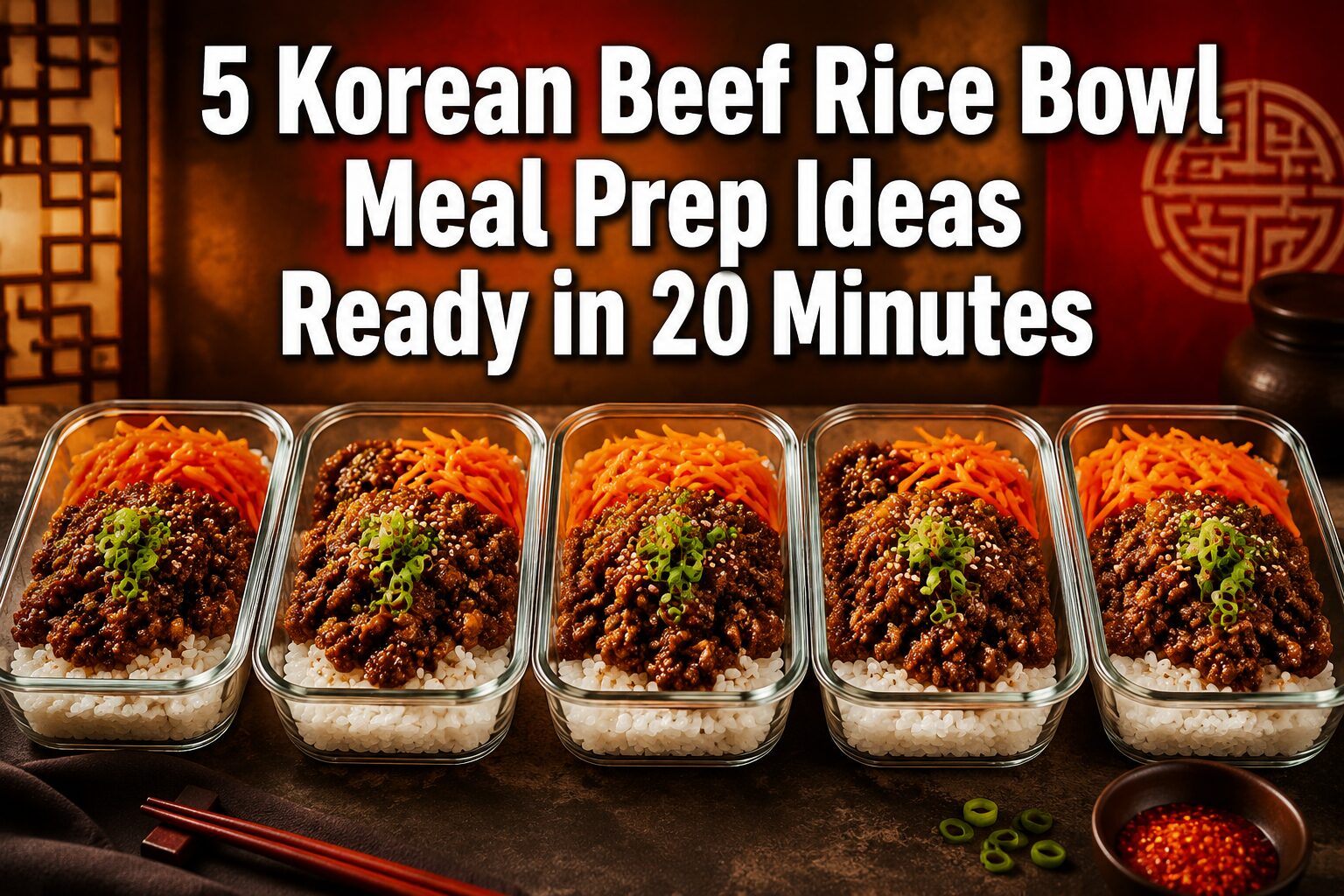
Quick Answer: These 5 Korean beef rice bowl meal prep ideas ready in 20 minutes use ground beef, a simple soy-sesame sauce, and pre-cooked rice to build high-protein, flavor-packed bowls in one skillet. Each variation takes 20 minutes or less from start to container. They store well for 4 to 5 days in the fridge, making them one of the most efficient weekday meal prep options available.
Tested in Maya’s kitchen, July 2026.
Key Takeaways
- All 5 Korean beef rice bowl variations use the same base sauce, so you only need to learn one core recipe.
- Ground beef cooks in 8 to 10 minutes, making this one of the fastest high-protein meal prep proteins.
- Each bowl delivers roughly 35 to 45 grams of protein per serving depending on portion size (estimate based on standard 5 oz ground beef and 1 cup cooked rice).
- The core Korean sauce uses 5 ingredients: soy sauce, sesame oil, garlic, brown sugar, and ginger.
- Bowls store in the fridge for 4 to 5 days and reheat in 2 minutes in the microwave.
- You can swap white rice for cauliflower rice, brown rice, or noodles with no changes to the beef recipe.
- Pre-shredded vegetables and a rice cooker cut total prep time to under 20 minutes consistently.
- Glass meal prep containers keep bowls fresh longer and prevent flavor transfer from sesame oil.
What Makes Korean Beef Rice Bowls Ideal for Meal Prep?
Korean beef rice bowls work for meal prep because the sauce doubles as a marinade and a cooking glaze, so there is no extra step. Ground beef browns fast, absorbs flavor quickly, and reheats without drying out the way chicken breast often does.
The Korean flavor profile, built on soy sauce, sesame oil, garlic, and a touch of sweetness, holds up well after several days in the fridge. The sauce actually deepens in flavor overnight, which means Day 3 often tastes better than Day 1.
Why this works for busy schedules:
- Ground beef is affordable, widely available, and needs no marinating time.
- Rice can be batch-cooked in a rice cooker while the beef cooks on the stovetop.
- The entire workflow fits into a single skillet and one pot, which means less cleanup.
- Toppings like shredded carrots, edamame, or sliced cucumbers require zero cooking.
For more high-protein bowl ideas that follow the same fast-prep logic, check out these high-protein meal prep ideas that work on similar timelines.
The Core Korean Beef Sauce (Used Across All 5 Variations)
Every one of the 5 Korean beef rice bowl meal prep ideas ready in 20 minutes in this guide uses the same base sauce. Learn it once, and all five bowls become easy.
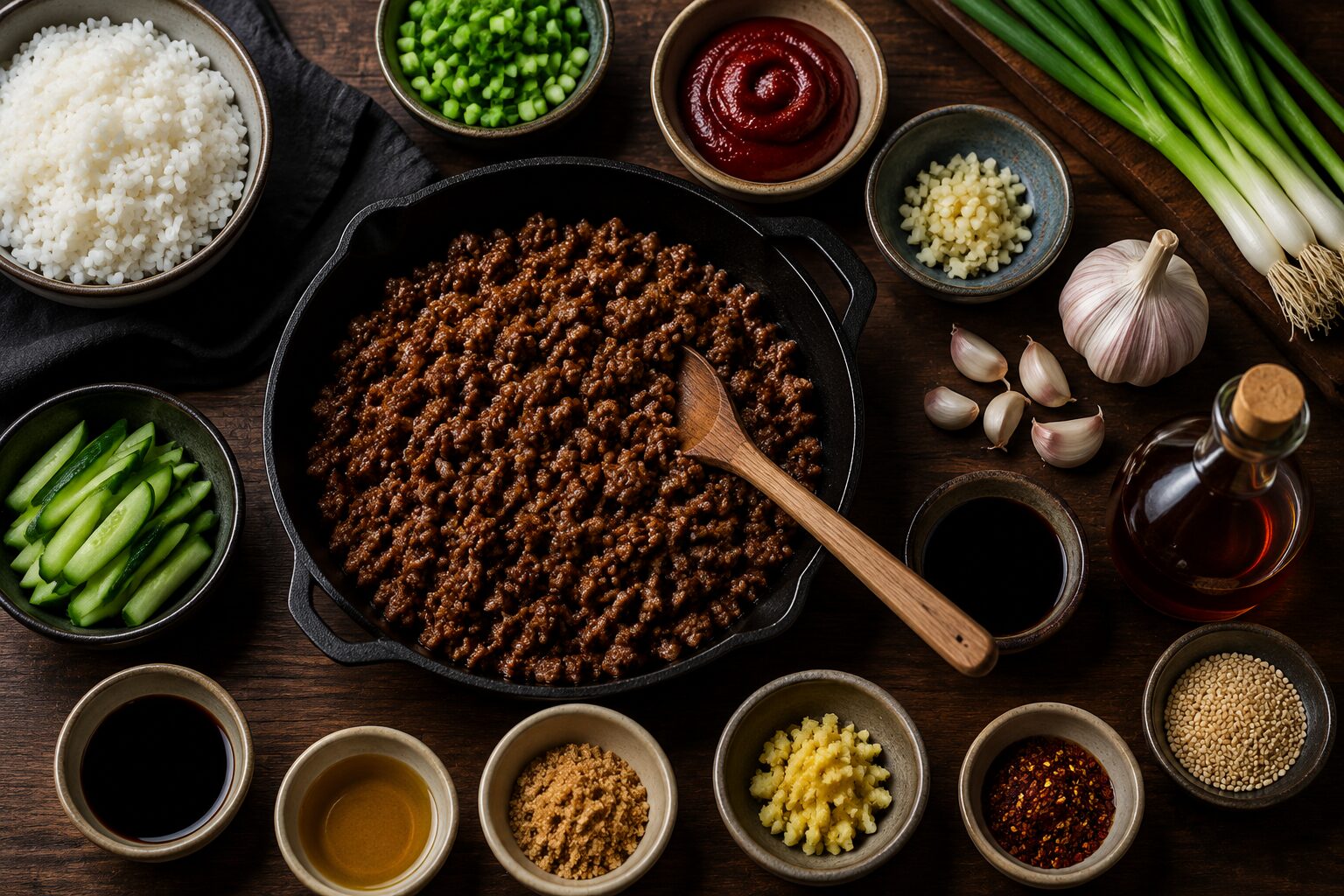
Base sauce (makes enough for 4 servings):
| Ingredient | Amount |
|---|---|
| Low-sodium soy sauce | 3 tablespoons |
| Sesame oil | 1 tablespoon |
| Brown sugar | 2 tablespoons |
| Minced garlic | 3 cloves |
| Fresh grated ginger | 1 teaspoon |
| Gochujang (optional heat) | 1 to 2 teaspoons |
Mix all ingredients in a small bowl before you start cooking. Add it to the browned beef in the last 2 minutes of cooking so the sugars caramelize slightly without burning.
Common mistake: Adding the sauce too early causes the sugar to scorch on high heat. Brown the beef first, drain excess fat, then add the sauce on medium heat.
5 Korean Beef Rice Bowl Meal Prep Ideas Ready in 20 Minutes
Here are the 5 variations. Each one uses the same core sauce and the same beef cooking method. The differences come from toppings, add-ins, and rice substitutions.
All 5 Bowls at a Glance
| Bowl | Protein (estimate) | Net Carbs | Cost per Serving | Prep Time | Best For |
|---|---|---|---|---|---|
| 1. Classic Korean Beef + White Rice | 38-42g | ~55g | ~$2.75-$3.50 | 20 min | Most people, everyday prep |
| 2. Spicy Korean Beef + Kimchi | 38-42g | ~55g | ~$3.00-$3.75 | 22 min | Spice lovers, gut-health focus |
| 3. Korean Beef + Broccoli Bowl | 42-46g | ~50g | ~$2.90-$3.60 | 20 min | Extra fiber, more volume |
| 4. Korean Beef + Fried Egg | 44-48g | ~55g | ~$2.90-$3.60 | 23 min | Higher protein, more satiety |
| 5. Korean Beef + Cauliflower Rice | 40-44g | ~8g | ~$3.25-$4.00 | 22 min | Low-carb, keto-friendly |
All 5 bowls use the same 20-minute base workflow. The only real variables are the carb source and one or two toppings. Bowls 1-4 are nutritionally similar. The big difference is Bowl 5, which cuts net carbs from ~55g to ~8g by swapping white rice for cauliflower rice.
Bowl 1: Classic Korean Beef and Rice
This is the foundation. Ground beef, white jasmine rice, shredded carrots, sliced green onions, and sesame seeds. Nothing complicated, nothing to overthink.
Steps:
- Cook 1.5 lbs (680g) lean ground beef (90/10) in a skillet over medium-high heat for 8 minutes, breaking it up as it cooks. 90/10 ground beef contains approximately 26g of protein per 100g cooked, per USDA FoodData Central — which is why it is the preferred lean cut for protein-focused meal prep.
- Drain excess fat.
- Add the core sauce and cook for 2 more minutes.
- Divide 4 cups cooked jasmine rice across 4 containers.
- Top with beef, shredded carrots, green onions, and a sprinkle of sesame seeds.
Protein per serving (estimate): 38 to 42 grams based on 6 oz cooked beef and 1 cup rice.
For the full recipe with exact macros, see the detailed Korean beef rice bowl meal prep guide.
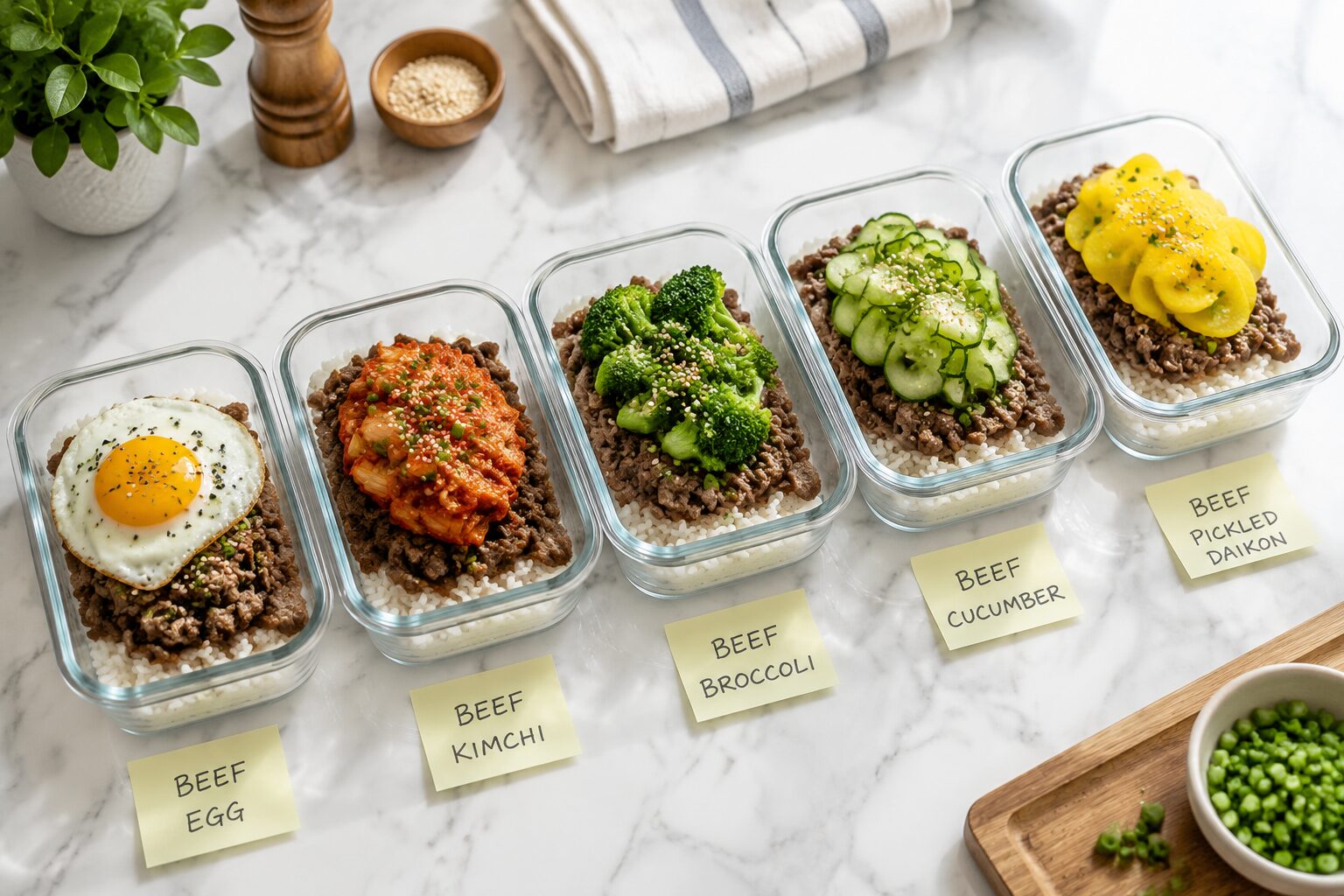
Bowl 2: Spicy Korean Beef with Kimchi
Add 2 teaspoons gochujang to the base sauce and top each bowl with 2 tablespoons of store-bought kimchi. The fermented kimchi adds probiotics and a tangy crunch that contrasts well with the sweet-savory beef.
Note: Add kimchi cold, on top of the assembled bowl, not mixed into the hot beef. This preserves the probiotic cultures and keeps the texture crisp.
Choose this bowl if you want more gut-friendly ingredients and enjoy spicy food. Skip it if you are sensitive to fermented foods or nightshades.
Bowl 3: Korean Beef and Broccoli Bowl
Steam 2 cups of broccoli florets while the beef cooks. Toss the broccoli with 1 teaspoon sesame oil and a pinch of salt before adding it to the container.
This variation adds fiber and volume without adding significant calories. It also mirrors the logic behind beef and broccoli meal prep bowls, which are consistently one of the most popular high-protein prep options.
Time check: Broccoli steams in 5 to 6 minutes in the microwave with 2 tablespoons of water, covered. This runs parallel to the beef cooking, so total time stays under 20 minutes.
Bowl 4: Korean Beef Bowl with Fried Egg
Assemble the classic bowl, then fry 4 eggs (one per container) in the same skillet after the beef is done. A quick wipe of the pan with a paper towel is all the cleanup needed between steps.
Store the fried eggs on top of the beef, not on the rice, to prevent the yolk from making the rice soggy. Reheat the beef and rice first, then add the cold egg and microwave for an additional 30 seconds.
Why add an egg? It adds roughly 6 grams of additional protein per serving and creates a richer, more satisfying bowl with minimal extra effort.
Bowl 5: Korean Beef Cauliflower Rice Bowl (Low-Carb Option)
Swap jasmine rice for 4 cups of cauliflower rice. Cook the cauliflower rice in the same skillet for 4 to 5 minutes with a little sesame oil before the beef goes in, or use pre-cooked frozen cauliflower rice to save time.
This variation cuts net carbs significantly while keeping protein high, making it a strong fit for anyone following a lower-carb eating pattern. For more ideas along these lines, see these high-protein low-carb meal prep options.
Edge case: Cauliflower rice releases moisture as it sits in the fridge. To prevent a watery bowl, pat it dry with a paper towel after cooking and let it cool completely before sealing the container.
Cost Breakdown: Classic Korean Beef Bowl (4 Servings)
| Ingredient | Amount | Approximate Cost |
|---|---|---|
| 90/10 ground beef (1.5 lbs) | 680g | ~$8.49 |
| Jasmine rice (dry, 2 cups) | 370g | ~$0.90 |
| Low-sodium soy sauce | 3 tbsp | ~$0.25 |
| Sesame oil | 1 tbsp | ~$0.40 |
| Brown sugar | 2 tbsp | ~$0.10 |
| Garlic (3 cloves) | – | ~$0.20 |
| Carrots, green onions, sesame seeds | – | ~$1.00 |
| Total (4 servings) | ~$11.34 | |
| Per serving | ~$2.84 |
At $2.84 per serving, this bowl costs roughly 85% less than an equivalent takeout order (~$14-18 at a Korean restaurant). You also control sodium, which typically runs 900-1,200mg in restaurant bibimbap vs. ~420mg in this version.
How to Prep All 5 Bowls in Under 20 Minutes
Completing all 5 Korean beef rice bowl meal prep ideas ready in 20 minutes in a single session requires a parallel workflow, not a sequential one.
Step-by-step prep timeline:
- Minutes 0 to 2: Start the rice cooker with 2 cups dry rice (yields roughly 4 cups cooked). If using cauliflower rice, skip this step.
- Minutes 2 to 4: Mix the core sauce in a small bowl. Set aside.
- Minutes 4 to 12: Brown 1.5 lbs ground beef in a large skillet over medium-high heat.
- Minutes 8 to 13: While beef cooks, steam broccoli in the microwave (for Bowl 3) and prep toppings: shred carrots, slice green onions, measure kimchi.
- Minutes 12 to 14: Drain beef fat, add sauce, cook 2 more minutes.
- Minutes 14 to 18: Assemble all containers with rice and beef. Add toppings per variation.
- Minutes 18 to 20: Fry eggs (for Bowl 4), seal containers, label with date.
Tools that help:
- A rice cooker (hands-free cooking)
- Pre-shredded carrots from the bag
- A best vegetable chopper for meal prep if you prefer fresh vegetables
- Glass meal prep containers with locking lids (see best glass meal prep containers)
Storage, Reheating, and Food Safety
All 5 Korean beef rice bowl variations store safely in the fridge for 4 to 5 days when kept in airtight containers at or below 40°F (4°C), per USDA food safety guidelines.
Storage tips:
- Cool beef completely before sealing containers. Sealing hot food traps steam and makes rice mushy.
- Store kimchi separately and add it cold at serving time.
- Keep fried eggs on top of the beef layer, not buried under rice.
- Label each container with the prep date.
Reheating:
- Remove the lid and microwave on high for 2 minutes, stirring halfway through.
- If the bowl seems dry, add 1 tablespoon of water before reheating to restore moisture.
- For the cauliflower rice bowl, reheat for 90 seconds to avoid overcooking.
Freezer option: The beef mixture (without rice or toppings) freezes well for up to 3 months. Thaw overnight in the fridge, then reheat and assemble fresh bowls. Rice does not freeze as well in assembled bowls because it becomes grainy after thawing.
Storage Quality by Day: Korean Beef Rice Bowls
Day 1: The beef is at its juiciest and the sauce hasn’t fully absorbed into the rice yet. This is actually the least flavorful day.
Day 2-3: The sesame-soy sauce has soaked into the rice and the garlic deepens. This is the best eating window for Korean beef bowls. The beef reheats evenly and stays moist.
Day 4: Rice starts to firm up slightly around the edges of the container. Add 1 tablespoon of water before microwaving. The beef is still good.
Day 5: Still safe to eat if stored properly below 40°F, but texture quality noticeably declines. Reheat with sauce (a teaspoon of soy sauce + water) to revive moisture.
Kimchi (Bowl 2): Add kimchi fresh at eating time on each day. Never store kimchi mixed into the hot bowl. It loses its crunch and probiotic cultures die above 115°F.
Korean Beef vs. Takeout: The Real Cost and Protein-Per-Dollar Comparison
A standard Korean beef bowl at a fast-casual restaurant runs $14 to $18 and typically contains 900 to 1,200mg of sodium, based on menu data from common Korean-American chain restaurants (July 2026). This homemade version costs $2.84 per serving and contains approximately 420mg of sodium using low-sodium soy sauce.
| Metric | Homemade Korean Beef Bowl | Restaurant Equivalent |
|---|---|---|
| Cost per serving | ~$2.84 | $14–$18 |
| Sodium per serving | ~420mg (low-sodium soy sauce) | 900–1,200mg |
| Protein per serving | 38–42g | 25–35g (smaller portions) |
| Protein per dollar | ~14g/$ | ~2–3g/$ |
| Prep time | 20 minutes | 0 minutes (but travel/wait time) |
| Weekly savings (5 lunches) | — | $55–$75 saved |
Restaurant prices based on standard menu pricing at Korean-American fast-casual chains, July 2026. Homemade sodium calculated from recipe ingredients using USDA FoodData Central data.
What to Serve With Korean Beef Rice Bowls
The bowls are complete meals on their own, but a few simple additions make them feel more varied across the week.
- Miso soup: Quick from a packet, adds warmth and sodium balance.
- Pickled cucumbers: Slice thin, toss with rice vinegar and a pinch of salt. Ready in 5 minutes.
- Edamame: Frozen, microwaved, salted. Adds 8 grams of plant protein per half cup.
- Seaweed snacks: Low calorie, high flavor, pairs naturally with Korean seasoning.
If you want to rotate proteins across the week, Korean chicken bowl meal prep uses the same sauce profile with chicken thighs and works as a direct swap.
Common Mistakes to Avoid
Even a simple recipe has a few places where things go wrong. Here are the most common issues and how to fix them.
The #1 mistake: Using high-fat ground beef without draining.
80/20 ground beef produces a lot of fat. If you do not drain it before adding the sauce, the bowl becomes greasy and the sauce does not stick properly. Use 90/10 for cleaner results, or drain thoroughly.
2. Overcooking the rice
Mushy rice does not reheat well. Cook rice with slightly less water than the package suggests if you plan to meal prep it. A ratio of 1 cup rice to 1.75 cups water works well for jasmine rice.
3. Adding cold toppings to hot containers before sealing
This creates condensation inside the container, which softens toppings and promotes faster spoilage. Let everything cool to room temperature before sealing.
4. Skipping the sesame oil
Sesame oil is the flavor anchor of Korean beef. Substituting vegetable oil produces a flat, one-dimensional sauce. It is worth keeping a bottle in the pantry.
FAQ
How long do Korean beef rice bowls last in the fridge?
Properly stored in airtight containers at or below 40°F, Korean beef rice bowls last 4 to 5 days in the refrigerator.
Can I use ground turkey instead of ground beef?
Yes. Ground turkey works with the same sauce. The flavor is lighter and less rich, but the bowl is still satisfying. Cook turkey to an internal temperature of 165°F.
Is this recipe gluten-free?
Not by default. Soy sauce contains wheat. Swap regular soy sauce for tamari or a certified gluten-free soy sauce to make all 5 bowls gluten-free.
Can I freeze assembled Korean beef rice bowls?
Freeze the beef mixture only. Assembled bowls with rice do not freeze and reheat well because rice becomes dry and grainy. Store beef separately and cook fresh rice when ready to eat.
What rice works best for these bowls?
Jasmine rice is the most common choice for Korean-style bowls because it is slightly sticky and holds sauce well. Short-grain white rice also works. Brown rice adds fiber but takes longer to cook.
How do I keep the bowls from getting soggy?
Cool all components before sealing, store wet toppings like kimchi separately, and avoid adding sauces directly onto the rice layer. Place beef on top of rice rather than mixing them together.
Can I make this dairy-free?
All 5 variations are already dairy-free. The core sauce contains no dairy ingredients.
What is gochujang and where do I find it?
Gochujang is a Korean fermented chili paste. It adds heat, depth, and a slight sweetness. Find it in the Asian foods aisle of most grocery stores or at any Asian market.
How much does one week of Korean beef rice bowl meal prep cost?
A rough estimate for 4 servings: 1.5 lbs of 90/10 ground beef (around $8 to $10), 2 cups dry rice (around $1), and pantry sauce ingredients (around $2 to $3 amortized). Total comes to approximately $11 to $14 for 4 meals, or $2.75 to $3.50 per serving. Prices vary by region and store.
Do I need a special pan for this recipe?
No. A standard 12-inch skillet works well. A cast iron skillet gives better browning on the beef if you have one. See best cast iron skillet for steak for recommendations that also work for ground beef.
These 5 Korean beef rice bowl meal prep ideas ready in 20 minutes solve the most common weekday meal problem: needing something fast, filling, and actually worth eating. The one-sauce system keeps things simple. The parallel cooking workflow keeps things fast. And the variety across 5 bowls means you will not be eating the exact same thing every day.
Your next steps:
- Make the core sauce tonight and store it in a jar in the fridge. It keeps for 1 week.
- Pick 2 or 3 of the 5 variations for your first prep session.
- Grab airtight glass containers if you do not already have them. They make a real difference in freshness.
- Set a 20-minute timer on your first prep day to see how the workflow actually feels.
- Rotate proteins across the week using Korean chicken bowl meal prep or salmon rice bowl meal prep to keep meals interesting.
For a full week of structured eating, the 7-day high-protein meal prep plan gives you a complete framework to build around these bowls.
Written by Maya Carter, meal prep writer and home cook at BeefSteakVeg. Tested in Maya’s kitchen, July 2026.
Maya Carter | Editorial Policy | Affiliate Disclosure
Nutrition note: BeefSteakVeg shares general food and meal prep information only. This is not medical or nutritional advice. Always check product labels, ingredients, allergens, serving sizes, prices, and storage instructions before buying or eating packaged foods.
References
- USDA Food Safety and Inspection Service. (2023). Safe Minimum Internal Temperature Chart. https://www.fsis.usda.gov/food-safety/safe-food-handling-and-preparation/food-safety-basics/safe-temperature-chart
- USDA Food Safety and Inspection Service. (2023). Refrigeration and Food Safety. https://www.fsis.usda.gov/food-safety/safe-food-handling-and-preparation/food-safety-basics/refrigeration
- USDA FoodData Central. (2023). Ground beef, 90% lean / 10% fat, raw. https://fdc.nal.usda.gov