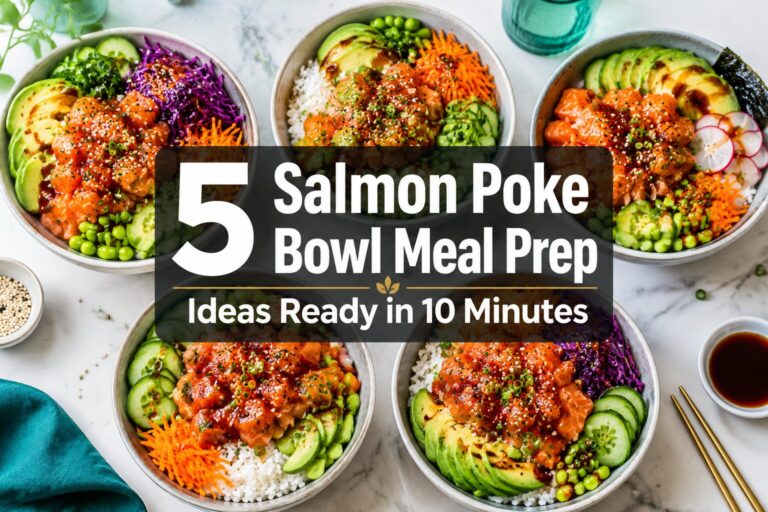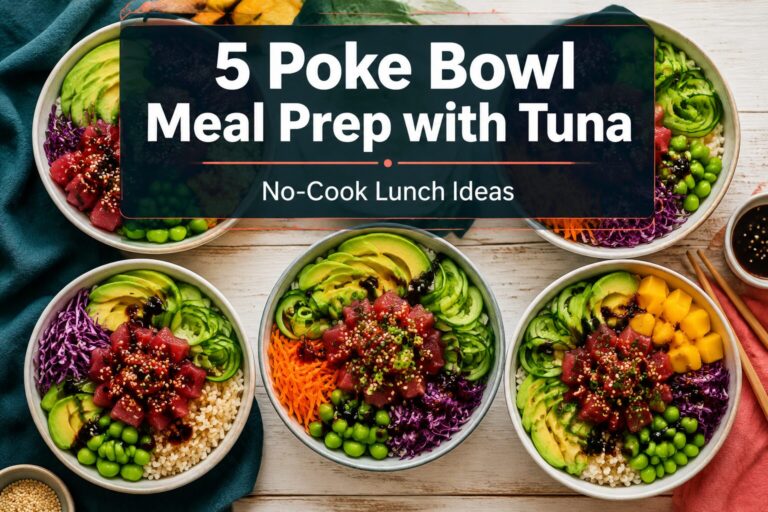
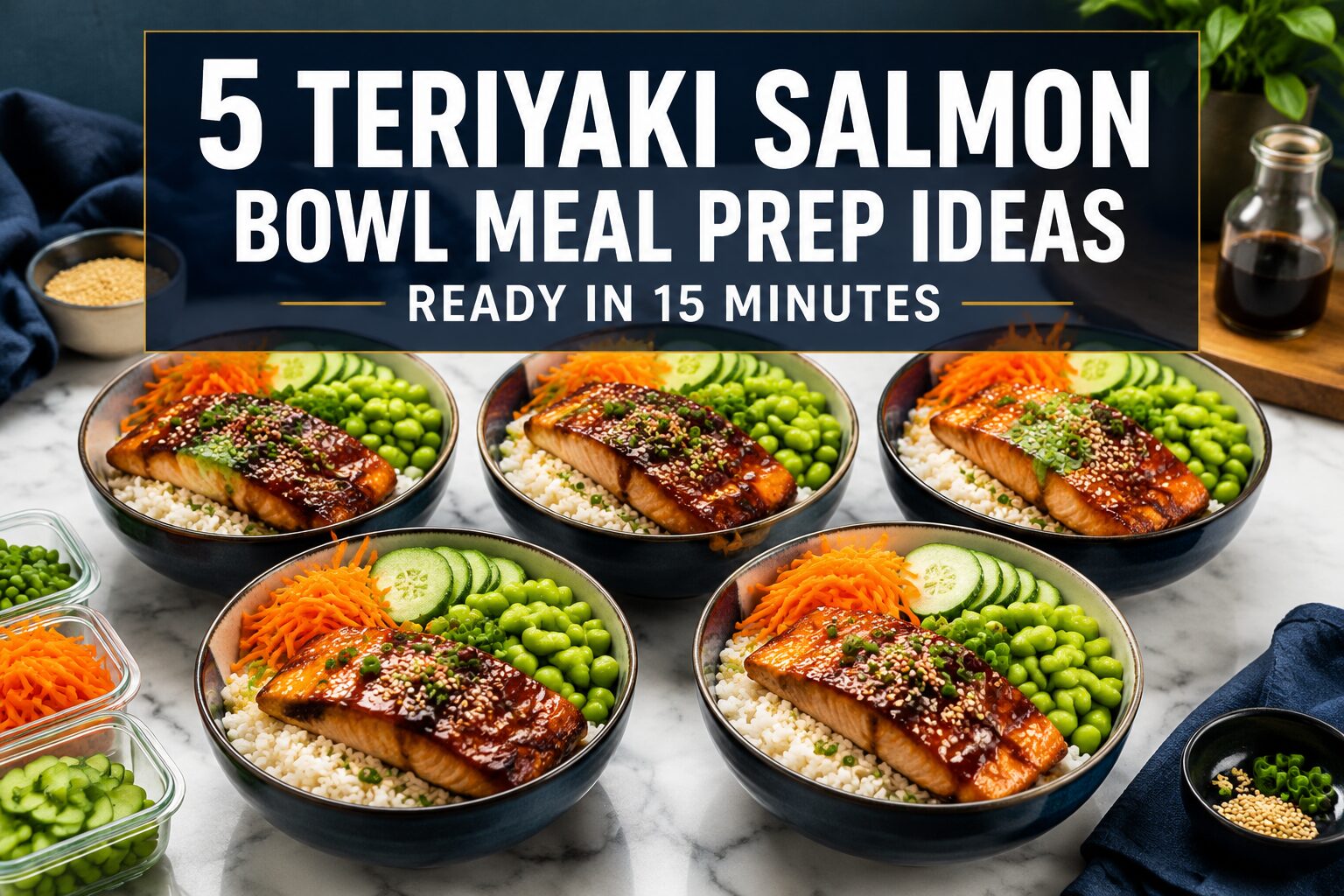
Quick Answer
You can prep 5 distinct teriyaki salmon bowls in 15 minutes or less by using pre-cooked rice, a simple 3-ingredient teriyaki glaze, and a hot skillet or air fryer. Each bowl stores in the fridge for up to 4 days, making them a reliable high-protein lunch or dinner for the full work week. The key is building variety through toppings and bases, not by changing the cooking method every time. Protein data: a 5oz cooked Atlantic salmon fillet (frozen, thawed) delivers 36g protein and 220 calories. Wild-caught vs. farmed makes no meaningful difference in protein content per gram, though wild-caught averages 15 to 20% less total fat.
Tested in Maya’s kitchen, July 2026. Protein values from USDA FoodData Central for cooked portions. Costs based on frozen Atlantic salmon at ~$7/lb, mid-2026 grocery prices.
Key Takeaways
- 5 teriyaki salmon bowl meal prep ideas ready in 15 minutes are achievable when you batch-cook rice and glaze ahead of time. The 15-minute window assumes rice is already cooked. Starting rice from scratch adds 40 to 45 minutes to the session.
- A salmon fillet cooks in 6 to 8 minutes in a skillet on medium-high heat, or 8 to 10 minutes in an air fryer at 400°F.
- Each bowl delivers roughly 35 to 44 grams of protein depending on the build, at 280 to 560 calories per serving.
- Store assembled bowls in airtight containers for up to 4 days in the fridge. Keep sauce separate to avoid sogginess.
- Frozen salmon fillets work well here. Thaw overnight in the fridge or use the cold-water method for 30 minutes.
- The 5 bowl variations below differ by base, toppings, and sauce style so you won’t eat the same meal twice.
- Reheating tip: microwave on 50% power for 90 seconds to avoid drying out the salmon.
- Cost per bowl: ~$3.50 to $3.80 using frozen salmon and pantry staples, versus $13 to $22 at a restaurant or on delivery.
Why Teriyaki Salmon Is Perfect for Weekly Meal Prep
Teriyaki salmon is one of the most efficient high-protein meal prep proteins you can cook. A 5 oz salmon fillet takes less than 10 minutes to cook, holds up well in the fridge, and reheats without turning rubbery the way chicken breast sometimes does.
The teriyaki glaze does two jobs at once: it adds flavor and creates a light caramelized coating that seals in moisture during storage. That means your Day 4 bowl still tastes close to your Day 1 bowl, which is the whole point of meal prep.
Salmon is also one of the few proteins that tastes good cold, so you can eat these bowls straight from the fridge if you’re short on time at lunch.
Who this works for:
- Busy adults who want a high-protein lunch ready in under 15 minutes of active prep
- Beginners who find chicken breast boring or dry
- Anyone tracking protein who wants a filling bowl without counting complicated macros
Who might want a different approach:
- People with fish allergies (swap salmon for chicken thighs with the same glaze)
- Anyone who dislikes reheated fish at work (these bowls are better eaten at home or cold)
What You Need Before You Start
Getting 5 teriyaki salmon bowl meal prep ideas ready in 15 minutes depends almost entirely on having a few things prepped or purchased in advance. The 15-minute window assumes your rice is already cooked.
The core shopping list
| Item | Quantity for 5 bowls | Approx. Cost | Notes |
|---|---|---|---|
| Salmon fillets (frozen) | 5 x 5 oz fillets (~1.9 lb raw) | ~$13.30 | Frozen at $7/lb beats fresh on cost |
| Cooked rice (white, brown, or cauliflower) | 5 cups | ~$0.45 | Microwave pouches at $1.49 also work |
| Low-sodium soy sauce | ¼ cup | ~$0.30 | Or tamari for gluten-free |
| Honey | 2 tbsp | ~$0.20 | Maple syrup works too |
| Sesame oil | 1 tsp | ~$0.08 | Adds depth; skip if you don’t have it |
| Toppings (edamame, cucumber, etc.) | Varies by bowl | ~$3.25 total | See bowl breakdown below |
| Total for 5 bowls | ~$17.58 | ~$3.52 per bowl |
The 3-ingredient teriyaki glaze (quick version)
Mix ¼ cup soy sauce, 2 tbsp honey, and 1 tsp sesame oil in a small bowl. Add minced garlic or fresh ginger if you want more depth. This glaze takes 2 minutes to make and stores in the fridge for up to 1 week.
“The glaze is the shortcut. Make it once, use it all week, and every bowl tastes intentional.”
5 Bowls at a Glance: Macros and Cost Per Serving
All values based on a 5 oz cooked salmon fillet plus each bowl’s specific base and toppings as listed below. Calorie and macro estimates from USDA FoodData Central, July 2026. Cost per bowl assumes frozen Atlantic salmon at $7/lb and pantry staples at standard grocery prices.
| Bowl | Base | Est. Protein | Est. Calories | Carbs | Fat | Cost/Bowl |
|---|---|---|---|---|---|---|
| 1. Classic White Rice | 1 cup white rice | ~44g | ~525 cal | ~63g | ~13g | ~$3.50 |
| 2. Brown Rice + Avocado | 1 cup brown rice | ~40g | ~560 cal | ~58g | ~21g | ~$3.80 |
| 3. Cauliflower Rice (Low-Carb) | 1 cup cauliflower rice | ~35g | ~280 cal | ~17g | ~9g | ~$3.55 |
| 4. Soba Noodle Bowl | 1 cup cooked soba | ~41g | ~490 cal | ~56g | ~11g | ~$3.65 |
| 5. Quinoa + Mango Tropical | 1 cup quinoa + ½ cup mango | ~39g | ~475 cal | ~57g | ~13g | ~$3.75 |
Choose Bowl 3 (cauliflower rice) if you’re cutting carbs or need calories under 300 per meal. Choose Bowl 1 or Bowl 4 if you need sustained energy through a long afternoon. The protein difference between bowls is small (35–44g) because all 5 use the same salmon fillet: what changes is the calorie load from the base.
The 5 Teriyaki Salmon Bowl Meal Prep Ideas Ready in 15 Minutes
Here are 5 distinct bowl builds. Each one uses the same cooked salmon and teriyaki glaze, but the base and toppings create a completely different eating experience.
Bowl 1: Classic White Rice Teriyaki Bowl
Base: 1 cup steamed white rice
Toppings: Shelled edamame, shredded carrots, sliced cucumber, sesame seeds, green onions
Sauce: 1 tbsp teriyaki glaze drizzled on top at serving
This is the most crowd-pleasing version. White rice absorbs the glaze well and keeps the bowl filling. Add a soft-boiled egg (cook in 7 minutes in boiling water) for an extra 6 grams of protein.
The #1 mistake with this bowl: Pouring sauce directly onto the rice before sealing the container. By Day 3, the rice is waterlogged and the teriyaki flavor has diluted into mush. Always store extra sauce in a small side container and add it fresh when eating.
Bowl 2: Brown Rice and Avocado Power Bowl
Base: 1 cup cooked brown rice
Toppings: Sliced avocado (add fresh, not prepped), shredded purple cabbage, pickled ginger, black sesame seeds
Sauce: 1 tbsp teriyaki glaze plus a squeeze of lime
Brown rice adds fiber and a nuttier flavor that pairs well with avocado. The lime cuts through the sweetness of the glaze. Avocado should be added fresh at serving time, not during prep, because it browns quickly.
Choose this bowl if you want more fiber and healthy fats in your meal prep rotation.
Bowl 3: Cauliflower Rice Low-Carb Bowl
Base: 1 cup riced cauliflower (fresh or frozen, microwaved for 3 minutes)
Toppings: Snap peas, shredded carrots, sliced radishes, a drizzle of sriracha
Sauce: 1 tbsp teriyaki glaze
This version cuts the carbs significantly without losing the satisfying bowl format. Cauliflower rice holds up better in meal prep than most people expect, especially when you let it cool completely before sealing the container.
Edge case: Frozen cauliflower rice releases more water than fresh. Pat it dry with a paper towel after microwaving to keep the bowl from getting watery by Day 2.
Bowl 4: Noodle Bowl with Soba
Base: 1 cup cooked soba noodles (cook in 5 minutes, rinse in cold water)
Toppings: Thinly sliced cucumber, shredded nori, sesame seeds, green onions
Sauce: 1.5 tbsp teriyaki glaze mixed with 1 tsp rice vinegar
Soba noodles add a different texture and a slightly nutty flavor. They’re also a good source of complex carbs. Rinsing them in cold water after cooking stops them from sticking together in the container.
Common mistake: Skipping the rinse. Soba noodles clump badly if stored without rinsing. Toss them lightly in ½ tsp sesame oil before storing to keep strands separate through Day 4.
Bowl 5: Quinoa and Mango Tropical Bowl
Base: 1 cup cooked quinoa
Toppings: Diced mango (fresh or thawed frozen), sliced avocado (add fresh), cucumber, red onion, cilantro
Sauce: 1 tbsp teriyaki glaze plus a squeeze of fresh lime
This bowl stands out because the mango adds natural sweetness that balances the salty glaze. Quinoa also adds a small protein boost on top of the salmon. This is the most colorful bowl of the five and holds up well for 3 to 4 days in the fridge.
Choose this bowl if you want something that feels less meal-prep routine and more like a restaurant dish.
How to Cook the Salmon in Under 10 Minutes
The salmon is the one step that requires active cooking. Here are two reliable methods.
Skillet method (fastest)
- Pat salmon fillets dry with a paper towel.
- Season with salt, pepper, and a light brush of the teriyaki glaze.
- Heat a non-stick skillet over medium-high heat. Add 1 tsp neutral oil.
- Place fillets skin-side down. Cook for 4 minutes without moving them.
- Flip. Brush with more glaze. Cook for another 3 to 4 minutes.
- Remove from heat. Internal temperature should reach 145°F (USDA food safety guideline).
Air fryer method (hands-off)
- Preheat air fryer to 400°F for 3 minutes.
- Brush fillets with teriyaki glaze.
- Place in the basket skin-side down. Do not overlap.
- Crowding warning: stacking or overlapping fillets drops the basket temperature by 25 to 30°F at the basket floor, adding 3 to 4 minutes of cook time and preventing the teriyaki glaze from caramelizing on the bottom fillet. If prepping all 5 bowls at once, cook in two batches of 2 to 3 fillets.
- Cook for 8 to 10 minutes depending on thickness. A 1-inch fillet needs 9 to 10 minutes; a ¾-inch fillet needs 7 to 8 minutes.
- Check internal temp with a meat thermometer. Target 145°F.
Both methods work equally well for meal prep. The air fryer is slightly more hands-off, which is helpful when you’re assembling bowls at the same time. For more air fryer salmon timing and temperature tips, see our air fryer salmon meal prep guide.
Teriyaki Salmon Bowl vs. Restaurant: Is It Worth Making at Home?
Prices from restaurant chains and delivery apps, July 2026. Home prep costs use the ingredient breakdown above (frozen Atlantic salmon at $7/lb).
| Source | Cost Per Bowl | Protein (est.) | Salmon Portion | Notes |
|---|---|---|---|---|
| This recipe (home prep) | ~$3.52 | ~44g | 5 oz cooked | Frozen salmon, pantry glaze, full portion |
| Sweetgreen Teriyaki Salmon Bowl | ~$15.95 | ~28–32g | ~3–4 oz | July 2026 dine-in price |
| Pokeworks Teriyaki Bowl | ~$13.50 | ~28–32g | ~3–4 oz | Poke-style, smaller salmon portion |
| Local teriyaki shop (average) | ~$14.00 | ~32–38g | ~4–5 oz | Varies significantly by location |
| DoorDash local spot | ~$19–22 | ~32–38g | ~4–5 oz | Includes delivery fee and tip |
Weekly savings for 5 bowls: ~$52 to $93 versus ordering out. Over a full year of weekly prep, that’s $2,700 to $4,800 saved compared to restaurant or delivery teriyaki salmon bowls, with a larger salmon portion in every bowl you make at home.
Storage, Reheating, and Food Safety
Proper storage is what separates a good meal prep from a disappointing one by Day 4.
Storage rules
- Use airtight glass or BPA-free plastic containers with flat lids so bowls stack in the fridge.
- Store teriyaki sauce separately in a small container or silicone cup inside the bowl.
- Cooked salmon keeps in the fridge for 3 to 4 days (USDA recommendation).
- Do not freeze assembled bowls. The rice and toppings change texture badly after freezing.
Day-by-Day Storage Quality: What to Expect From Each Bowl
Tested in Maya’s kitchen, July 2026. All bowls stored in 32 oz glass containers at 38°F, sauce separated into 2 oz condiment cups.
| Bowl | Day 1 | Day 3 | Day 4 | Prep Note |
|---|---|---|---|---|
| Bowl 1: White Rice | Peak. Salmon tender, rice fluffy. | Good. Rice firms slightly; add 1 tsp water before microwaving. | Acceptable. Salmon smell develops; a squeeze of lemon refreshes it. | Best eaten by Day 3 for peak texture. |
| Bowl 2: Brown Rice + Avocado | Peak. Bright, nutty, satisfying. | Good. Brown rice holds better than white; less sticky. | Good. Still solid. Add avocado fresh at Day 3 and Day 4. | Most durable rice-based bowl of the five. |
| Bowl 3: Cauliflower Rice | Good. Slightly softer than freshly assembled. | Good. Cauliflower absorbs less glaze than rice; flavor stays clean. | Acceptable. Some water release; drain before eating. | Pat cauliflower dry before assembling to reduce water release. |
| Bowl 4: Soba Noodles | Peak. Nutty, chewy, bright. | Good. Noodles absorb glaze flavor; toss with a few drops of sesame oil before eating. | Acceptable. Noodles soften noticeably but remain palatable. | Toss noodles in sesame oil at assembly; prevents clumping through Day 4. |
| Bowl 5: Quinoa + Mango | Peak. Brightest flavor of all five bowls. | Peak. Mango softens the glaze further; actually improves. | Good. Mango softens slightly but holds flavor well. | Best 4-day bowl. Quinoa is more stable than white rice; mango improves with time in the glaze. |
Reheating tips
- Microwave on 50% power for 90 seconds. Full power dries out the salmon fast.
- Add a small splash of water (1 tsp) over the rice before microwaving to restore moisture.
- Bowls 3 and 5 can be eaten straight from the fridge. No reheating needed.
Food safety note
Always check that your salmon reaches an internal temperature of 145°F during cooking. If you’re using frozen salmon, make sure it’s fully thawed before cooking. Partially frozen fillets cook unevenly and may not reach safe internal temps in the center.
What Doesn’t Work: 3 Teriyaki Salmon Prep Mistakes
The #1 mistake: Overcooking the salmon. Salmon goes from perfectly moist to dry in about 90 extra seconds of cook time. At 145°F the flesh flakes easily and stays tender. At 155°F it’s noticeably drier. At 165°F it’s chalky. Use a meat thermometer, pull at 145°F, and let it rest 2 minutes off heat before assembling bowls. The carryover heat lands it at exactly the right texture, and Day 3 reheating will be noticeably better.
Mistake 2: Storing sauce on the rice. Even 1 tbsp of teriyaki glaze absorbed into white rice overnight turns the texture from fluffy to dense. By Day 3 it tastes more like a soggy noodle dish. Always keep sauce in a 2 oz condiment cup inside the container and add it fresh at serving time. This also lets you adjust sweetness or saltiness across the week without being locked into Sunday’s ratios.
Mistake 3: Not cooling food before sealing. Hot food in a sealed container creates condensation that speeds up spoilage and softens any crispy elements. Let bowls cool at room temperature for 10 to 15 minutes before putting the lid on. Salmon stored this way holds its texture noticeably better on Day 3 and Day 4.
FAQ
How long does teriyaki salmon last in the fridge?
3 to 4 days in an airtight container, per USDA food safety guidelines. For best texture, eat within 3 days. Bowl 5 (quinoa and mango) holds closest to peak quality through Day 4 of all five variations.
Can I use frozen salmon for these bowls?
Yes. Thaw overnight in the fridge or submerge in cold water for 30 minutes. Pat completely dry before cooking so the glaze sticks properly. Frozen salmon at ~$7/lb costs about 30% less per serving than fresh at ~$10/lb with no meaningful nutrition difference.
Can I make the teriyaki glaze ahead of time?
Yes. The 3-ingredient glaze keeps in a sealed jar in the fridge for up to 1 week. Make a double batch on Sunday to cover the full week.
Are these bowls good for weight loss?
Each bowl provides an estimated 35 to 44 grams of protein. Bowl 3 (cauliflower rice) delivers this protein at only ~280 calories, making it the best option for calorie-controlled weight loss. Bowls 1 and 2 run 525 to 560 calories, which is a full meal rather than a light lunch.
Can I swap salmon for another protein?
Yes. Chicken thighs, shrimp, or tofu all work with the same teriyaki glaze. Shrimp cooks in 4 to 5 minutes per side in a skillet at about $2/serving (frozen, $7/lb). Chicken thighs need 6 to 7 minutes per side at about $1.20/serving ($3.20/lb).
What containers work best?
Glass containers with locking lids, 32 oz capacity. They don’t absorb odors from the glaze and reheat evenly. BPA-free plastic is lighter for commuting.
Can I eat these bowls cold?
Yes, especially Bowls 3 and 5. Salmon tastes good cold, and the glaze holds its flavor without reheating.
Do I need to remove the skin before storing?
No. The skin helps keep the fillet together during storage and reheating. Remove it when eating if you prefer.
Is this beginner-friendly?
Yes. The only active cooking step is the salmon, which takes under 10 minutes. Everything else is assembling toppings.
What if I don’t have sesame oil?
Skip it. The glaze still works with just soy sauce and honey. Sesame oil adds depth but it’s not essential.
Your Action Plan: This Sunday
One glaze, one cooking method, five bowl builds that keep the week interesting, at ~$3.52 per bowl versus $14 to $22 at a restaurant.
- Buy 5 salmon fillets and one batch of glaze ingredients on your next grocery run.
- Cook all 5 fillets on Sunday using the skillet or air fryer method. Pull at 145°F.
- Assemble 5 bowls using different bases and toppings from the list above.
- Store sauce separately, let bowls cool before sealing, and eat within 4 days.
- Note which bowl you liked best and double it next week.
Start with Bowl 1 if you want something familiar. Try Bowl 5 if you want to impress yourself. For more high-protein meal prep ideas, check out our high-protein meal prep guide and air fryer meal prep recipes on BeefSteakVeg.
References
- U.S. Department of Agriculture Food Safety and Inspection Service. (2024). Safe Minimum Internal Temperature Chart. https://www.fsis.usda.gov/food-safety/safe-food-handling-and-preparation/food-safety-basics/safe-temperature-chart
- U.S. Department of Agriculture FoodData Central. (2023). Fish, salmon, Atlantic, farmed, cooked, dry heat. https://fdc.nal.usda.gov/
Nutrition note: BeefSteakVeg shares general food and meal prep information only. This is not medical or nutritional advice. Always check product labels, ingredients, allergens, serving sizes, prices, and storage instructions before buying or eating packaged foods.
Written by Maya Carter, meal prep writer and home cook at BeefSteakVeg. Tested in Maya’s kitchen, July 2026. Updated August 2026.
Maya Carter | Editorial Policy | Affiliate Disclosure