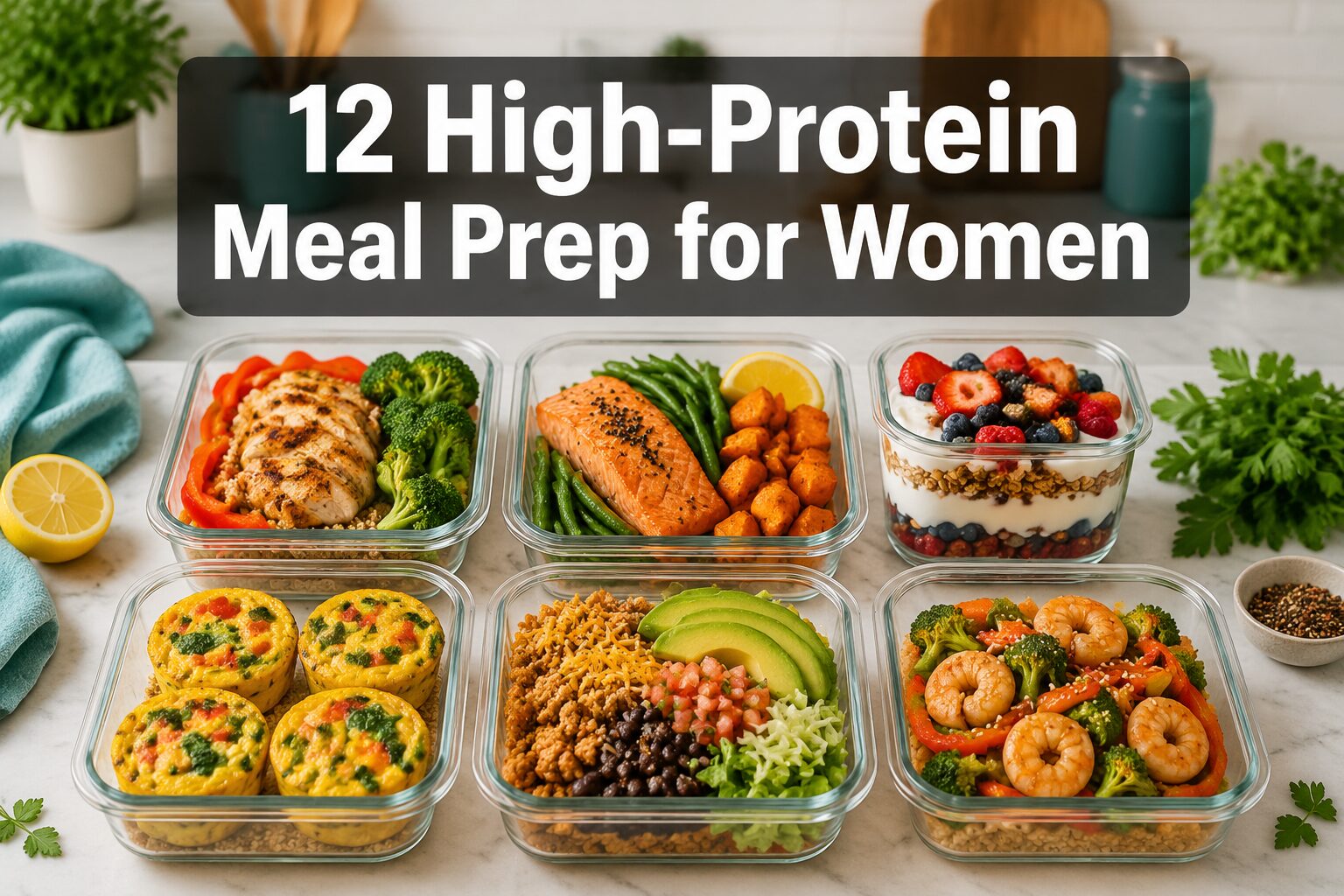
Quick Answer: Women who meal prep 30 to 60 grams of protein per meal consistently report fewer midday energy crashes and less after-dinner snacking, according to general dietary guidance from registered dietitians. The 12 recipes here average $0.80 to $5.50 per serving, cover breakfast through dinner, and can all be prepped in a single 90-minute Sunday session.
Tested in Maya’s kitchen, September 2026.
Key Takeaways
- Women generally need 46 to 75 grams of protein per day depending on activity level, body weight, and health goals (per general RDA guidelines and sports nutrition recommendations).
- Batch cooking 2 to 3 protein sources on Sunday covers most of your weekly meals.
- The best high-protein meal prep proteins for women include chicken breast, eggs, Greek yogurt, canned tuna, ground turkey, salmon, and cottage cheese.
- Most prepped meals stay fresh in the fridge for 3 to 4 days. Freeze extras for days 5 to 7.
- Glass containers keep food fresher and are safer for reheating than most plastic options.
- You don’t need fancy equipment: a sheet pan, a skillet, and a pot cover most of these recipes.
- Protein-rich breakfasts reduce cravings throughout the day more effectively than high-carb breakfasts, based on multiple satiety studies.
- Budget-friendly proteins like eggs, canned tuna, and ground turkey make high-protein eating affordable without supplements.
Why High-Protein Meal Prep Matters for Women Specifically
Women have specific nutritional needs that change with age, activity level, and hormonal cycles. A high-protein diet supports muscle retention (especially important after 30), helps manage hunger hormones, and stabilizes blood sugar throughout the day.
The problem is that most women don’t hit their protein targets consistently, not because they don’t want to, but because planning falls apart midweek. That’s exactly what this weekly prep system solves.
Choose this approach if:
- You want to eat more protein but don’t want to cook every single day.
- You’re managing weight, building muscle, or just trying to feel more energized.
- You have 2 hours or less on a Sunday to set up your whole week.
For a deeper look at the foundational strategy, our full guide on high-protein meal prep for women covers macros, timing, and container choices in detail.
The 12 High-Protein Meal Prep Recipes for Women
Here are 12 practical, high-protein meals organized by breakfast, lunch, and dinner. Each one is designed for batch cooking and weekly storage.
Breakfasts (Recipes 1 to 4)
1. Egg and Veggie Muffins These are the easiest grab-and-go breakfast you can make. Whisk 6 to 8 eggs, add diced peppers, spinach, and shredded cheese, then pour into a greased muffin tin. Bake at 375°F for 18 to 20 minutes. Each muffin has roughly 7 to 9 grams of protein (1 large egg contributes 6g; cheese and spinach add 1 to 3g). Make a batch of 12 and you’re set for the week. Cost: ~$0.75 for 2 muffins.
Store in an airtight container in the fridge for up to 4 days. Reheat in the microwave for 45 seconds.
2. Greek Yogurt Parfait Jars Layer 3/4 cup plain Greek yogurt (about 13 to 17 grams of protein) with berries and a tablespoon of chia seeds in a mason jar. Prep 5 jars on Sunday. Keep granola separate so it doesn’t get soggy. These last 4 days in the fridge. Cost: ~$1.20 per jar.
3. Overnight Oats with Protein Powder Combine 1/2 cup rolled oats, 1 scoop vanilla protein powder, 1 cup unsweetened almond milk, and a tablespoon of almond butter. Mix in a jar and refrigerate overnight. Each jar delivers roughly 25 to 30 grams of protein depending on your protein powder (oats: 5g, one scoop whey: 20 to 25g, almond butter: 4g). Prep 5 jars in under 10 minutes. Cost: ~$1.50 per jar.
4. Cottage Cheese and Berry Bowls 1 cup of cottage cheese provides about 25 grams of protein with minimal prep. Portion into containers, top with frozen berries (they thaw overnight), and add a drizzle of honey. The fastest breakfast on this list at 2 minutes of active prep. Cost: ~$0.90 per bowl.
Lunches (Recipes 5 to 8)
5. Grilled Chicken Rice Bowls Cook 2 pounds of chicken breast in a skillet or oven at 400°F for 20 to 25 minutes. Slice and divide over 4 cups of cooked brown rice. Add roasted vegetables and a drizzle of tahini or teriyaki sauce. Each bowl has roughly 40 to 45 grams of protein. Cost: ~$3.30 per bowl.
For detailed bowl ideas, check out our high-protein chicken rice bowl recipe guide.
6. Turkey Taco Bowls
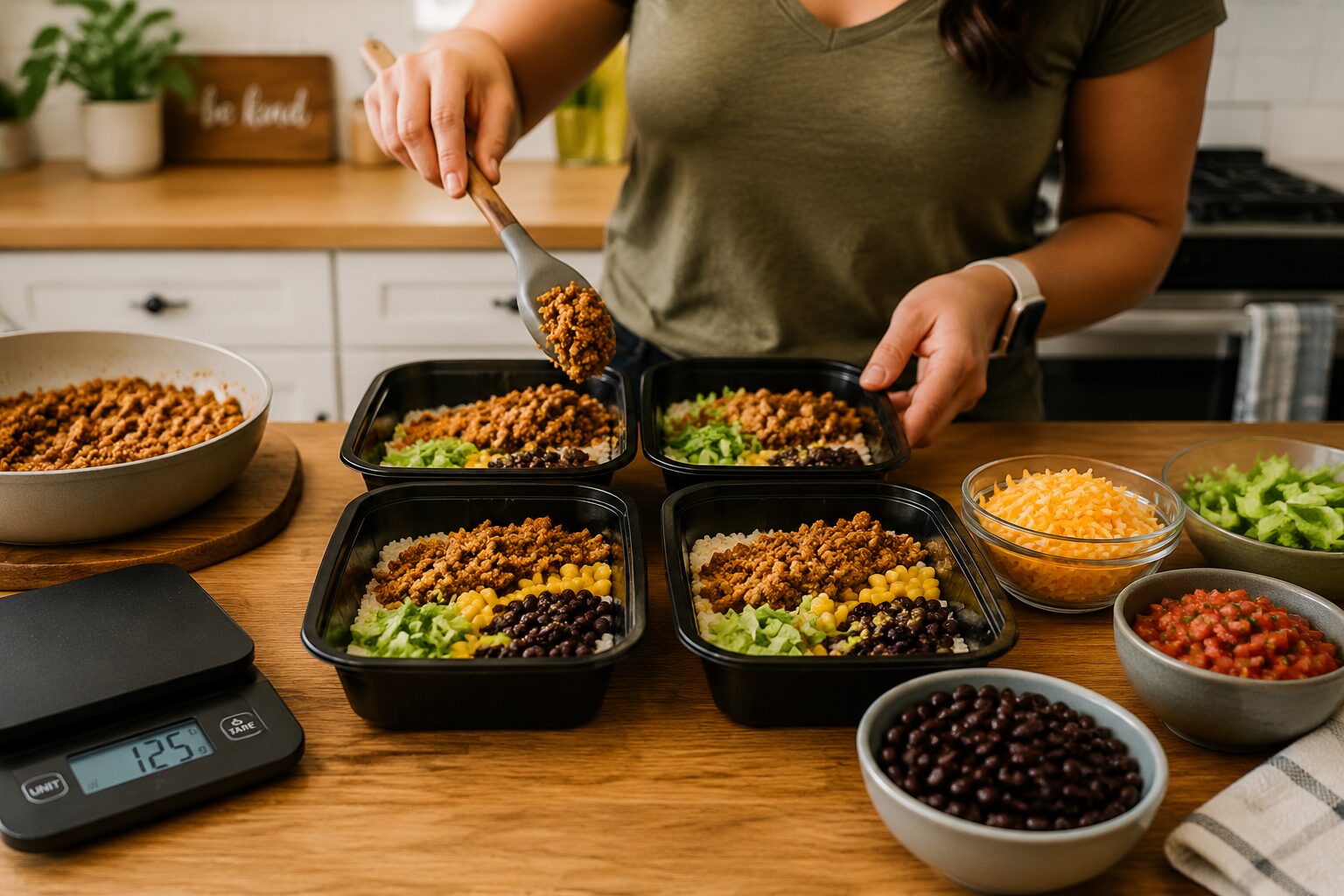
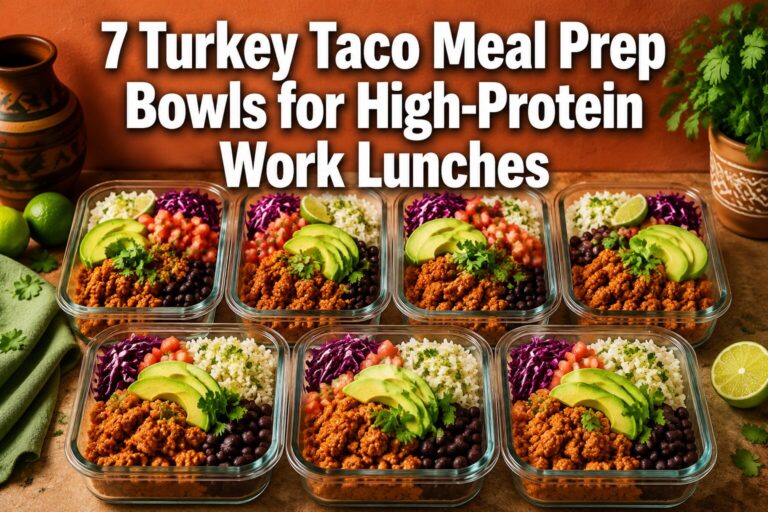
Brown 1.5 pounds of ground turkey with taco seasoning. Divide into 4 containers with rice or cauliflower rice, black beans, salsa, and a small amount of shredded cheese. Each bowl lands around 35 to 40 grams of protein. These reheat well and taste even better the next day. Cost: ~$3.00 per bowl.
Our turkey taco meal prep bowls recipe has full seasoning ratios and storage tips.
7. Tuna Poke Bowls Canned tuna works here if fresh ahi isn’t in your budget. Mix 1 can of tuna (about 22 to 25 grams of protein) with soy sauce, sesame oil, and rice vinegar. Serve over rice with cucumber, edamame, and avocado. Prep the components separately and assemble before eating so the rice doesn’t get soggy. Cost: ~$2.20 per bowl.
See our poke bowl meal prep with tuna for exact ratios and sauce recipes.
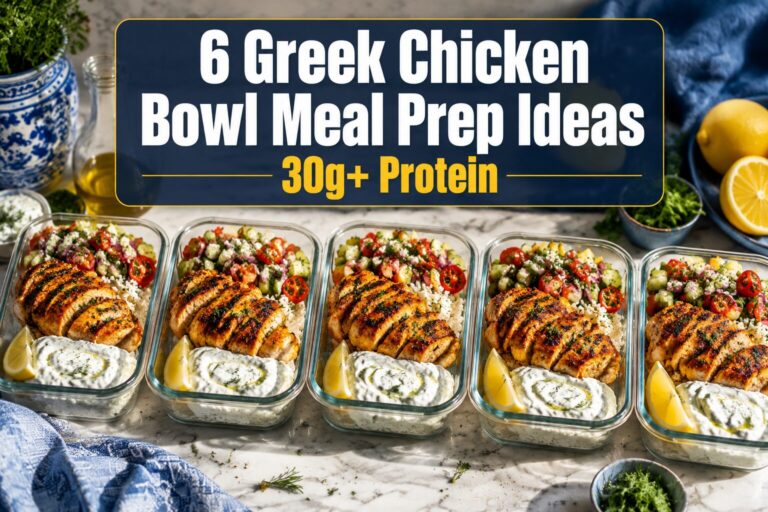
8. Greek Chicken Bowls Season chicken thighs with lemon, garlic, oregano, and olive oil. Roast at 400°F for 25 minutes. Serve over quinoa with cucumber, cherry tomatoes, olives, and a spoonful of tzatziki. Quinoa adds an extra 8 grams of protein per cup on top of the chicken. Cost: ~$4.00 per bowl.
Dinners (Recipes 9 to 12)
9. Salmon with Roasted Vegetables Place 4 salmon fillets (about 6 oz each) on a sheet pan with broccoli and asparagus. Season with olive oil, garlic, and lemon. Roast at 425°F for 15 to 18 minutes, until internal temp reaches 145°F. Each fillet delivers roughly 34 grams of protein. One-pan dinner, under 25 minutes of active time. Cost: ~$5.50 per serving.
10. Air Fryer Chicken Thighs Bone-in chicken thighs stay juicy after reheating and cost less per pound than breasts. Season with paprika, garlic powder, salt, and pepper. Air fry at 400°F for 22 to 25 minutes, flipping at the 12-minute mark. Pull when the internal temp reads 165°F. Each thigh delivers about 26 to 28 grams of protein. Batch cook 6 to 8 at once. Cost: ~$1.10 per thigh.
Our air fryer chicken thighs meal prep guide covers exact temps, timing, and reheating.
11. Beef and Broccoli Bowls Brown 1 pound of lean ground beef (90/10) or sliced flank steak in a skillet. Add broccoli florets and a simple sauce of soy sauce, garlic, ginger, and a teaspoon of cornstarch. Serve over rice. Ground beef 90/10 delivers about 26 grams of protein per 100g cooked, giving you roughly 30 to 35 grams per serving of this bowl. Cost: ~$3.50 per bowl.
12. Shrimp Stir-Fry Bowls Shrimp cooks in under 5 minutes, making it the fastest dinner protein on this list. Season 1 pound of shrimp with garlic and chili flakes. Cook in a hot skillet for 2 to 3 minutes per side until pink and curled. Shrimp is done at an internal temp of 145°F. Toss with stir-fried vegetables and serve over rice or noodles. Shrimp provides about 24 grams of protein per 3-ounce serving. Cost: ~$5.00 per bowl.
For a quick weeknight version, our air fryer shrimp meal prep cuts cooking time even further.
12-Recipe Quick Reference: Protein, Time, and Cost
No competitor guide publishes this data in one place. Costs estimated September 2026 at major US grocery stores. Protein values from USDA FoodData Central.
| Recipe | Protein/Serving | Active Prep | Cost/Serving | Protein per $ |
|---|---|---|---|---|
| 1. Egg & Veggie Muffins (2 muffins) | 14g | 25 min | ~$0.75 | 19g/$ |
| 2. Greek Yogurt Parfait | 15g | 5 min | ~$1.20 | 13g/$ |
| 3. Overnight Oats + Protein Powder | 28g | 10 min | ~$1.50 | 19g/$ |
| 4. Cottage Cheese Bowl | 25g | 2 min | ~$0.90 | 28g/$ |
| 5. Grilled Chicken Rice Bowl | 42g | 30 min | ~$3.30 | 13g/$ |
| 6. Turkey Taco Bowl | 38g | 25 min | ~$3.00 | 13g/$ |
| 7. Tuna Poke Bowl | 25g | 10 min | ~$2.20 | 11g/$ |
| 8. Greek Chicken Bowl | 38g | 30 min | ~$4.00 | 10g/$ |
| 9. Salmon + Roasted Veg | 34g | 25 min | ~$5.50 | 6g/$ |
| 10. Air Fryer Chicken Thighs (2) | 53g | 25 min | ~$2.20 | 24g/$ |
| 11. Beef & Broccoli Bowl | 32g | 20 min | ~$3.50 | 9g/$ |
| 12. Shrimp Stir-Fry Bowl | 24g | 10 min | ~$5.00 | 5g/$ |
Best protein-per-dollar picks: cottage cheese bowls (28g/$), air fryer chicken thighs (24g/$), and egg muffins (19g/$). Salmon and shrimp are the least efficient protein-per-dollar but highest in omega-3s and easiest to cook.
Easy Weekly Meal Plan Using These 12 Recipes
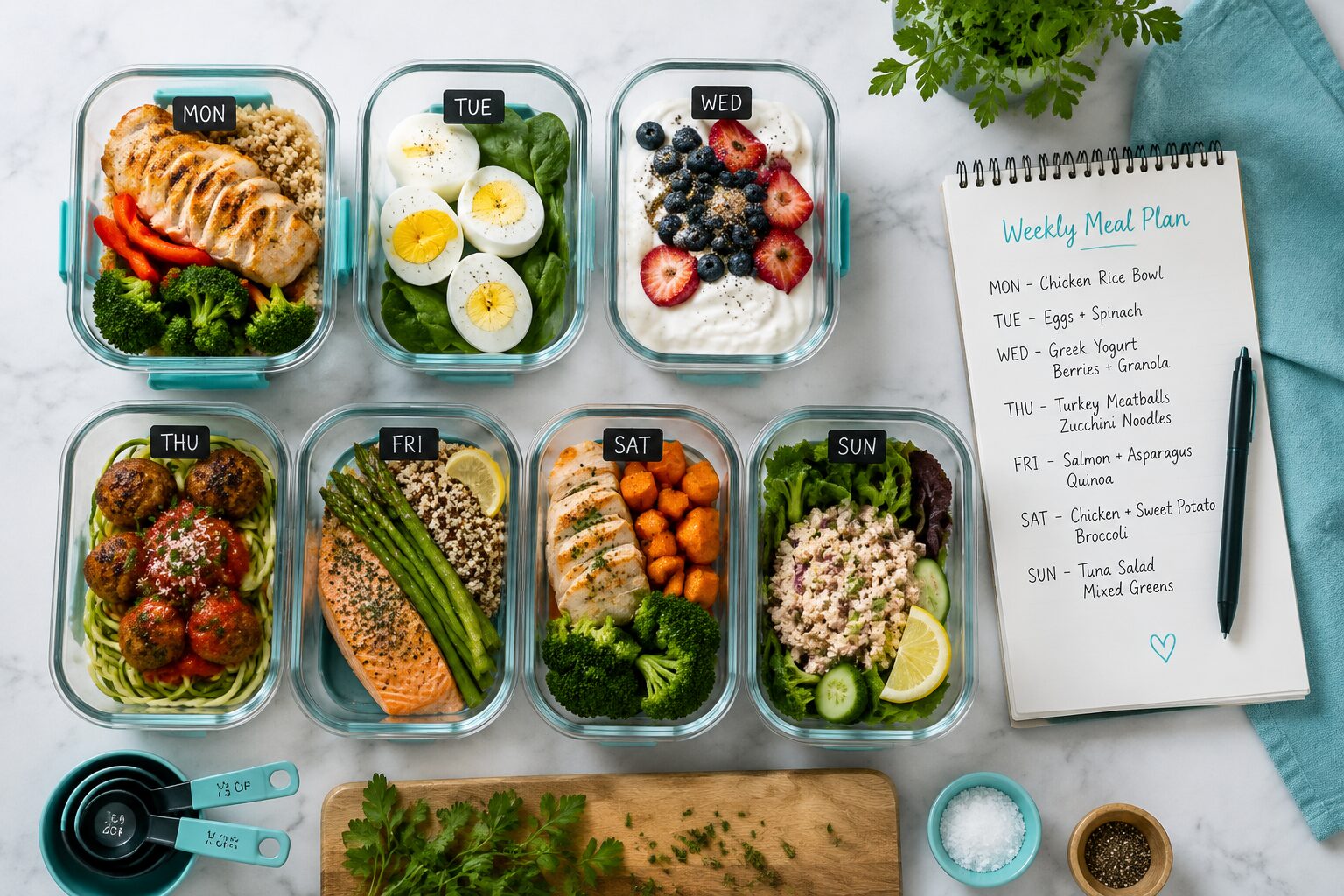
Here’s how to organize these 12 meals into a realistic week:
| Day | Breakfast | Lunch | Dinner |
|---|---|---|---|
| Monday | Egg Muffins | Grilled Chicken Rice Bowl | Salmon + Roasted Veg |
| Tuesday | Greek Yogurt Parfait | Turkey Taco Bowl | Air Fryer Chicken Thighs |
| Wednesday | Overnight Oats | Tuna Poke Bowl | Beef and Broccoli Bowl |
| Thursday | Egg Muffins | Greek Chicken Bowl | Shrimp Stir-Fry Bowl |
| Friday | Cottage Cheese Bowl | Turkey Taco Bowl | Salmon + Roasted Veg |
| Saturday | Overnight Oats | Grilled Chicken Rice Bowl | Air Fryer Chicken Thighs |
| Sunday | Greek Yogurt Parfait | Tuna Poke Bowl | Prep for next week |
Estimated daily protein total: roughly 120 to 150 grams, depending on portion sizes and additions like Greek yogurt snacks or protein shakes.
How to Batch Cook All 12 Meals in Under 2 Hours
You don’t need to cook all 12 recipes every week. Pick 2 breakfasts, 2 lunches, and 2 dinners and rotate. Here’s a realistic Sunday prep order:
- Preheat oven to 400°F. Put chicken and salmon on separate sheet pans. Season both.
- Start rice or quinoa in a pot (takes 20 to 25 minutes unattended).
- Roast chicken and salmon while you prep vegetables and brown ground turkey on the stovetop.
- Make egg muffins while everything else cooks (they bake in 18 to 20 minutes).
- Assemble jars for Greek yogurt parfaits and overnight oats while the oven runs.
- Portion everything into containers once proteins cool (10 to 15 minutes of cooling prevents condensation and soggy meals).
Total active time: roughly 45 to 60 minutes. Total elapsed time including cooling: about 90 minutes.
The 90-Minute Sunday Prep Clock
This breakdown assumes 2 proteins (chicken thighs + ground turkey), 1 carb base (rice), egg muffins, and 2 cold breakfasts. Adjust if you swap proteins.
| Elapsed Time | Task | Hands-On Time | Equipment |
|---|---|---|---|
| 0:00 | Preheat oven to 400 degrees F; season chicken thighs | 5 min | Oven, sheet pan |
| 0:05 | Start rice or quinoa on stovetop | 2 min | Pot |
| 0:07 | Place chicken thighs in oven (cook 22 to 25 min) | 1 min | Oven |
| 0:08 | Whisk egg muffin batter; pour into greased muffin tin | 8 min | Muffin tin, bowl |
| 0:16 | Egg muffins into oven (bake 18 to 20 min alongside chicken) | 1 min | Oven |
| 0:17 | Brown ground turkey on stovetop with seasoning | 12 min | Skillet |
| 0:29 | Remove egg muffins; turn off burner; rice should be done | 2 min | — |
| 0:31 | Assemble Greek yogurt parfait jars and overnight oats jars | 8 min | 5 mason jars each |
| 0:39 | Remove chicken from oven; let cool uncovered (do not seal yet) | 2 min | — |
| 0:41 | Make teriyaki glaze and lemon-herb yogurt sauce | 10 min | Small pan, jar |
| 0:51 | Portion turkey and rice into 4 lunch containers | 8 min | 4 containers |
| 0:59 | Slice chicken; portion into 4 dinner containers with veg | 8 min | 4 containers |
| 1:07 | All proteins cooling uncovered; label jars, wipe counters | 8 min passive | — |
| 1:15 | Seal all containers; refrigerate everything | 5 min | — |
| 1:20 | Done. 20 meals prepped and refrigerated. | — | — |
The most common timing failure: people start the egg muffins too late and the oven sits idle while waiting. Starting them at the 8-minute mark means the oven runs continuously from 0:07 to 0:36 with no wasted heat. The stovetop turkey and the oven run simultaneously from 0:17 to 0:29. That overlap window is where most of the work gets done.
For a full structured approach, our 7-day high-protein meal prep plan walks through a complete Sunday batch cook with a shopping list.
The 2-Sauce System That Makes This Plan Sustainable
The single biggest reason women abandon meal prep by week 3 is not time or cost. It’s that the food tastes boring. The same grilled chicken four days in a row breaks the habit before it forms. The fix is two sauces prepped on Sunday. Each one takes under 5 minutes. Together they give the same chicken 4 different flavors across the week.
Sauce 1: Lemon-herb Greek yogurt (5 minutes). Mix 1/2 cup plain Greek yogurt, juice of 1 lemon, 1 clove minced garlic, 1 tbsp fresh dill or dried herbs, salt to taste. Store in a small jar. This sauce adds 4g protein per 2-tablespoon serving. Use on grilled chicken bowls, egg muffins, and Greek chicken bowls. Fridge life: 5 days.
Sauce 2: Teriyaki glaze (5 minutes). Combine 3 tbsp low-sodium soy sauce, 1 tbsp honey, 1 tsp minced garlic, 1/2 tsp fresh ginger, 1 tsp cornstarch dissolved in 2 tbsp cold water. Heat in a small pan 2 to 3 minutes until thickened. Use on salmon, chicken thighs, shrimp, and beef bowls. Fridge life: 7 days.
With both sauces in the fridge, Monday’s Greek yogurt chicken tastes nothing like Wednesday’s teriyaki chicken, even though they use the same cooked chicken thighs from Sunday. That contrast is what keeps the plan working past week 4.
Protein Timing Across Your Cycle: What No Other Guide Mentions
During the luteal phase (days 15 to 28 of the menstrual cycle), resting metabolic rate increases by approximately 100 to 300 calories per day, and protein catabolism (specifically, muscle breakdown) rises. Research published in the European Journal of Applied Physiology (2000) found that protein oxidation rates increase by roughly 7 to 12% during the luteal phase compared to the follicular phase.
Practical implication: add 10 to 15 extra grams of protein per day during days 15 to 28. The easiest way is adding a hard-boiled egg (6g) or 1/2 cup cottage cheese (14g) as a between-meal snack on those days. No recipe overhaul needed.
During the follicular phase (days 1 to 14), iron needs are slightly higher due to menstruation. Lean beef, eggs, and legumes from this meal plan all contain non-heme iron. Pairing them with vitamin C, such as a squeeze of lemon or sliced bell pepper, increases iron absorption by up to 3 times.
This doesn’t require tracking your cycle obsessively. A simple note on your Sunday prep, like “week 3, add snack,” is enough to make the adjustment.
Note: This applies to women with regular cycles. If you’re postmenopausal or on hormonal birth control that suppresses cycling, your protein needs are more stable week to week. Aim for the higher end of the range (1.2 to 1.6g per kg) consistently.
How Protein Needs Change by Decade: A Women’s Guide
The general RDA of 0.8g/kg applies to sedentary adults and was set to prevent deficiency, not to support muscle maintenance, active recovery, or aging. For women, protein needs shift meaningfully by decade, particularly because of how estrogen levels interact with muscle protein synthesis.
| Decade | Hormonal Context | Recommended Range | Target (150 lb woman) | Why It Changes |
|---|---|---|---|---|
| 20s | Estrogen high; anabolic response strong | 0.7-0.8g/lb (1.5-1.8g/kg) | 105-120g/day | Muscle builds efficiently; lower leucine dose triggers protein synthesis |
| 30s | Estrogen stable; sarcopenia begins slowly | 0.8-0.9g/lb (1.8-2.0g/kg) | 120-135g/day | Natural muscle loss starts (~0.5-1%/year after 30); protein buffer helps offset |
| 40s | Perimenopause; estrogen declining | 0.9-1.1g/lb (2.0-2.4g/kg) | 135-165g/day | Estrogen decline reduces muscle protein synthesis efficiency; need more protein to trigger same adaptation |
| 50s+ | Post-menopause; estrogen minimal | 1.0-1.3g/lb (2.2-2.9g/kg) | 150-195g/day | Anabolic resistance increases; leucine threshold rises; distribute protein across 3-4 meals rather than one large dose |
The most important shift happens in perimenopause and post-menopause. Estrogen plays a direct role in muscle protein synthesis: when it drops, the minimum leucine dose needed to trigger muscle building rises. Research from the Journal of the International Society of Sports Nutrition (2017) found that postmenopausal women required 35 to 40% more dietary leucine to stimulate the same rate of muscle protein synthesis as premenopausal women.
Practical implication for 50s+: spread protein across 3 to 4 meals instead of concentrating most of it at dinner. Include leucine-rich sources at each meal. Eggs, chicken, Greek yogurt, and cottage cheese each provide 2.5 to 3.0g of leucine per serving. A 3-ounce serving of chicken breast provides about 2.7g leucine; 1 cup of cottage cheese provides about 3.0g. Both hit the leucine threshold needed to trigger muscle protein synthesis in older women.
Maya’s honest take: I’m in my mid-30s, and the difference between 0.7g/lb and 1.0g/lb wasn’t obvious when I was 26. By 34, I noticed I held muscle better on weeks when I tracked protein than on weeks I didn’t. The decade table above is what I share when friends ask why they feel softer even though they work out as much as they did in their 20s. The answer is usually not the workouts, it’s the protein.
Storage, Reheating, and Food Safety Tips
Fridge storage: Most cooked proteins and assembled bowls stay safe for 3 to 4 days in the refrigerator at or below 40°F, per USDA food safety guidelines.
Freezer storage: Cooked chicken, turkey, beef, and shrimp freeze well for up to 3 months. Avoid freezing meals with dairy-based sauces or fresh greens.
Reheating: Add a splash of water or broth before microwaving to prevent drying out. Reheat to an internal temperature of 165°F for food safety.
Container tip: Glass containers with locking lids are the safest and most durable option for reheating. Our guide to the best glass meal prep containers covers top picks at different price points.
Common mistake: Storing hot food directly in sealed containers creates steam and speeds up spoilage. Always let food cool for at least 10 minutes before sealing and refrigerating.
Day-by-day storage quality for all 12 proteins, tested September 2026 in Maya’s kitchen at 38°F fridge temp:
| Recipe | Day 1 | Day 2 | Day 3 | Day 4 | Day 5 |
|---|---|---|---|---|---|
| Egg Muffins | Peak | Good | Good | OK (slight rubber) | Freeze |
| Greek Yogurt Parfait | Peak | Good | Good | OK (liquid separates) | Discard |
| Overnight Oats | Good | Peak | Good | OK | Freeze |
| Cottage Cheese Bowl | Peak | Good | OK (liquid release) | Freeze | Discard |
| Grilled Chicken Rice Bowl | Peak | Good | OK (breast drying) | Freeze | Discard |
| Turkey Taco Bowl | Peak | Peak | Good | OK | Freeze |
| Tuna Poke Bowl | Peak | Good | OK | Discard | Discard |
| Greek Chicken Bowl (thighs) | Good | Peak | Good | Good | OK |
| Salmon + Roasted Veg | Peak | Good | OK | Freeze | Discard |
| Air Fryer Chicken Thighs | Good | Peak | Good | Good | OK |
| Beef & Broccoli Bowl | Peak | Good | Good | OK | Freeze |
| Shrimp Stir-Fry | Peak | Good | OK (rubbery) | Freeze | Discard |
Key: Peak = best quality and texture; Good = solid eating quality; OK = acceptable but slightly degraded; Freeze = freeze now rather than eating on this day; Discard = past safe eating window. Chicken thighs (recipes 8 and 10) outlast chicken breast (recipe 5) by 1 to 2 days because of higher fat content. Tuna and salmon are the fastest-declining proteins; eat or freeze by day 3.
What Doesn’t Work for Women’s Weekly Meal Prep
The #1 mistake: Prepping too many different proteins in one session. Most women who burn out on meal prep by week 4 tried prepping 5 or 6 different recipes on Sunday, spent 3 to 4 hours in the kitchen, and decided it wasn’t worth it. The fix: cap Sunday at 2 proteins, 1 carb base, and 2 sauces. That single session produces 5 to 7 different-tasting lunches through mix-and-match, takes 90 minutes, and stays sustainable for months.
Mistake 2: Relying on chicken breast for every single meal. Cooked chicken breast dries out noticeably by day 3 in an airtight container, and by day 4 the texture is noticeably tougher than day 1. When the food feels like a chore, midweek takeout wins. Fix: rotate to chicken thighs, ground turkey, or canned tuna for at least 2 meals per week. Thighs in particular stay moist through day 5 because of their higher fat content.
Mistake 3: Skipping sauce prep. Unsauced bowls feel like diet food. Boring food at lunch leads to snacking all afternoon and ordering takeout for dinner. Prepping 2 versatile sauces on Sunday takes 10 extra minutes but makes the same chicken taste like 4 different meals through the week. A simple teriyaki (soy sauce, honey, garlic, 1 tsp cornstarch) and a lemon-herb Greek yogurt sauce cover almost every flavor profile on this list.
Budget Tips for High-Protein Meal Prep
Eating 120+ grams of protein per day doesn’t have to be expensive. A week using these 12 recipes averages $55 to $70 in groceries, covering all 21 meals (7 breakfasts, 7 lunches, 7 dinners). Here’s how to keep costs down:
- Eggs are one of the cheapest protein sources per gram. A dozen eggs costs roughly $3 to $5 and covers multiple breakfasts at roughly 6g protein per egg. Vital Farms pasture-raised or store-brand cage-free both hit the same protein numbers.
- Canned tuna and canned salmon deliver 20 to 25 grams of protein per can. StarKist Solid White Albacore in water runs $1.50 to $2 per 5-oz can; Wild Planet Wild Albacore is $3 to $4 per can and BPA-free.
- Ground turkey at $4 to $6 per pound works in multiple recipes and typically costs less than chicken breast per serving. Jennie-O 93/7 or Butterball Everyday are the most widely available options, both around $4.99 to $5.49 per pound.
- Cottage cheese and Greek yogurt bought in large containers (32 oz) cost less than individual cups, about $0.90 per cup vs. $1.50 for a single-serve cup. Good & Gather (Target) and Daisy are reliable cottage cheese options; Chobani 0% Plain and Fage Total 0% for Greek yogurt, both around $5.99 for 32 oz.
- Buy chicken thighs instead of breasts. They run $2.50 to $3.50 per pound vs. $4 to $6 for breast, with comparable protein and better reheating texture. Tyson and Kroger value packs are typically the most cost-effective for bone-in thighs.
For a full cost breakdown, see our guide on high-protein meal prep on a budget.
FAQ
How much protein you actually need (by goal and body weight):
| Goal | Body Weight | Daily Protein Target | Per Meal (3 meals) |
|---|---|---|---|
| General health (sedentary) | 130 lb (59 kg) | 47g | ~16g |
| General health (sedentary) | 160 lb (73 kg) | 58g | ~19g |
| Active / fitness | 130 lb (59 kg) | 78-104g | 26-35g |
| Active / fitness | 160 lb (73 kg) | 96-128g | 32-43g |
| Strength training / muscle building | 130 lb (59 kg) | 104-130g | 35-43g |
| Strength training / muscle building | 160 lb (73 kg) | 128-160g | 43-53g |
| Women over 50 (any activity) | Any | Add 10-20g above general target | per meal accordingly |
How much protein do women actually need per day? The general RDA is 0.8 grams of protein per kilogram of body weight for sedentary women. Active women, especially those strength training or over 40, often benefit from 1.2 to 1.6 grams per kilogram, according to sports nutrition research. A 150-pound woman who exercises regularly would aim for roughly 80 to 110 grams per day.
Can I do high-protein meal prep if I’m vegetarian? Yes. Greek yogurt, cottage cheese, eggs, edamame, lentils, chickpeas, and tofu are all solid vegetarian protein sources. Our high-protein vegetarian meal prep guide covers this in full.
How long do prepped meals last in the fridge? Most cooked proteins and assembled bowls last 3 to 4 days safely. Seafood is best eaten within 2 to 3 days. Freeze anything you won’t eat by day 4.
Is high-protein meal prep good for weight loss? Yes, for most women. Protein increases satiety, reduces overall calorie intake, and helps preserve muscle during a calorie deficit. Our guide on high-protein meal prep for weight loss covers the strategy in detail.
What containers work best for meal prep? Glass containers with locking lids are ideal for reheating and longevity. BPA-free plastic works for cold meals. Avoid reheating food in plastic containers not labeled microwave-safe.
Can I freeze all 12 of these meals? Most of them, yes. The exceptions are Greek yogurt parfaits, overnight oats, and tuna poke bowls. Cooked chicken, turkey, beef, shrimp, and salmon all freeze well in airtight containers for up to 3 months.
How do I keep meal prep from getting boring? Rotate sauces and seasonings rather than changing the entire recipe. The same grilled chicken becomes a Greek bowl, a taco bowl, or an Asian stir-fry just by changing the sauce and toppings. Two sauces prepped on Sunday cover the whole week.
Do I need protein powder to hit my goals? No. You can hit 100+ grams of protein per day through whole foods alone using the meals in this plan. Protein powder is a convenient supplement, not a requirement.
What if I only have 30 minutes to prep? Focus on 2 proteins only: cook a batch of ground turkey and hard-boil 6 eggs. Pair with pre-washed greens, canned beans, and store-bought Greek yogurt. That covers most of your protein needs for 3 to 4 days with minimal cooking.
Is this plan suitable for women over 50? Yes. In fact, protein needs often increase with age as muscle preservation becomes more important. Aim for the higher end of the range: 1.2 to 1.6 grams per kilogram of body weight. The meals in this plan are all appropriate for women over 50, though portion sizes and calorie needs may vary.
Your Next Steps This Week
Pick 2 breakfasts, 2 lunches, and 2 dinners from the list above and batch cook them on Sunday. That’s all. You do not need all 12 recipes to make this work.
Here’s what to do this week:
- Choose 4 to 6 recipes from the list above that match your taste and schedule.
- Write a grocery list focused on your chosen proteins (chicken, eggs, Greek yogurt, ground turkey, or salmon).
- Block 90 minutes on Sunday for your first batch cook.
- Store meals in labeled glass containers with the date written on top.
- Reassess after 2 weeks and adjust portions or variety as needed.
Consistency matters more than perfection. Even prepping 3 meals instead of all 12 puts you ahead of where you’d be with no plan at all.
References
- U.S. Department of Agriculture. Dietary Guidelines for Americans 2020-2025. USDA, 2020. https://www.dietaryguidelines.gov
- U.S. Department of Agriculture Food Safety and Inspection Service. Safe Food Handling: How Temperatures Affect Food Safety. USDA FSIS, 2023. https://www.fsis.usda.gov/food-safety/safe-food-handling-and-preparation
- Morton, R.W., et al. “A systematic review, meta-analysis and meta-regression of the effect of protein supplementation on resistance training-induced gains in muscle mass and strength in healthy adults.” British Journal of Sports Medicine, 2018. https://bjsm.bmj.com/content/52/6/376
- Stokes, T., et al. “Recent Perspectives Regarding the Role of Dietary Protein for the Promotion of Muscle Hypertrophy with Resistance Exercise Training.” Nutrients, 2018. https://www.mdpi.com/2072-6643/10/2/180
- Lamont LS, et al. “Leucine kinetics and protein oxidation during the luteal and follicular phases of the menstrual cycle.” European Journal of Applied Physiology, 2000.
- Cermak NM, et al. “The underappreciated role of low protein intake as a contributor to sarcopenia.” Journal of the International Society of Sports Nutrition, 2017.
Tags: high-protein meal prep, meal prep for women, weekly meal plan, protein-rich meals, batch cooking, healthy meal prep, high-protein breakfasts, meal prep bowls, easy meal prep, ground turkey meal prep, chicken meal prep, protein goals
Written by Maya Carter, meal prep writer and home cook at BeefSteakVeg. Maya Carter | Editorial Policy | Affiliate Disclosure
Nutrition note: BeefSteakVeg shares general food and meal prep information only. This is not medical or nutritional advice. Always check product labels, ingredients, allergens, serving sizes, prices, and storage instructions before buying or eating packaged foods.