Quick Answer
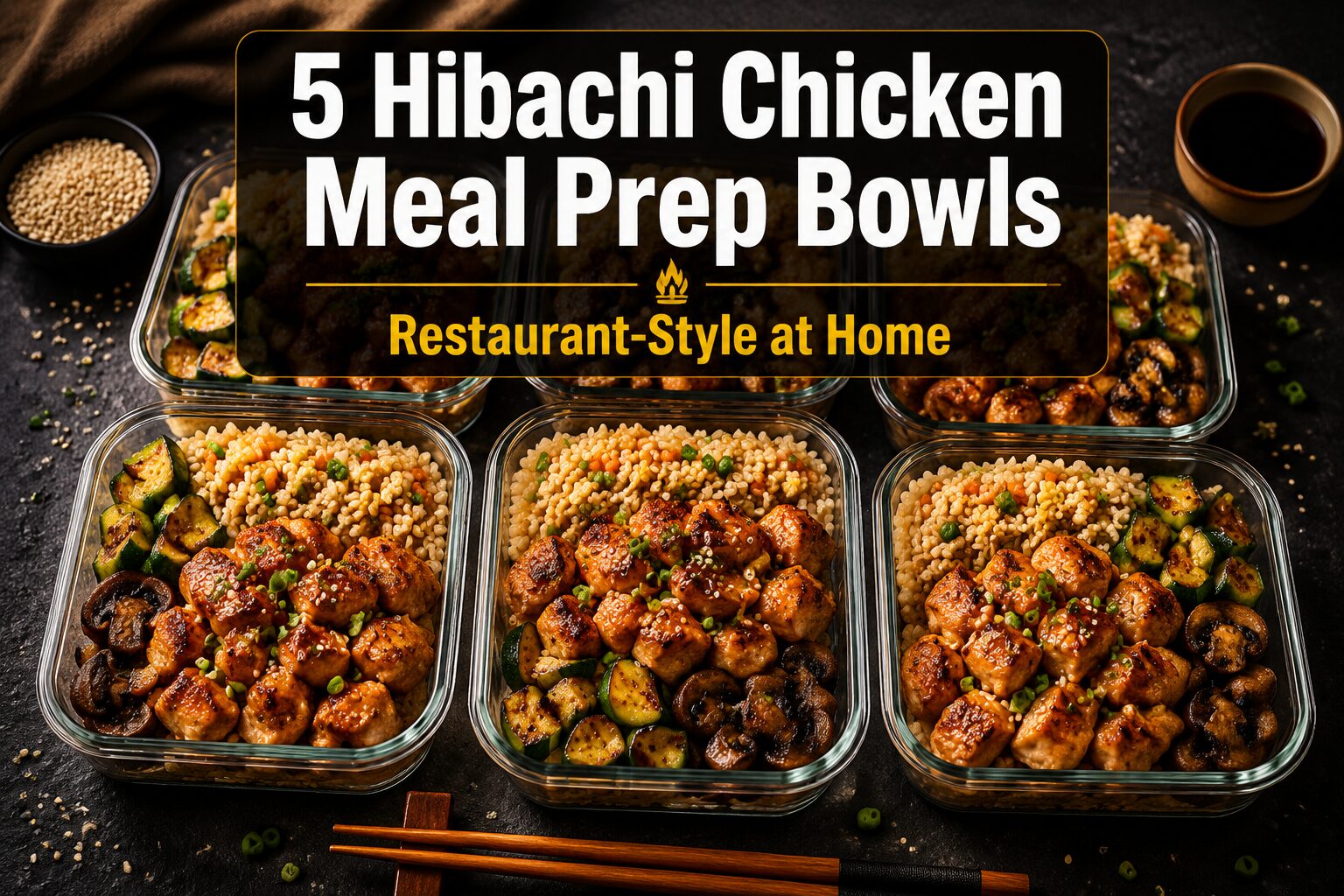
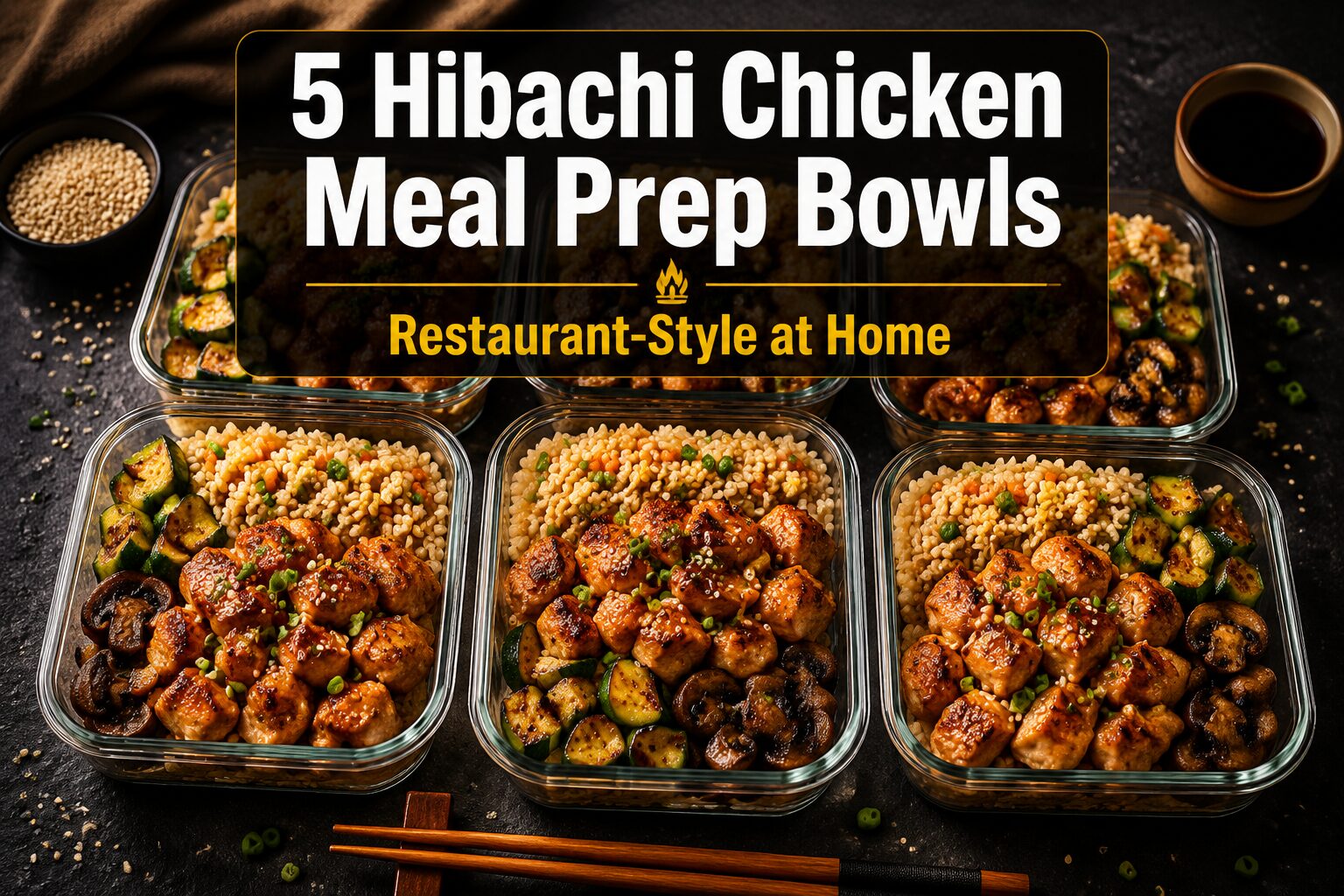
You can make restaurant-quality hibachi chicken meal prep bowls at home in about 45 minutes using a cast iron skillet or flat-top griddle. The key is high heat, butter, soy sauce, and a simple garlic-ginger marinade. These five bowl variations give you a full week of high-protein lunches or dinners that reheat well and taste close to the real thing.
Key Takeaways
- 5 hibachi chicken meal prep bowls (restaurant-style at home) can be prepped in one session and stored for up to 4 days in the fridge
- The secret to hibachi flavor is cooking on very high heat with butter, soy sauce, garlic, and a splash of sesame oil
- Chicken thighs stay juicier than chicken breasts when reheated, making them the better choice for meal prep
- Each bowl provides roughly 35 to 45 grams of protein depending on portion size (estimate based on standard 6 oz cooked chicken thigh)
- You do not need a teppanyaki grill. A cast iron skillet or carbon steel pan gets hot enough to replicate the char and sear
- Fried rice, lo mein noodles, cauliflower rice, and zucchini noodles all work as bases depending on your carb goals
- Yum yum sauce and ginger dipping sauce can be made in 5 minutes and stored separately for 7 days
- Reheat bowls in a skillet with 1 teaspoon of water or in the microwave at 70% power for 2 minutes to avoid drying out the chicken
- Glass containers with locking lids keep the sauces from leaking and maintain texture better than plastic bags
What Makes Hibachi Chicken Taste Like the Restaurant Version?
The restaurant flavor comes from three things: high heat, real butter, and soy sauce added at the right moment. Most home cooks use medium heat and wonder why their chicken tastes steamed instead of seared.
To get that signature char and savory crust at home:
- Preheat your pan for at least 3 minutes before adding oil
- Use unsalted butter (not olive oil alone) for richness
- Add low-sodium soy sauce directly to the hot pan so it caramelizes fast
- Season with garlic powder, onion powder, and a small amount of fresh ginger
- Do not crowd the pan. Cook chicken in batches if needed
The #1 mistake home cooks make with hibachi chicken: using a non-stick pan on medium heat. Non-stick pans max out around 400°F, which is not hot enough for the sear hibachi chicken needs. The chicken steams instead of charring and comes out pale with no crust. Use a cast iron skillet preheated on high for at least 3 minutes — it should be lightly smoking before the chicken goes in.
A cast iron skillet, carbon steel pan, or flat-top griddle all work well. Non-stick pans do not get hot enough and will not give you the sear you need.
How to Make the Base Hibachi Chicken Marinade
The marinade is the same across all five bowl variations. You make it once and use it for the whole batch.
Marinade ingredients (for 2 lbs / 910g of chicken thighs, boneless and skinless):
| Ingredient | Amount | Grams / mL |
|---|---|---|
| Low-sodium soy sauce | 3 tablespoons | ~45 mL |
| Sesame oil | 1 tablespoon | ~14 mL |
| Unsalted butter (melted) | 2 tablespoons | ~28g |
| Garlic (minced) | 3 cloves | ~9g |
| Fresh ginger (grated) | 1 teaspoon | ~2g |
| Honey or brown sugar | 1 teaspoon | ~7g |
| Black pepper | 1/2 teaspoon | ~1g |
Steps:
- Combine all marinade ingredients in a bowl and whisk together
- Cut chicken thighs into 1-inch cubes
- Toss chicken in the marinade and let it sit for at least 15 minutes (up to 2 hours in the fridge)
- Heat your cast iron skillet over high heat for 3 minutes
- Add 1 tablespoon of neutral oil, then add chicken in a single layer
- Cook for 3 to 4 minutes without moving, then flip and cook another 2 to 3 minutes
- Add 1 tablespoon of butter in the last minute and baste the chicken
- Internal temperature should reach 165°F (74°C)
Make the full batch at once. Divide into portions after cooking.
5 Hibachi Chicken Meal Prep Bowls (Restaurant-Style at Home): The Full Lineup
Here are the five bowl variations. Each one uses the same hibachi chicken base but pairs it with a different base and sauce for variety throughout the week.
Bowl 1: Classic Hibachi Fried Rice Bowl
This is the most popular version and the closest to what you get at a teppanyaki restaurant.
What you need:
- 1 cup cooked jasmine rice (day-old rice works best)
- Hibachi chicken (6 oz / 170g per serving)
- 2 eggs (scrambled in butter)
- Frozen peas and carrots (1/2 cup / 75g)
- Soy sauce and butter for the rice
How to make the fried rice:
- Heat a large skillet or wok over high heat
- Add 1 tablespoon of butter and scramble the eggs quickly, then push to the side
- Add the cold rice and press it flat against the pan
- Let it sit for 2 minutes without stirring to get a slight crust
- Add peas, carrots, 2 tablespoons of soy sauce, and 1 teaspoon of sesame oil
- Toss everything together and cook for another 2 minutes
Protein per bowl: Approximately 44 grams (based on 6 oz / 170g chicken thigh and 2 eggs)
Bowl 2: Hibachi Chicken with Zucchini Noodles (Low-Carb)
This version swaps the rice for spiralized zucchini, cutting the carbs significantly while keeping the hibachi flavor.
- Use 2 medium zucchinis (~300g) spiralized or cut into thin strips
- Sauté zucchini noodles in butter for 2 minutes only. Overcooking makes them watery
- Season with garlic, soy sauce, and a pinch of red pepper flakes
- Top with hibachi chicken and a drizzle of yum yum sauce
Choose this bowl if you are tracking net carbs or following a lower-carb eating plan.
Bowl 3: Hibachi Chicken Lo Mein Bowl
This one works well for people who want something heartier and more filling.
- Cook 2 oz / 57g of lo mein noodles or spaghetti per serving
- Toss cooked noodles in a sauce made from 2 tablespoons soy sauce, 1 tablespoon oyster sauce, 1 teaspoon sesame oil, and 1 teaspoon honey
- Add sliced mushrooms, cabbage, and shredded carrots sautéed in butter
- Top with hibachi chicken
Bowl 4: Hibachi Chicken Cauliflower Rice Bowl
For a lower-calorie option that still feels satisfying, cauliflower rice works surprisingly well with hibachi flavors.
- Use 1.5 cups / 150g of riced cauliflower per serving (fresh or frozen)
- Cook in a dry skillet over high heat for 4 to 5 minutes to remove moisture before adding butter and soy sauce
- Add the same vegetables as the fried rice version (peas, carrots, egg)
- The texture is different but the flavor profile holds up well
Common mistake: Not drying out the cauliflower rice enough before adding sauce. Wet cauliflower rice turns mushy in the container by day two.
Bowl 5: Hibachi Chicken Noodle Salad Bowl (Cold Version)
This bowl is served cold, which makes it a great option for meal prep days when you do not want to reheat.
- Cook 2 oz / 57g of soba noodles per serving and rinse under cold water
- Toss with a cold sesame dressing: 2 tablespoons soy sauce, 1 tablespoon rice vinegar, 1 teaspoon sesame oil, 1 teaspoon honey, and 1/2 teaspoon grated ginger
- Add shredded purple cabbage, edamame, shredded carrots, and sliced cucumber
- Top with cold hibachi chicken and sesame seeds
- This bowl holds well for 3 days without getting soggy if you keep the dressing in a small side container
5 Hibachi Chicken Bowl Comparison: Protein, Calories, and Cost
Use this table to pick the right bowl for your goals. All figures are based on a 6 oz / 170g serving of hibachi chicken thigh plus the listed base.
| Bowl | Protein | Calories | Net Carbs | Cost/Serving |
|---|---|---|---|---|
| Bowl 1: Classic Fried Rice | 44g | ~510 cal | 47g | ~$4.20 |
| Bowl 2: Zucchini Noodles (Low-Carb) | 34g | ~375 cal | 9g | ~$4.50 |
| Bowl 3: Lo Mein | 34g | ~490 cal | 54g | ~$4.35 |
| Bowl 4: Cauliflower Rice | 36g | ~405 cal | 15g | ~$4.45 |
| Bowl 5: Cold Soba Salad | 38g | ~450 cal | 40g | ~$4.60 |
All five bowls run under $4.75 per serving compared to $17 to $24 at a teppanyaki restaurant. That is a savings of roughly 75% on the same protein.
What Sauces Go With Hibachi Chicken Meal Prep Bowls?
Two sauces cover almost every hibachi bowl: yum yum sauce and ginger dipping sauce. Both take about 5 minutes to make and last 7 days in the fridge.
Yum Yum Sauce:
| Ingredient | Amount |
|---|---|
| Mayonnaise | 1/2 cup (112g) |
| Ketchup | 1 tablespoon (17g) |
| Rice vinegar | 1 teaspoon (5 mL) |
| Garlic powder | 1/2 teaspoon |
| Paprika | 1/4 teaspoon |
| Sugar | 1 teaspoon (4g) |
| Water (to thin) | 1 to 2 tablespoons |
Whisk together and refrigerate. Drizzle over any of the five bowls.
Ginger Dipping Sauce:
- 2 tablespoons soy sauce
- 1 tablespoon fresh grated ginger
- 1 tablespoon rice vinegar
- 1 teaspoon sesame oil
- 1/2 teaspoon honey
This sauce works especially well with the lo mein and noodle salad bowls.
How to Store and Reheat These Hibachi Bowls
Proper storage keeps your 5 hibachi chicken meal prep bowls (restaurant-style at home) tasting fresh through the week.
Storage rules:
- Store in glass containers with locking lids for best results
- Keep sauces in separate small containers (2 oz condiment cups work well)
- Refrigerate within 2 hours of cooking
- Bowls stay fresh for 4 days in the fridge
- The cold noodle salad bowl (Bowl 5) is best within 3 days
- Do not freeze bowls with zucchini noodles or soba noodles. They lose texture badly after freezing
- The fried rice and lo mein bowls freeze well for up to 2 months
Reheating tips:
- Skillet method (best): Add bowl contents to a hot skillet with 1 teaspoon of water or extra soy sauce. Heat for 3 to 4 minutes over medium-high heat
- Microwave method: Heat at 70% power for 2 minutes, stir, then heat another 30 to 60 seconds. This prevents the chicken from getting rubbery
- Add sauce after reheating, not before. Heat breaks down the yum yum sauce and makes it greasy
Meal Prep Timeline: How to Prep All 5 Bowls in One Session
You can prep all five bowls in about 45 to 55 minutes if you work in parallel.
Suggested order:
- Start rice or noodles first (they take the longest, 15 to 20 minutes)
- While rice cooks, make the marinade and cut the chicken
- Marinate chicken for 15 minutes while you prep vegetables
- Cook chicken in batches (6 to 8 minutes per batch)
- While chicken rests, cook fried rice and sauté vegetables
- Make sauces while everything cools (5 minutes)
- Assemble and portion into containers
Shopping list for all 5 bowls (serves 5):
- 2 lbs / 910g boneless skinless chicken thighs
- 2 cups / 370g jasmine rice (dry)
- 2 medium zucchinis (~300g)
- 4 oz / 113g lo mein noodles
- 1 bag (12 oz / 340g) frozen riced cauliflower
- 4 oz / 113g soba noodles
- Soy sauce, sesame oil, butter, garlic, ginger, honey
- Frozen peas and carrots
- Mushrooms, cabbage, edamame, shredded carrots, cucumber
- Mayonnaise, ketchup, rice vinegar, paprika (for yum yum sauce)
- 5 eggs
What Does This Prep Session Cost? Ingredient Breakdown
Total for all 5 servings runs approximately $21.50 to $22.50, or $4.30 to $4.50 per bowl. Here is where the money goes.
| Ingredient | Amount Used | Estimated Cost |
|---|---|---|
| Chicken thighs, boneless skinless | 2 lbs / 910g | $7.00 to $8.00 |
| Jasmine rice (2 cups dry) | half a 2 lb bag | $1.50 |
| Zucchini (2 medium) | 2 whole | $1.50 |
| Lo mein noodles (4 oz) | half a standard pack | $1.00 |
| Frozen riced cauliflower (1 bag, 12 oz) | 1 bag | $2.00 |
| Soba noodles (4 oz) | half a standard pack | $1.25 |
| Eggs (5 large) | 5 | $1.25 |
| Frozen peas and carrots (1 cup) | 1 cup | $0.75 |
| Soy sauce, sesame oil, butter, garlic, ginger, honey | shared pantry items | $1.50 est. |
| Mushrooms, cabbage, edamame, cucumber | mixed produce | $3.00 |
| Mayo, ketchup, rice vinegar, paprika (yum yum sauce) | shared | $0.75 est. |
| Total for 5 servings | $21.50 to $22.50 |
At a teppanyaki restaurant, one chicken bowl runs $17 to $24. Making all five at home saves $63 to $97 over five restaurant orders.
Day-by-Day Storage Quality: What to Expect
Not all five bowls hold equally well through the week. Use this to plan which bowl to eat on which day.
| Day | Bowl 1 (Fried Rice) | Bowl 2 (Zucchini Noodles) | Bowl 3 (Lo Mein) | Bowl 4 (Cauli Rice) | Bowl 5 (Soba Salad) |
|---|---|---|---|---|---|
| Day 1 | Excellent | Excellent | Excellent | Excellent | Excellent |
| Day 2 | Excellent | Good (slightly softer) | Good | Good | Good (keep dressing separate) |
| Day 3 | Good | Acceptable (texture fading) | Good | Good | Acceptable (noodles absorb dressing) |
| Day 4 | Good (add 1 tsp water when reheating) | Not recommended | Good | Good | Not recommended |
Eat Bowl 2 (zucchini noodles) and Bowl 5 (soba salad) on days 1 and 2. Bowl 1, Bowl 3, and Bowl 4 hold up through day 4.
What Doesn’t Work: 3 Hibachi Chicken Meal Prep Mistakes
These are the three mistakes that come up most often on a first hibachi meal prep session.
Mistake 1: Using a non-stick pan on medium heat. Non-stick surfaces max out around 400°F, which is not hot enough for the sear hibachi chicken needs. The chicken steams instead of charring and comes out pale with no crust. Fix: use a cast iron skillet preheated on high for at least 3 minutes. The pan should be smoking before the chicken goes in.
Mistake 2: Skipping the rest step after cooking. Cutting into chicken right after cooking forces the juices out before they redistribute. The chicken looks fine in the pan but turns dry in the container by day 2. Fix: let cooked chicken rest for 5 minutes before slicing or cubing for the bowls.
Mistake 3: Cooking zucchini noodles too long. Zucchini is about 95% water. Anything past 2 minutes in a hot pan releases that water into your bowl, diluting the sauce and making everything soggy. Fix: sauté zucchini noodles on high heat for exactly 2 minutes, then pull immediately. Residual heat finishes them.
FAQ
Can I use chicken breast instead of chicken thighs?
Yes, but chicken breast dries out faster when reheated. If you use breast, cut it slightly thicker (about 1.5 inches) and pull it at exactly 165°F (74°C) to keep it from getting tough.
Do I need a special pan to make hibachi chicken at home?
No. A cast iron skillet or carbon steel pan works best. The key is preheating the pan on high for at least 3 minutes before adding oil. Non-stick pans do not get hot enough for the sear you want.
How long do these meal prep bowls last in the fridge?
Most of the five bowls last 4 days in the fridge. The cold noodle salad bowl (Bowl 5) is best within 3 days because the soba noodles absorb dressing and soften over time.
Can I freeze hibachi chicken meal prep bowls?
The fried rice bowl (Bowl 1) and lo mein bowl (Bowl 3) freeze well for up to 2 months. Avoid freezing the zucchini noodle bowl and the cold noodle salad bowl. The texture falls apart after thawing.
What is yum yum sauce made of?
Yum yum sauce is a mayo-based sauce with ketchup, rice vinegar, garlic powder, paprika, and a small amount of sugar. It takes about 5 minutes to make and lasts 7 days in the fridge.
Is hibachi chicken meal prep good for high-protein diets?
Yes. Each bowl provides an estimated 35 to 45 grams of protein depending on your chicken portion size. Chicken thighs are a solid high-protein option and hold up well through the week.
Can I make these bowls dairy-free?
Yes. Swap the butter for a plant-based butter or use avocado oil. The flavor will be slightly less rich but still very good.
What vegetables work best in hibachi bowls?
Zucchini, mushrooms, onions, broccoli, and carrots are the most common. Cut them into similar sizes so they cook evenly. Sauté them in butter with a splash of soy sauce for 3 to 4 minutes over high heat.
Can I prep the chicken ahead and store it before assembling bowls?
Yes. Cooked hibachi chicken stores well on its own for 4 days in the fridge. You can assemble bowls daily if you prefer fresh bases, or batch-assemble all five at once.
What rice works best for hibachi fried rice?
Day-old jasmine rice or long-grain white rice works best. Fresh rice has too much moisture and turns the fried rice mushy. If you only have fresh rice, spread it on a sheet pan and refrigerate for 30 minutes before using.
Next Steps
Making 5 hibachi chicken meal prep bowls (restaurant-style at home) is one of the most practical ways to eat well through a busy week. The flavor is close to what you get at a teppanyaki restaurant, the prep fits into a single Sunday session, and the variety across five different bases keeps things from feeling repetitive.
Your next steps:
- Pick up 2 lbs / 910g of chicken thighs and the base ingredients this week
- Set aside one hour on Sunday for the full prep session
- Make a double batch of yum yum sauce so you always have it ready
- Try Bowl 1 (classic fried rice) first if you are new to hibachi at home. It is the most forgiving and the most crowd-pleasing
- Once you have the base recipe down, swap in different vegetables or sauces to keep the rotation fresh
The hardest part is the first batch. After that, this becomes a routine that takes less than an hour and gives you five solid high-protein meals ready to go.
Sources
- USDA FoodData Central. Chicken thigh, boneless, skinless, cooked. U.S. Department of Agriculture. 2023. https://fdc.nal.usda.gov/
- FDA Food Safety Guidelines. Safe Minimum Internal Temperatures. U.S. Food and Drug Administration. 2024. https://www.fda.gov/food/buy-store-serve-safe-food/safe-food-handling
Nutrition note: BeefSteakVeg shares general food and meal prep information only. This is not medical or nutritional advice. Always check product labels, ingredients, allergens, serving sizes, prices, and storage instructions before buying or eating packaged foods.
Written by Maya Carter, meal prep writer and home cook at BeefSteakVeg. Tested in Maya’s kitchen, August 2026.
Maya Carter | Editorial Policy | Affiliate Disclosure