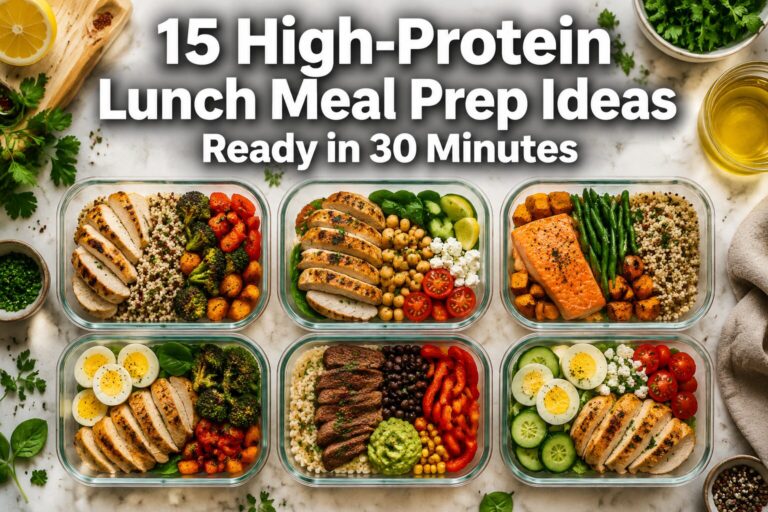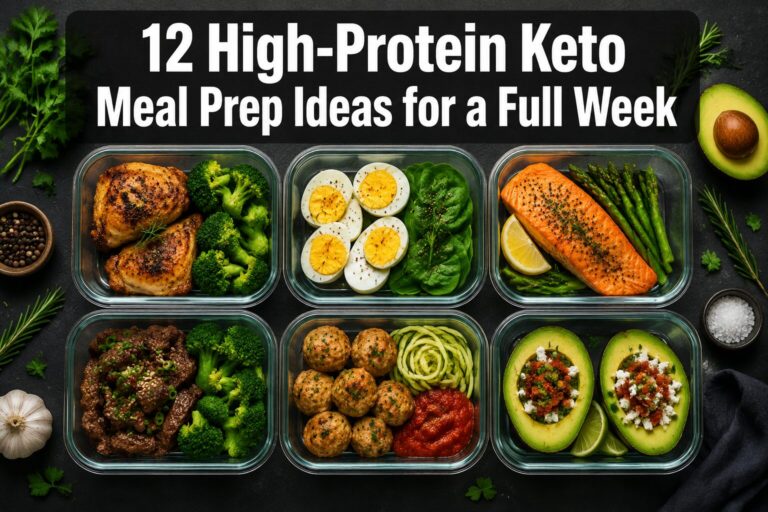
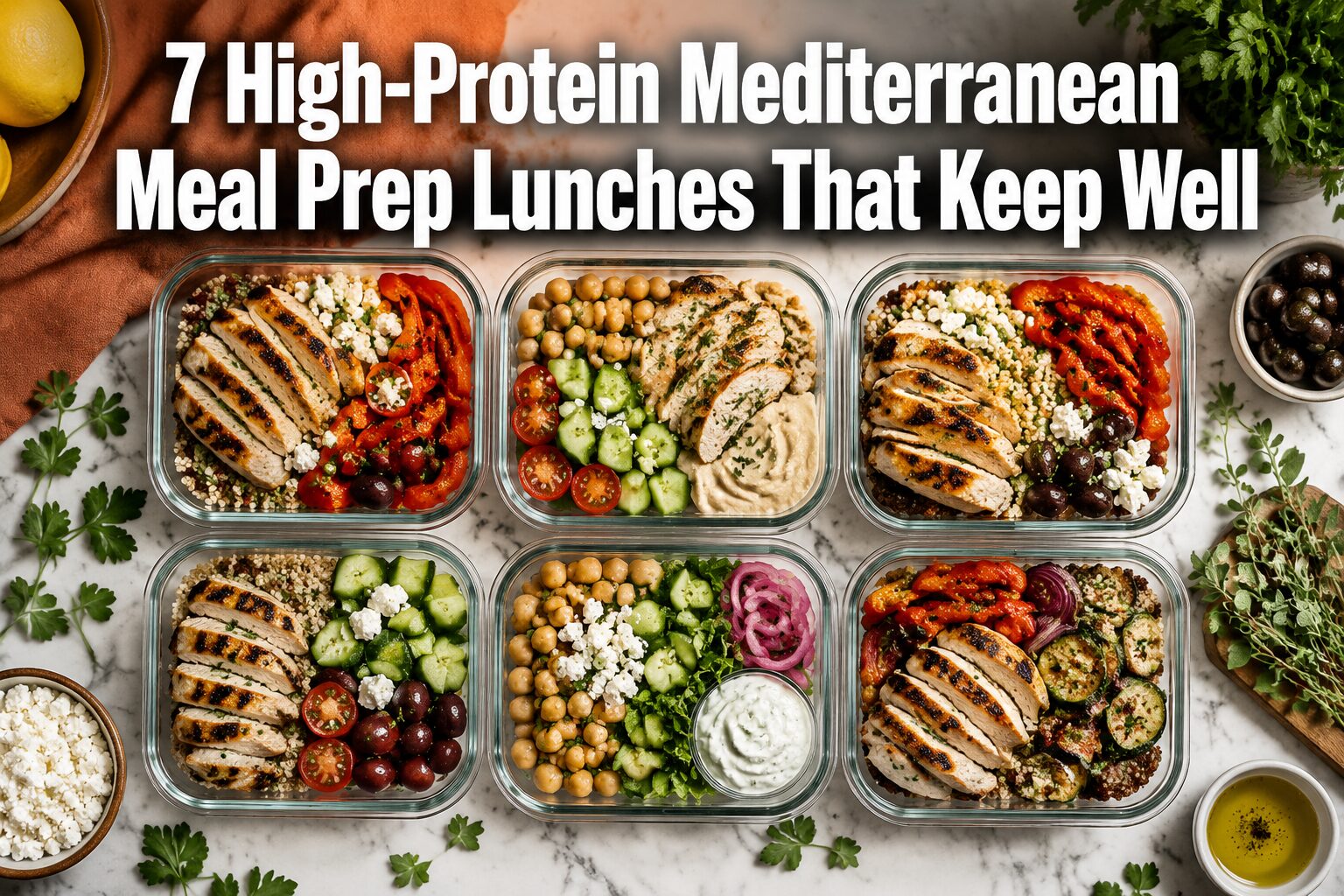
High-protein Mediterranean meal prep pairs the olive-oil-and-seafood eating pattern with a real protein target, and you can build a full 5-day plan in about 90 minutes on a Sunday. The plan below hits 120 grams of protein a day using chicken, salmon, Greek yogurt, and chickpeas, so it fills you up without turning every lunch into another plain salad.
This post contains affiliate links. If you buy through them, I earn a small commission at no extra cost to you.
What makes a meal plan Mediterranean
The Mediterranean pattern is not a strict rulebook. It is a set of building blocks that show up across the coasts of Greece, Italy, and Spain. When you stack them, you get meals that are heavy on plants and fish and light on processed food.
The core building blocks are:
- Extra-virgin olive oil as the main fat, not butter
- Legumes like chickpeas and lentils, eaten several times a week
- Seafood two or more times a week
- Lean meats and poultry in moderate portions
- Vegetables at nearly every meal
- Whole grains like farro, bulgur, and brown rice
- Fermented dairy like Greek yogurt and feta
The standard pattern runs a little light on protein for anyone lifting or trying to hold muscle while losing fat. The fix is simple: keep the building blocks, push the protein foods to the front of the plate. That is the whole idea behind this high-protein meal prep approach.
High-protein Mediterranean proteins
You do not need protein powder to hit a high target on this plan. These whole foods do the work. Protein figures are per common serving.
| Protein | Serving | Protein (g) | Notes |
|---|---|---|---|
| Grilled chicken thighs | 4 oz cooked | 28 | Juicier than breast, holds up in the fridge |
| Salmon | 4 oz cooked | 25 | Omega-3s, cook to 125–130°F for prep |
| Canned tuna | 1 can (5 oz) | 26 | Cheapest fast protein, no cooking |
| Shrimp | 4 oz cooked | 24 | Cooks in 3 minutes, great cold |
| Greek yogurt (nonfat) | 1 cup | 22 | Breakfast base and sauce base |
| Feta | 1 oz | 4 | Flavor and a small protein bump |
| Chickpeas | 1 cup cooked | 15 | Fiber plus protein, roast or blend |
| Lentils | 1 cup cooked | 18 | Cheap, filling, freezes well |
Chicken thighs and salmon do the heavy lifting, and Greek yogurt quietly adds 20-plus grams before you even think about it. Stack two or three of these per meal and 120 grams a day is easy.
Protein per dollar: which sources pull their weight
Serving-size numbers hide the real question at the register: how much protein does each dollar buy? This table normalizes everything to protein per 100 grams and an approximate cost per serving so you can see where to spend. Prices are US grocery averages from mid-2026 and will drift with your store.
| Protein | Protein per 100g | Cost per serving | Protein per dollar |
|---|---|---|---|
| Canned tuna | 25 g | $1.10 | ~24 g |
| Lentils (dry) | 25 g cooked-equivalent | $0.35 | ~51 g |
| Chickpeas (dry) | 19 g cooked-equivalent | $0.40 | ~38 g |
| Eggs | 13 g | $0.45 | ~29 g |
| Chicken thighs | 26 g | $1.30 | ~22 g |
| Greek yogurt (nonfat) | 10 g | $0.90 | ~24 g |
| Shrimp | 24 g | $2.40 | ~10 g |
| Salmon | 22 g | $3.20 | ~8 g |
| Feta | 14 g | $0.85 | ~5 g |
Lentils and dry chickpeas deliver 38 to 51 grams of protein per dollar, roughly five times what salmon returns. The move is to anchor most meals on the cheap plant and canned proteins, then buy salmon and shrimp as the twice-a-week treat that makes the plan feel Mediterranean rather than budget. For more of these swaps, see our budget meal prep tactics.
The Mediterranean pantry staples list
Half of this plan comes off the shelf, not out of the fridge. Stock these once and you can rebuild any week without a full shop. Quantities below cover roughly two weeks of the 5-day plan for one person.
- Extra-virgin olive oil: 1 liter. You will use about 60 mL a week across roasting and dressings.
- Canned chickpeas: 4 cans (or 500 g dry). One can serves two bowls.
- Dried or canned lentils: 500 g dry, which cooks up to roughly 10 servings.
- Canned tuna: 4 cans in olive oil or water.
- Farro or bulgur: 500 g, enough for about 8 grain-bowl servings.
- Brown rice: 1 kg for the weeks you want a milder grain.
- Tahini: 1 jar (300 g) lasts about a month of sauces.
- Red wine vinegar and 3 lemons: the acid backbone of every dressing.
- Dried oregano, cumin, smoked paprika, garlic: the four seasonings behind most of these meals.
- Kalamata olives and a block of feta: the finishers that make a plain bowl taste built.
Keep the perishables (feta, yogurt, fresh herbs, salmon) on a separate short list you refresh weekly. The pantry list you buy monthly.
The 5-day plan with macros
Here is a full week built to land around 120 grams of protein each day across three meals and a snack. Portions assume a 4-ounce cooked protein serving unless noted.
| Day | Breakfast | Lunch | Dinner | Snack | Protein (g) |
|---|---|---|---|---|---|
| Mon | Greek yogurt, berries, walnuts | Chicken + farro + roasted veg bowl | Salmon + chickpea salad | Feta + cucumber | 122 |
| Tue | Greek yogurt, honey, chia | Tuna + white bean salad | Chicken + brown rice + tzatziki | Boiled eggs (2) | 125 |
| Wed | Egg + feta scramble | Chicken + farro + roasted veg bowl | Shrimp + lentil bowl | Greek yogurt | 121 |
| Thu | Greek yogurt, berries, walnuts | Salmon + chickpea salad | Chicken + brown rice + tzatziki | Feta + olives | 123 |
| Fri | Egg + feta scramble | Shrimp + lentil bowl | Chicken + roasted veg + tahini | Greek yogurt | 120 |
The plan repeats a few core components on purpose. You cook three big batches once, then remix them with different sauces and sides so it never reads as the same meal twice. If you want a lower-carb spin on this, our high-protein low-carb guide swaps the grains for extra veg and legumes.
The 90-minute prep-day timeline
The whole week fits in a 90-minute block if you run the oven, the stovetop, and your hands in parallel instead of one task at a time. Here is the play-by-play I use.
| Time | Task |
|---|---|
| 0:00–0:10 | Preheat oven to 425°F. Set a large pot of salted water to boil for the grain. Pull chicken, salmon, and veg from the fridge. |
| 0:10–0:20 | Season 2 lb chicken thighs (oregano, garlic, lemon, salt) and load onto a sheet pan. Chop zucchini, peppers, red onion, tomatoes onto a second pan and toss with olive oil. |
| 0:20–0:22 | Both sheet pans into the oven. Set a 25-minute timer. |
| 0:22–0:27 | Add 1 cup dry farro to the boiling water, drop to a simmer, set a 30-minute timer. |
| 0:27–0:40 | Whisk all three sauces (tzatziki, lemon-herb vinaigrette, tahini) into separate jars. Rinse and drain 2 cans chickpeas. |
| 0:40–0:52 | Season salmon and roast at 400°F for 12 minutes on the oven’s third rack or in the air fryer. |
| 0:52–1:05 | Chicken and veg come out at the 25-minute mark. Rest, then slice chicken. |
| 1:05–1:20 | Grain drains and cools. Toss grain with olive oil and lemon so it does not clump. |
| 1:20–1:30 | Portion proteins, grain, and veg into containers. Sauces stay in their own jars in the door. |
The trick is starting the grain and both sheet pans in the first 22 minutes so everything cooks at once. Miss that and a 90-minute session stretches to two hours.
Batch-cooking the grains
The grain is the cheapest way to make a bowl feel like a meal, and each one behaves differently in the pot and the fridge. Cook one grain per week so you are not juggling four pots. All yields below start from 1 cup dry.
| Grain | Water ratio | Simmer time | Yield (cooked) | Servings | Fridge life |
|---|---|---|---|---|---|
| Farro | 3:1 | 25–30 min | 3 cups | 4–6 | 5 days |
| Bulgur | 2:1 | 12–15 min | 3 cups | 4–6 | 4 days |
| Brown rice | 2.25:1 | 40–45 min | 3 cups | 4–6 | 5 days |
| Quinoa | 2:1 | 15 min | 3 cups | 4–6 | 4 days |
Bulgur and quinoa are the fast grains at 12 to 15 minutes, while brown rice needs 40 to 45, so pick bulgur on a tight prep day. Salt the water like pasta, and finish every batch with a tablespoon of olive oil and a squeeze of lemon; the fat keeps the grains loose for five days instead of drying into a brick by day two.
The batch method for three core components
The trick to a 90-minute session is cooking three things that mix and match, not five separate meals. Prep these three components and you can assemble any bowl on the plan.
Component 1: The protein (about 35 minutes)
Cook two proteins at once. Roast 2 pounds of chicken thighs at 425°F for 25 to 30 minutes while a sheet pan of salmon cooks at 400°F for 12 minutes. Season the chicken with oregano, garlic, lemon, and salt. Season the salmon simply with olive oil, salt, and lemon. Pull chicken at an internal 165°F and salmon at 125 to 130°F, and let both rest 5 minutes before slicing so the juices stay in the meat instead of pooling in the container. Two pounds of raw thighs yields about 24 ounces cooked, or six 4-ounce servings, which covers most of the week’s lunches and dinners on its own. If you want a hands-off salmon method, follow our air fryer salmon routine instead.
Component 2: The grain (about 25 minutes, hands-off)
Cook a big pot of one whole grain. Farro, bulgur, and brown rice all hold well for 4 to 5 days. One cup of dry grain yields about 3 cups cooked, enough for 4 to 6 bowls. Toss the cooked grain with a little olive oil and lemon so it does not clump in the fridge.
Component 3: The roasted veg (about 30 minutes, overlaps the protein)
Fill two sheet pans with vegetables that roast well and store well: zucchini, bell peppers, red onion, and cherry tomatoes. Roast at 425°F for 20 to 25 minutes. These share the oven with your chicken, so the whole hot-cook block runs at the same time.
Here is the session order that gets you out of the kitchen fast:
- Preheat oven to 425°F and set water for grains to boil.
- Season chicken and veg, load both onto sheet pans, start the timer.
- Start the grain simmering.
- Cook salmon on the third rack or in the air fryer.
- Whisk your sauces while everything roasts.
- Cool, portion into meal prep containers, and refrigerate.
Sauces that carry the week
Sauce is the reason this plan does not get boring. Three sauces cover every meal, and each takes under 5 minutes.
- Tzatziki: 1 cup Greek yogurt, half a grated cucumber (squeezed dry), garlic, lemon, dill, salt. Adds protein and cools spicy bowls.
- Lemon-herb vinaigrette: 3 parts olive oil, 1 part lemon juice, oregano, garlic, salt. The all-purpose dressing for grain bowls and salads.
- Tahini sauce: 3 tablespoons tahini, lemon juice, water to thin, garlic, salt. Nutty and rich, great on chicken and roasted veg.
- Harissa yogurt: half a cup Greek yogurt, 1 tablespoon harissa paste, lemon, salt. The spicy option that adds another 11 grams of protein per serving and wakes up a plain chicken-and-grain bowl.
Each sauce recipe makes about half a cup, enough to dress 4 to 5 bowls, and all four keep 5 days in the fridge. Rotating them is what turns three cooked components into what tastes like a dozen different meals.
Store sauces in separate small jars and add them at serving time, never before. A dressed grain bowl goes soggy in a day; a dry one keeps for four. When you do reheat, warm the protein and grain to 165°F for about 90 seconds in the microwave, then add the cold sauce and any fresh veg after heating so the yogurt-based sauces do not split.
Week two: the same batch, a different plate
The fastest way to keep this plan alive past week one is to run the identical three-component batch and change only the grain, the sauce, and one vegetable. Same 90-minute session, a plate that reads brand new. Here is a second week that still lands near 120 grams a day.
| Day | Breakfast | Lunch | Dinner | Snack | Protein (g) |
|---|---|---|---|---|---|
| Mon | Greek yogurt, honey, chia | Chicken + bulgur + roasted eggplant | Tuna + white bean salad | Feta + olives | 121 |
| Tue | Egg + feta scramble | Shrimp + quinoa tabbouleh | Chicken + roasted veg + tahini | Greek yogurt | 124 |
| Wed | Greek yogurt, berries, walnuts | Chicken + bulgur + roasted eggplant | Salmon + lentil bowl | Boiled eggs (2) | 123 |
| Thu | Egg + feta scramble | Tuna + white bean salad | Chicken + quinoa + tzatziki | Feta + cucumber | 120 |
| Fri | Greek yogurt, honey, chia | Shrimp + quinoa tabbouleh | Chicken + roasted veg + tahini | Greek yogurt | 122 |
The only new shopping this week is eggplant, quinoa, and white beans; everything else repeats. Swap bulgur for last week’s farro, lean on tahini and tabbouleh instead of vinaigrette, and the same proteins feel like a different cuisine.
How to avoid the boring-salad trap
Most Mediterranean meal prep dies in week two because it turns into the same lettuce bowl every day. These four moves keep it interesting.
- Rotate the sauce, not just the protein. The same chicken and farro tastes new under tzatziki, then tahini, then vinaigrette.
- Change the temperature. Serve one bowl warm, eat the next cold as a grain salad.
- Add crunch at serving time. Toasted pita, cucumber, or a handful of walnuts wakes up a soft bowl.
- Use feta and olives as finishers. A little salt and fat at the end makes a plain bowl taste like a restaurant plate.
Storage and flavor notes
Not every ingredient survives the fridge the same way. Prep the durable stuff ahead and add the fragile stuff fresh.
| Ingredient | Holds well? | Note |
|---|---|---|
| Cooked chicken thighs | Yes, 4 days | Stays juicier than breast |
| Cooked salmon | Yes, 3 days | Best eaten by day 3 |
| Farro / brown rice | Yes, 5 days | Toss with oil to prevent clumping |
| Roasted veg | Yes, 4 days | Reheats or eats cold |
| Feta | Yes, 5 days | Flavor holds, no sogginess |
| Chickpeas | Yes, 4 days | Roasted ones soften, plan for that |
| Fresh tomatoes | No | Get watery, add at serving time |
| Leafy greens | No | Add fresh, keep dressing separate |
Feta holds beautifully all week, while fresh tomatoes turn watery within a day, so keep tomatoes out of the prepped containers and slice them fresh.
Why this is sustainable long-term
Crash plans fail because they cut too hard. This one works because it is built on food people actually like to eat.
You get olive oil, cheese, real bread, and fish. You are not choking down dry chicken and rice for the tenth day straight. The protein target keeps you full, which kills the mid-afternoon snack spiral, and the cost stays reasonable because canned tuna, chickpeas, and lentils are some of the cheapest protein on the shelf. If budget is your main lever, pair this with our budget meal prep tactics.
A plan you can picture eating in six months is the only plan worth prepping. This is that plan.
Common mistakes to avoid
- Dressing bowls before storage. Grains and greens go soggy. Keep sauce in separate jars.
- Packing fresh tomatoes ahead. They leak water everywhere. Add them fresh.
- Overcooking the salmon. Pull it at 125 to 130°F or it dries out by day 2.
- Cooking five separate meals. Batch three mix-and-match components instead.
- Skipping the Greek yogurt. It is the easiest 20-plus grams of protein in the plan.
- Under-seasoning the chicken. Bland protein is why people quit. Use oregano, garlic, lemon, and enough salt.
FAQ
How much protein can you get on a Mediterranean meal prep plan?
You can hit 120 grams a day and more. This plan stacks chicken thighs, salmon, Greek yogurt, and chickpeas across three meals and a snack to land at roughly 120 to 125 grams daily without any protein powder.
Is the Mediterranean diet high in protein?
The traditional pattern runs moderate in protein, leaning on fish, legumes, and dairy rather than large meat portions. You can make it high-protein by keeping the same building blocks and pushing protein foods to the front of every plate.
How long does Mediterranean meal prep last in the fridge?
Cooked chicken and roasted veg keep 4 days, farro and brown rice keep 5 days, and salmon is best by day 3. Keep sauces in separate jars and add fresh tomatoes and greens at serving time.
What proteins work best for Mediterranean meal prep?
Grilled chicken thighs and salmon hold up best over several days. Greek yogurt, canned tuna, chickpeas, and lentils round out the week and are cheaper. Shrimp cooks in 3 minutes and eats well cold.
Can you do Mediterranean meal prep on a budget?
Yes. Canned tuna, chickpeas, and lentils are some of the cheapest protein available, and grains like bulgur and brown rice cost little per serving. Buy salmon and chicken on sale and freeze extra.
How much does a week of Mediterranean meal prep cost?
Anchored on chicken thighs, canned tuna, chickpeas, lentils, and one weekly salmon buy, a single-person 5-day plan runs about $35 to $50 in ingredients. Lentils and dry chickpeas at roughly $0.35 to $0.40 a serving keep the average down; salmon and shrimp are what push a week toward the top of that range.
Can you meal prep Mediterranean food without a microwave?
Yes, and it is one of the plan’s strengths. Grain bowls, chickpea and white bean salads, tuna, and shrimp all eat well cold straight from the container. Serve the chicken and salmon cold over greens or grain, add a sauce, and you have a full meal with zero reheating.
How do you keep salmon from drying out in meal prep?
Pull it from the oven at 125 to 130°F internal, which leaves it just short of fully set, then let carryover heat finish it. Store it whole rather than flaked, eat it by day 3, and serve it cold or barely warmed rather than microwaving it, which is what dries prepped salmon out.
Related articles
- High-protein meal prep guide
- High-protein meal prep on a budget
- Air fryer salmon meal prep
- High-protein low-carb meal prep
Written by Maya Carter, meal prep writer and home cook at BeefSteakVeg.
Maya Carter | Editorial Policy
BeefSteakVeg shares general food and meal prep information only. This is not medical or nutritional advice.