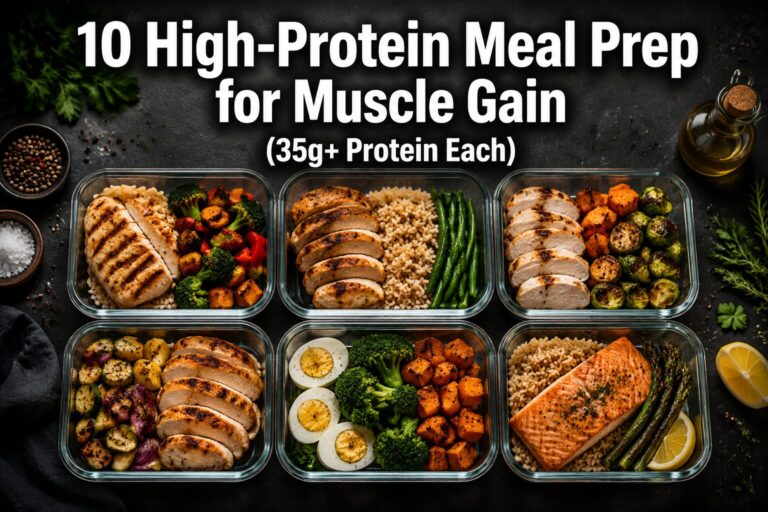
Quick Answer: This 5-day high-protein keto meal prep plan hits 140 to 150g protein and under 30g net carbs daily, batch-cooked in 90 minutes on Sunday using a sheet pan and air fryer. Weekly cost is approximately $61 ($4.07 per meal), saving $120 to $195 per week compared to keto meal delivery services like Factor ($11 to $15/meal) or Trifecta ($12 to $15/meal). Best value proteins: ground turkey 93/7 at 30g protein per dollar, followed by chicken thighs at ~26g per dollar.
Tested in Maya’s kitchen, September 2026. Grocery prices based on September 2026 U.S. averages. Protein values from USDA FoodData Central.
This post contains affiliate links. If you buy through them, I earn a small commission at no extra cost to you.
Table of Contents
- What Makes a Meal Prep Plan Keto
- High-Protein Keto Food Sources
- Keto-Friendly Vegetables for Meal Prep
- 5-Day High-Protein Keto Meal Prep Plan
- Batch Cooking Method: Sheet Pan + Air Fryer
- How to Handle the Protein-vs-Fat Balance on Keto
- Weekly Cost Breakdown
- Storage Tips: Day-by-Day Quality Guide
- Common Keto Meal Prep Mistakes
- FAQ
What Makes a Meal Prep Plan Keto
Keto means keeping daily net carbs low enough to maintain ketosis: typically under 20–50g net carbs per day, depending on the individual. For this plan, 30g net carbs is the daily ceiling.
Net carbs = total carbs minus fiber minus sugar alcohols.
Protein on keto can range from moderate to high depending on your goals. High-protein keto targets 30–40% of calories from protein, significantly above standard keto (which often sits at 20–25%). The benefit is better muscle retention and satiety.
The three macro targets for this plan:
- Protein: 140g+ per day
- Net carbs: under 30g per day
- Fat: 100–130g per day (remainder of calories)
High-Protein Keto Food Sources
Not all protein sources suit keto equally. The best picks have high protein with minimal carbs and enough fat to keep you satiated. Price per serving and protein per dollar are based on September 2026 U.S. average grocery prices.
| Protein Source | Protein per 4 oz | Net Carbs | Price per Serving (est.) | Protein per Dollar | Notes |
|---|---|---|---|---|---|
| Ground beef (80/20) | 28g | 0g | ~$1.25 | 22g | High fat, great for batch cooking |
| Chicken thighs (bone-in) | 26g | 0g | ~$1.00 | 26g | Juicier than breast, less likely to dry out |
| Salmon (skin-on fillet) | 28g | 0g | ~$1.50 fresh / ~$1.13 frozen | 19g fresh / 25g frozen | High omega-3, pairs well with keto veggies |
| Bacon | 12g per 3 slices | 0g | ~$0.60 | 20g | Use as a topping, not a main. Too low protein per calorie. |
| Eggs (2 large) | 12g | 0.5g | ~$0.58 | 21g | Best breakfast anchor; 6 eggs = 36g protein |
| Cottage cheese (full-fat) | 14g per ½ cup | 4g | ~$0.88 | 16g | Fast snack or breakfast; check labels for added starch |
| Ground turkey (93/7) | 30g | 0g | ~$1.00 | 30g | Leaner than beef but still keto-friendly. Best protein per dollar on this list. |
Fatty cuts beat lean cuts for keto. Chicken breast is fine but tends to dry out in sheet pan cooking. Thighs and ground beef stay moist across multiple reheat cycles.
Keto-Friendly Vegetables for Meal Prep
These vegetables stay under 8g net carbs per cup and hold their texture through storage and reheating.
| Vegetable | Net Carbs per Cup | Best Prep Method |
|---|---|---|
| Broccoli | 4g | Air fryer, roasted |
| Cauliflower | 3g | Sheet pan, riced |
| Zucchini | 3g | Sheet pan, sautéed |
| Spinach | 1g | Wilted, stirred into bowls |
| Asparagus | 2g per 5 spears | Sheet pan, air fryer |
| Green beans | 5g | Sheet pan, blanched |
Avoid: corn, peas, sweet potato, butternut squash, and onion in large amounts. These carry 10–20g net carbs per cup.
5-Day High-Protein Keto Meal Prep Plan
This plan feeds one person for the full work week. Prep Sunday, eat Monday through Friday.
| Day | Breakfast | Lunch | Dinner | Daily Totals |
|---|---|---|---|---|
| Monday | 3 scrambled eggs + 3 slices bacon | Ground beef bowl + cauliflower + spinach | Salmon fillet + asparagus + 1 tbsp butter | Protein: 142g, Net Carbs: 18g, Fat: 118g |
| Tuesday | 4 eggs + ½ cup cottage cheese | Ground beef bowl + zucchini + cheese | Chicken thighs + broccoli + olive oil | Protein: 148g, Net Carbs: 22g, Fat: 112g |
| Wednesday | 3 eggs + 2 turkey sausage links | Salmon fillet + spinach + avocado | Ground turkey + broccoli + cheese sauce | Protein: 144g, Net Carbs: 24g, Fat: 120g |
| Thursday | 4 eggs + ½ cup cottage cheese | Chicken thighs + cauliflower + olive oil | Ground beef bowl + zucchini | Protein: 150g, Net Carbs: 20g, Fat: 115g |
| Friday | 3 eggs + 3 slices bacon | Ground turkey + asparagus + butter | Salmon fillet + broccoli + lemon | Protein: 146g, Net Carbs: 19g, Fat: 110g |
Average daily totals: ~146g protein / 21g net carbs / 115g fat
All lunches and dinners come from Sunday’s batch cook. Breakfasts use pre-cooked bacon and hard-boiled or scrambled eggs (2 minutes in a pan each morning).
Batch Cooking Method: Sheet Pan + Air Fryer
The sheet pan handles your proteins; the air fryer handles your vegetables. Running both at the same time cuts total active prep from 3 hours to 90 minutes.
Sheet Pan Setup
- Preheat oven to 425°F.
- Line two sheet pans with foil.
- Pan 1: arrange 6 chicken thighs, skin-side up, seasoned with salt, pepper, and garlic powder.
- Pan 2: arrange 4 salmon fillets, skin-side down.
- Cook chicken at 425°F for 35–40 minutes until internal temp hits 165°F.
- Cook salmon at 425°F for 12–15 minutes (pull when it flakes easily at the thickest part; internal temp 125–130°F for medium).
- Ground beef: use a skillet on the stovetop, 8–10 minutes at medium-high heat. Brown, drain, and season.
Air Fryer Vegetables
While the sheet pans are in the oven, batch your vegetables in the air fryer:
- Broccoli: 400°F for 10–12 minutes (2 batches if needed).
- Asparagus: 400°F for 8–10 minutes.
- Zucchini: 400°F for 8 minutes.
- Cauliflower: 400°F for 15 minutes, shake at 8 minutes.
For batch vegetable prep tips, see the air fryer meal prep guide.
Assembly
Divide proteins and vegetables into 10 meal prep containers (5 lunches + 5 dinners). Label each container with a sticky note if you use multiple proteins. Refrigerate immediately once cooled.
How to Handle the Protein-vs-Fat Balance on Keto
Standard keto is high fat. High-protein keto shifts that balance, which creates a tension point for new practitioners.
If you eat 140–150g protein per day at 2,000 calories, protein accounts for roughly 30% of your calories. That leaves 70% split between fat and carbs. At 30g carbs maximum, nearly all remaining calories come from fat.
The practical rule: eat fatty proteins (salmon, ground beef, chicken thighs) rather than adding extra butter or oils on top of lean proteins. You get fat from the protein source itself, which keeps meals denser and more satisfying.
Do not avoid protein out of fear of gluconeogenesis (protein converting to glucose). That process is demand-driven, not supply-driven. Eating more protein does not automatically kick you out of ketosis.
For freezer batch cooking on keto, ground beef and salmon freeze especially well and reheat without texture loss.
Weekly Cost Breakdown
This 5-day plan costs approximately $58–$65 for one person, based on average US grocery prices in September 2026. That works out to roughly $3.90–$4.35 per meal across 15 meals (3 meals per day, 5 days).
| Ingredient | Amount Needed | Estimated Cost | Servings from This |
|---|---|---|---|
| Chicken thighs (bone-in) | 6 thighs (~3 lbs / 1,360g) | $6.00 | 10 portions |
| Salmon fillets (frozen, skin-on) | 4 fillets (~1.5 lbs / 680g) | $9.00 | 4 portions |
| Ground beef (80/20) | 1 lb (454g) | $5.00 | 4 portions |
| Ground turkey (93/7) | 1 lb (454g) | $4.00 | 4 portions |
| Eggs (1 dozen) | 12 large eggs | $3.50 | 12 individual eggs |
| Cottage cheese (full-fat) | 16 oz (454g) tub | $3.50 | 4 servings |
| Bacon | 1 lb (454g) | $6.00 | ~10 servings (3 slices each) |
| Turkey sausage links | 1 pkg (12 oz / 340g) | $4.00 | 6 servings |
| Broccoli (fresh or frozen) | 2 lbs (907g) | $3.00 | 6 side portions |
| Cauliflower | 1 head (~2 lbs / 907g) | $3.00 | 4 side portions |
| Zucchini | 3 medium (~18 oz / 510g) | $2.50 | 4 side portions |
| Asparagus | 1 bunch (~12 oz / 340g) | $3.00 | 4 side portions |
| Spinach (baby) | 5 oz (142g) bag | $3.00 | 5 servings |
| Cheese (shredded cheddar) | 8 oz (227g) bag | $3.50 | 8 servings |
| Oil + spices (weekly portion) | shared pantry items | $1.50 | all 15 meals |
| Total | ~$61 | 15 meals = $4.07/meal |
vs. keto meal delivery services (Factor, Trifecta, Green Chef keto): $12–$17 per meal. This plan saves $120–$195 per week for one person. vs. keto-friendly restaurant bowl (no rice/grain, Chipotle or similar): $14–$18 per bowl. Homemade = $4.07 per bowl, saving $10–$14 every lunch.
Storage Tips: Day-by-Day Quality Guide
Storage quality changes noticeably across the week. Here is what to expect from each protein and vegetable day by day:
| Day | Proteins | Vegetables | What to Do |
|---|---|---|---|
| Day 1–2 | Peak texture and flavor across all proteins | Crisp, bright color, full flavor | Prioritize eating salmon on Day 1 or 2. It declines faster than other proteins. |
| Day 3 | Still firm; chicken and beef hold well; salmon slightly drier | Softening slightly, still good flavor | Add 1 tbsp broth when reheating chicken or beef. Salmon: eat cold over spinach instead of reheating. |
| Day 4 | Ground meats hold better than whole cuts; salmon noticeably fishier | Softer; better stirred into bowls than served as a separate side | Discard any salmon past Day 3. Zucchini may be releasing water; pat dry before reheating. |
| Day 5 | Chicken and beef are safe but texture is softer; skip salmon | Zucchini gets watery; broccoli and cauliflower hold reasonably well | If you need 5-day freshness: prep Sunday + Wednesday instead of one Sunday prep. |
- Refrigerator: cooked proteins keep 4 days; vegetables 3–4 days. Store them separately for maximum shelf life.
- Freezer: ground beef and chicken thighs freeze for up to 3 months. Portion before freezing so you can thaw only what you need.
- Salmon: does not reheat well in the microwave. Reheat at 275°F in the oven for 10 minutes, or eat cold over a spinach salad.
- Eggs: do not batch cook scrambled eggs. They get rubbery. Hard-boil a batch of 6 instead (keeps 7 days in the shell).
- Containers: wide, shallow containers reheat more evenly than deep containers. A 3-cup glass container holds one full keto lunch portion.
Common Keto Meal Prep Mistakes
Too much deli meat. Deli turkey and ham look high protein, but they are sodium-packed and protein-light per calorie compared to cooked chicken or beef. A 2 oz serving of deli turkey has 9g protein and 400mg sodium. A 2 oz portion of cooked chicken thigh has 14g protein and under 100mg sodium.
Not enough vegetables. Keto practitioners often cut all carbs, including fibrous vegetables, and end up eating just meat and cheese. This tanks fiber intake and digestive health. Aim for at least 3 cups of low-carb vegetables per day. That adds only 9–15g net carbs while delivering fiber and micronutrients.
Skipping electrolytes. When carbs drop, kidneys excrete sodium faster. Add ¼ teaspoon of salt to water or meals if you feel tired, lightheaded, or experience muscle cramps in the first 2 weeks. Magnesium glycinate (200–400mg) helps with sleep and cramps.
Using the same protein all week. Five days of chicken breast leads to eating nothing on Wednesday. Rotate at least 3 protein sources across the week.
Building a budget keto plan requires swapping salmon for canned tuna and store-brand proteins. Same macros, lower weekly spend. Pair with a solid high-protein meal prep foundation and the routine becomes automatic.
FAQ
What is the best protein for high-protein keto meal prep?
Ground beef (80/20), salmon, and chicken thighs are the most practical for batch cooking because they stay moist through 4–5 days of storage and reheating. Lean chicken breast works but dries out fast.
How many grams of protein should I eat on keto?
For high-protein keto, target 0.7–1g per pound of body weight. At 160 lbs, that is 112–160g per day. This plan targets 140–150g, which hits the midpoint for most active adults.
Can you do high-protein keto without tracking macros?
Roughly. The shortcut: each meal should have a palm-sized protein portion (4–5 oz cooked), a fist of low-carb vegetables, and a thumb of fat (oil, butter, or cheese). No grains, no fruit, no starchy vegetables. This gets most people to ~140g protein and ~25g net carbs without counting.
Does eating high protein kick you out of ketosis?
Eating adequate or high protein does not automatically cause this. Gluconeogenesis is demand-driven, not supply-driven. People who experience issues usually have a carb source they are not tracking, hidden in sauces, condiments, or processed meats.
How long does high-protein keto meal prep last in the fridge?
Cooked proteins last 4 days; most vegetables 3–4 days. Prep Sunday for a Monday through Thursday window, or prep twice a week (Sunday + Wednesday) for full 5-day coverage.
Related Articles
- High-Protein Meal Prep Guide
- Budget Keto: Hitting Your Macros for Under $50/Week
- Air Fryer Salmon Meal Prep
Written by Maya Carter, meal prep writer and home cook at BeefSteakVeg. Tested in Maya’s kitchen, September 2026.
Maya Carter | Editorial Policy
BeefSteakVeg shares general food and meal prep information only. This is not medical or nutritional advice.