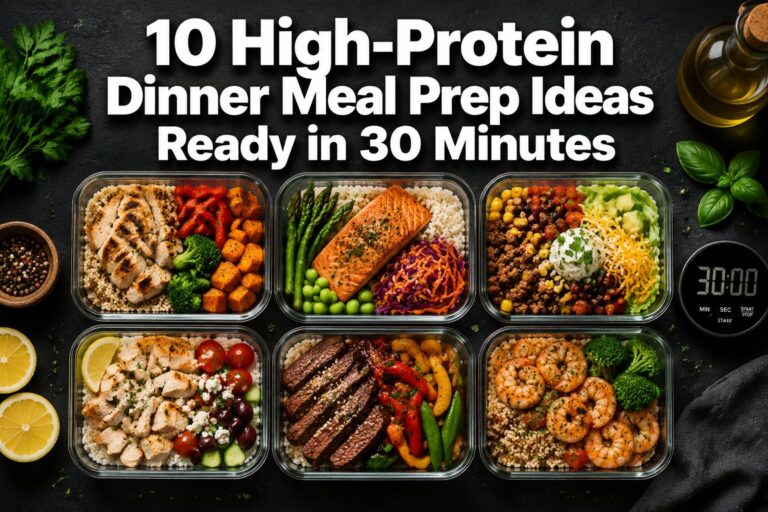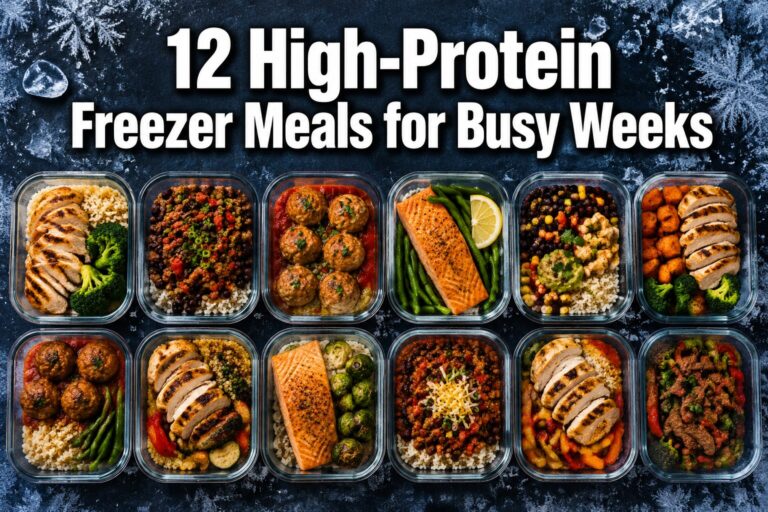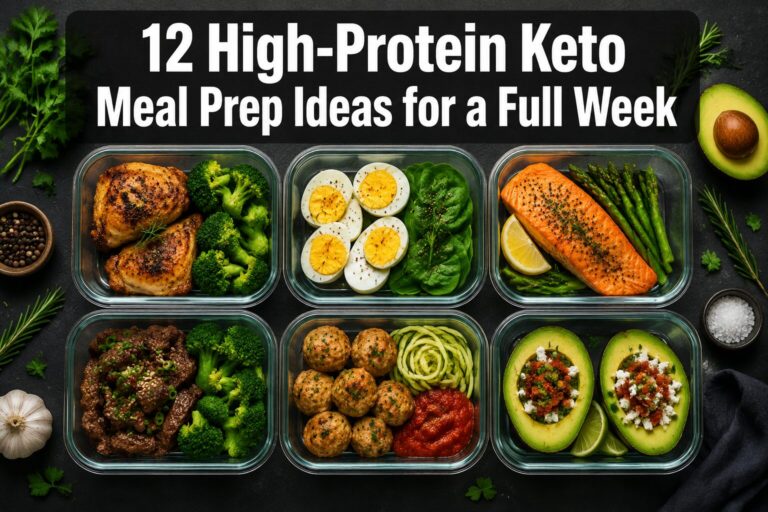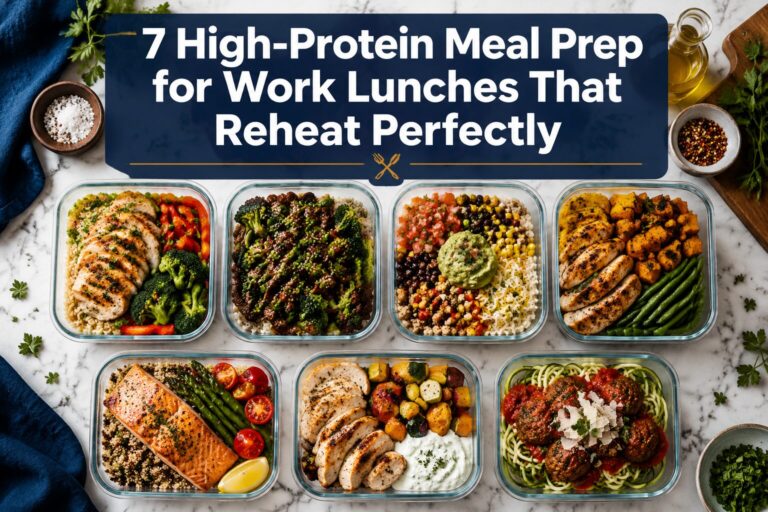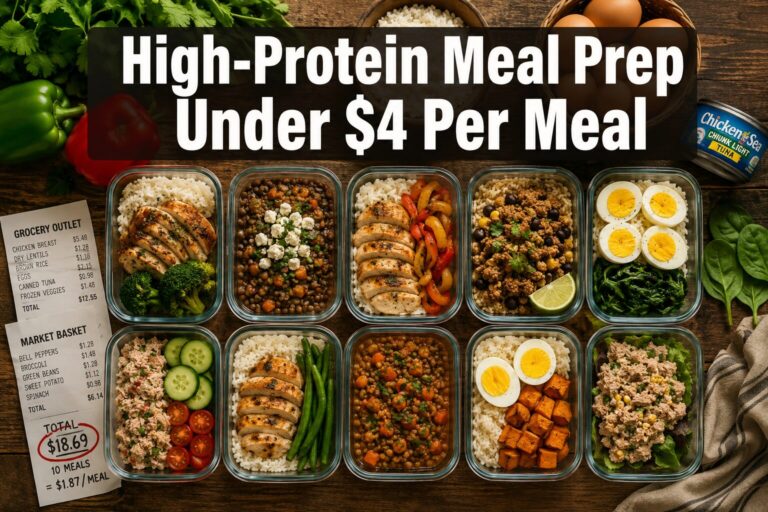
No-cook meal prep means building a full week of meals without touching a stove or oven, and you can still hit 100g or more of protein per day using canned tuna, rotisserie chicken, Greek yogurt, and cottage cheese. This works in a dorm, a hot summer kitchen, or an office with only a fridge.
This post contains affiliate links. If you buy through them, I earn a small commission at no extra cost to you.
Table of Contents
- What no-cook meal prep actually means
- Zero-cook proteins ranked by grams
- The 5-day 100g+ no-cook plan
- How to build no-cook bowls, salads, and wraps
- Who no-cook meal prep is for
- Storage and food safety for cold proteins
- Common mistakes to avoid
- FAQ
What no-cook meal prep actually means
No-cook means zero stove and zero oven time. You open, drain, portion, and assemble. That is different from no-reheat prep, where you might cook chicken on Sunday and eat it cold all week.
With no-cook, nothing gets heated at any stage. If you also want the cook-once-eat-cold approach, my guide to meal prep without reheating covers that. For the full framework, start with the main high-protein meal prep guide.
The tradeoff is real. You lean on packaged and pre-cooked proteins, so the grocery bill runs about 10 to 20 percent higher than cooking raw chicken yourself. In exchange, weekly prep time drops to under 20 minutes.
Zero-cook proteins ranked by grams
Every protein below needs no heat. Grams are per typical serving and will vary by brand, so check your own label.
| Protein | Serving | Protein (g) | Notes |
|---|---|---|---|
| Canned tuna in water | 1 can (5 oz drained) | 27 | Cheapest per gram, about $0.05/g |
| Canned salmon | 1 can (5 oz) | 23 | Omega-3s, edible soft bones add calcium |
| Store rotisserie chicken | 3 oz | 24 | One bird yields 4 to 5 servings |
| Canned chicken breast | 1 can (5 oz) | 21 | Shelf-stable, drain well |
| Deli turkey or chicken | 3 oz | 18 | Pick low-sodium, under 500mg |
| Greek yogurt (plain, 0%) | 1 cup | 23 | Buy the tub, not single cups |
| Cottage cheese (2%) | 1 cup | 24 | Savory or sweet, very versatile |
| Pre-cooked hard-boiled eggs | 2 eggs | 13 | Sold in the deli or dairy case |
| Smoked salmon (lox) | 3 oz | 16 | Higher sodium, treat as a topper |
| Edamame (shelled, ready to eat) | 1 cup | 18 | Plant protein plus fiber |
| Canned chickpeas or beans | 1 cup | 15 | Rinse to cut sodium by 40% |
| Beef or turkey jerky | 1 oz | 11 | Shelf-stable snack protein |
| String cheese | 2 sticks | 14 | Portable, no fridge for 4 hours |
| Protein shake (ready-to-drink) | 1 bottle | 30 | Fastest 30g when rushed |
Canned tuna delivers protein at roughly $0.05 per gram, the best value on this list. Rotisserie chicken and Greek yogurt tubs come next for cost and convenience.
The 5-day 100g+ no-cook plan
This plan hits at least 100g of protein every day across three meals and one snack. Nothing is heated. Assembly for the full week takes about 90 minutes on a Sunday.
| Day | Breakfast | Lunch | Dinner | Snack | Protein |
|---|---|---|---|---|---|
| Mon | Greek yogurt + berries (23g) | Tuna + chickpea salad (42g) | Rotisserie chicken bowl (24g) | String cheese (14g) | 103g |
| Tue | Cottage cheese + fruit (24g) | Turkey wrap (28g) | Salmon + edamame bowl (41g) | Jerky (11g) | 104g |
| Wed | Protein shake (30g) | Rotisserie chicken salad (34g) | Tuna wrap (27g) | Hard-boiled eggs (13g) | 104g |
| Thu | Greek yogurt + granola (25g) | Chicken + bean bowl (39g) | Deli turkey plate (30g) | String cheese (14g) | 108g |
| Fri | Cottage cheese + tomato (24g) | Salmon salad (39g) | Rotisserie chicken wrap (30g) | Shake (30g) | 123g |
The macros lean high-protein and moderate-carb. Add fruit, whole-grain wraps, or a handful of nuts to push calories up if you need more energy.
How to build no-cook bowls, salads, and wraps
The no-cook bowl formula
- Base: shredded lettuce, baby spinach, or pre-cooked microwave rice eaten cold (2 cups)
- Protein: 1 pouch tuna, 3 oz rotisserie chicken, or 1 cup edamame (20 to 30g)
- Crunch: cucumber, bell pepper, shredded carrot (1 cup)
- Fat: avocado, olives, or 1 tbsp olive oil
- Sauce: Greek yogurt dressing or a squeeze of lemon
The protein salad
Mix a drained tuna or salmon can with 2 tablespoons of Greek yogurt instead of mayo. That swap adds 4g of protein and cuts about 90 calories per serving. Fold in chopped celery and a pinch of pepper.
The 5-minute wrap
Lay 3 oz deli turkey and 2 sticks of string cheese on a whole-grain tortilla, add spinach, roll, and wrap in foil. That is 32g of protein with zero heat. Store the containers you pack these in properly, and my roundup of the best plastic meal prep containers covers leak-proof picks.
Who no-cook meal prep is for
- Dorm students with no kitchen access beyond a mini fridge
- Office workers who only have a fridge and want to skip the shared microwave line
- Summer cooks avoiding a hot stove when it is 90 degrees outside
- Renters between apartments or without a working oven
- Anyone who wants weekly prep under 20 minutes
If you snack more than you sit down for meals, pair this with my list of high-protein snacks to fill the gaps.
Storage and food safety for cold proteins
Cold proteins are safe only inside the right temperature window. The USDA danger zone runs from 40 to 140 degrees Fahrenheit, and perishable food should not sit in it for more than 2 hours, or 1 hour above 90 degrees.
- Keep your fridge at or below 40 degrees; opened cans and cooked chicken last 3 to 4 days
- Pack lunches with an ice pack if the fridge at work is unreliable
- Rotisserie chicken should be refrigerated within 2 hours of buying it warm
- Once opened, canned tuna and salmon must move to a sealed container, not stay in the can
- Greek yogurt and cottage cheese keep 5 to 7 days after opening if resealed
Common mistakes to avoid
- Under-counting protein. A single deli slice is often 5g, not 10g. Weigh or read labels for the first week.
- Leaving tuna in the open can. Metal cans are not storage containers once opened. Transfer within an hour.
- Buying single-serve yogurt cups. The tub costs about 40 percent less per gram of protein.
- Skipping the ice pack. A warm office fridge plus a 3-hour commute is how cold proteins go bad.
- Relying only on jerky and cheese. They are convenient but low-volume, so you feel hungry by mid-afternoon.
- Forgetting sodium. Smoked salmon, jerky, and deli meat can each carry 400 to 700mg per serving. Balance with fresh produce.
FAQ
Can you really get 100g of protein a day with no cooking?
Yes. Two cans of tuna (54g), one cup of Greek yogurt (23g), and 3 oz of rotisserie chicken (24g) already total 101g before you add cheese, eggs, or a shake.
Is no-cook meal prep more expensive?
It runs about 10 to 20 percent higher than cooking raw chicken because you pay for convenience. Canned tuna, bean cans, and yogurt tubs keep the average cost near $3 to $4 per high-protein meal.
How long do no-cook meals last in the fridge?
Assembled bowls and salads hold 3 to 4 days at or below 40 degrees. Dress salads the morning you eat them so greens stay crisp for the full 4 days.
What is the difference between no-cook and no-reheat meal prep?
No-cook uses zero heat at any stage, so every protein is pre-cooked or shelf-stable. No-reheat still involves cooking on prep day, then eating those meals cold. No-cook is faster; no-reheat is usually cheaper.
Which no-cook protein is cheapest?
Canned tuna in water, at about $0.05 per gram of protein. Canned beans and store-brand Greek yogurt tubs are close behind for budget prep.
Related articles
- High-protein meal prep guide
- Meal prep without reheating
- High-protein snacks
- Best plastic meal prep containers
Written by Maya Carter, meal prep writer and home cook at BeefSteakVeg.
Maya Carter | Editorial Policy
BeefSteakVeg shares general food and meal prep information only. This is not medical or nutritional advice.