The best pan for meal prep is a 12-inch skillet paired with two large rimmed sheet pans, because that combo batch-cooks protein and roasts vegetables at the same time. A single 12-inch skillet holds about 2 pounds of chicken in one layer, and a half-sheet pan roasts 3 pounds of vegetables per tray.
This post contains affiliate links. If you buy through them, I earn a small commission at no extra cost to you.
These picks come from testing criteria and verified manufacturer specifications, not hands-on use of every pan listed. I scored each type on capacity, oven-safe temperature, cleanup, and price.
Table of Contents
- What makes a pan good for meal prep
- The 5 pan types compared
- Comparison table
- Top picks in 3 price tiers
- When to use nonstick vs stainless vs cast iron
- Sheet pans for batch-roasting
- Seasoning and care for cast iron and carbon steel
- What to skip
- Common mistakes to avoid
- FAQ
- Related articles
What makes a pan good for meal prep
Capacity and heat range matter more than brand for batch cooking. A 12-inch skillet gives roughly 40 percent more cooking surface than a 10-inch, which is the difference between searing 2 pounds of chicken in one batch versus three. Large rimmed sheet pans let you roast a full tray of protein and vegetables in one oven cycle.
Look for four things when you cook in bulk. These four criteria drove every score in this roundup, and they pair well with the rest of my meal prep tools.
- Surface area: 12 inches for a skillet, half-sheet (18 by 13 inches) for trays.
- Oven-safe temperature: at least 400F so you can finish proteins in the oven.
- Cleanup: how fast it wipes down after 5 days of prep.
- Durability: resistance to warping over hundreds of heat cycles.
The 5 pan types compared
Cast iron
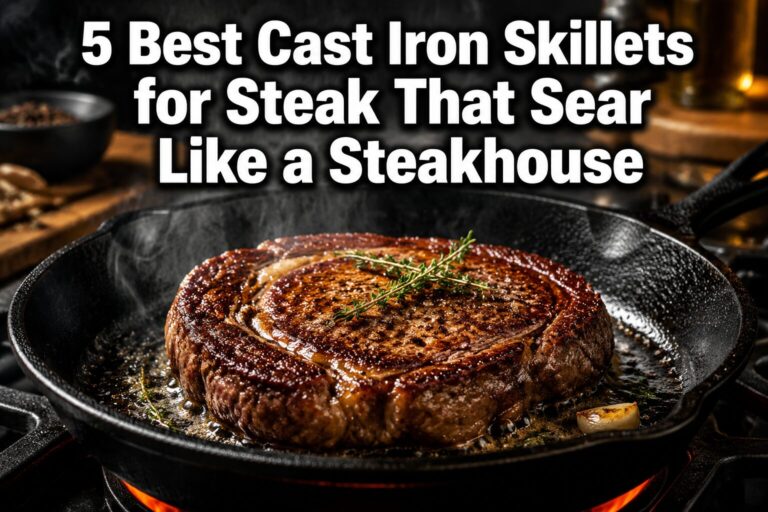
Cast iron holds heat better than any other type, which makes it the top choice for a deep sear on chicken or steak. A 12-inch skillet weighs about 8 pounds and stays oven-safe past 500F. The tradeoff is weight and the need to season it.
Stainless steel
Stainless is the workhorse for meal prep. It is oven-safe to around 500F, dishwasher-safe, and builds fond for pan sauces. It is not nonstick, so you need enough oil and proper preheating to keep food from sticking.
Nonstick
Nonstick wins on eggs, delicate fish, and fast cleanup. Most nonstick coatings cap out near 400F to 450F, and the coating wears down in 1 to 3 years with regular use. It is the least durable option for daily batch cooking.
Carbon steel
Carbon steel behaves like a lighter cast iron. It heats fast, seasons over time into a natural nonstick surface, and handles oven temps past 500F. A 12-inch pan weighs about 4 pounds, half the weight of cast iron.
Sheet pans
Sheet pans are the unsung hero of batch cooking. A half-sheet aluminum pan roasts 3 pounds of vegetables or two racks of protein per tray and costs under $20. Buy heavy-gauge aluminum (18-gauge) so it does not warp at 425F.
Comparison table
| Type | Material | Oven-safe temp | Nonstick | Dishwasher | Best for | Price range |
|---|---|---|---|---|---|---|
| Cast iron | Seasoned iron | 500F+ | After seasoning | No | Deep sear, oven finish | $25 to $120 |
| Stainless steel | Clad steel/aluminum | 500F | No | Yes | Everyday batch cooking | $40 to $200 |
| Nonstick | Coated aluminum | 400F to 450F | Yes | Check label | Eggs, fish, fast cleanup | $20 to $90 |
| Carbon steel | Seasoned steel | 500F+ | After seasoning | No | Sear plus lighter weight | $35 to $100 |
| Sheet pan | Aluminum | 450F+ | No | Yes | Batch-roasting | $12 to $40 |
Top picks in 3 price tiers
Budget: $20 to $40
A pre-seasoned cast iron 12-inch skillet is the best value under $40. It sears protein, moves to the oven, and lasts decades if you keep it dry. Pair it with a two-pack of half-sheet aluminum pans for about $25 and you can cook a full week of prep with two tools.
- 12-inch pre-seasoned cast iron skillet: around $25 to $35.
- Half-sheet aluminum pan, 2-pack, 18-gauge: around $25.
Mid-range: $40 to $90
A tri-ply stainless steel 12-inch skillet is the pick here. Tri-ply construction spreads heat evenly and stays oven-safe to 500F. It handles searing, pan sauces, and daily use without a coating that wears out. Expect $60 to $85 for a solid tri-ply pan.
Premium: $90 and up
A fully clad stainless set or a professional carbon steel pan sits at the top. Fully clad pans bond aluminum through the entire body, not just the base, for the most even heat. A quality carbon steel 12-inch pan runs $90 to $110 and rewards you with a natural nonstick surface over time.
When to use nonstick vs stainless vs cast iron
- Nonstick: scrambled eggs, tofu, delicate white fish, and anything you want to release cleanly with minimal oil.
- Stainless: browning chicken, building pan sauces, and everyday batch cooking where you want a fond.
- Cast iron: a hard sear on steak or chicken thighs, plus recipes that start on the stove and finish in the oven.
Most meal prep kitchens run well with one stainless skillet, one nonstick for eggs, and two sheet pans. That three-tool setup covers 90 percent of a weekly meal prep guide.
Sheet pans for batch-roasting protein and veg
Two half-sheet pans let you roast protein on one and vegetables on the other at 425F in the same 30-minute window. Line them with parchment for near-zero cleanup, and leave 1 inch between pieces so food roasts instead of steaming.
- Buy 18-gauge aluminum; thinner pans warp and pop at high heat.
- Choose rimmed pans so juices from 3 pounds of vegetables do not spill.
- Keep one pan for savory prep and one for anything sweet to avoid flavor transfer.
Seasoning and care for cast iron and carbon steel
- Wash with hot water and a soft brush; skip long soaks that cause rust.
- Dry on the stove over low heat for 2 minutes until no moisture remains.
- Rub a thin layer of neutral oil across the surface while warm.
- Wipe off the excess so the pan looks dry, not greasy.
- Re-season fully once or twice a year by baking oiled at 450F for 1 hour.
A cutting board keeps prep moving between the stove and the pan; see my notes on the best cutting board for meal prep.
What to skip
- Cheap warping nonstick under $20: the coating flakes within a year and the base bows on high heat.
- Flimsy sub-18-gauge sheet pans: they buckle at 425F and cook unevenly.
- Full 10-piece cookware sets: you use 3 pieces and store 7; buy individual pans that match your cooking.
- Nonstick above 450F: exceeding the temperature limit degrades the coating fast.
Common mistakes to avoid
- Buying a 10-inch skillet for batch cooking. It forces you into 3 batches instead of 1 for 2 pounds of chicken.
- Putting nonstick in a 500F oven. Most coatings cap near 400F to 450F and break down above it.
- Soaking cast iron overnight. Standing water strips the seasoning and starts rust in hours.
- Crowding the sheet pan. Less than 1 inch between pieces traps steam and stops browning.
- Skipping preheat on stainless. A cold pan is why food sticks; heat it 2 minutes before adding oil.
FAQ
What size pan is best for meal prep?
A 12-inch skillet is the sweet spot. It sears about 2 pounds of protein in one layer, roughly 40 percent more surface than a 10-inch pan, so you cook in one batch instead of three.
Is stainless steel or nonstick better for meal prep?
Stainless is better for most batch cooking because it is oven-safe to 500F and lasts decades. Keep one nonstick pan for eggs and fish, where easy release matters more than a sear.
How many pans do I need for meal prep?
Three tools cover most weeks: one 12-inch stainless or cast iron skillet, one nonstick for eggs, and two half-sheet pans for roasting protein and vegetables at once.
Are sheet pans worth it for batch cooking?
Yes. A half-sheet pan costs under $20 and roasts 3 pounds of vegetables per tray. Two pans let you cook protein and vegetables in the same 30-minute oven window.
Can I use cast iron for all my meal prep?
Cast iron handles searing and oven finishing well, but it is heavy at 8 pounds and reacts with acidic sauces. Add a nonstick pan for eggs and delicate foods to round out your kit.
Related articles
- Meal prep tools
- High-protein meal prep guide
- Best cutting board for meal prep
- Best plastic meal prep containers
Written by Maya Carter, meal prep writer and home cook at BeefSteakVeg.
Maya Carter | Editorial Policy
BeefSteakVeg shares general food and meal prep information only. This is not medical or nutritional advice.