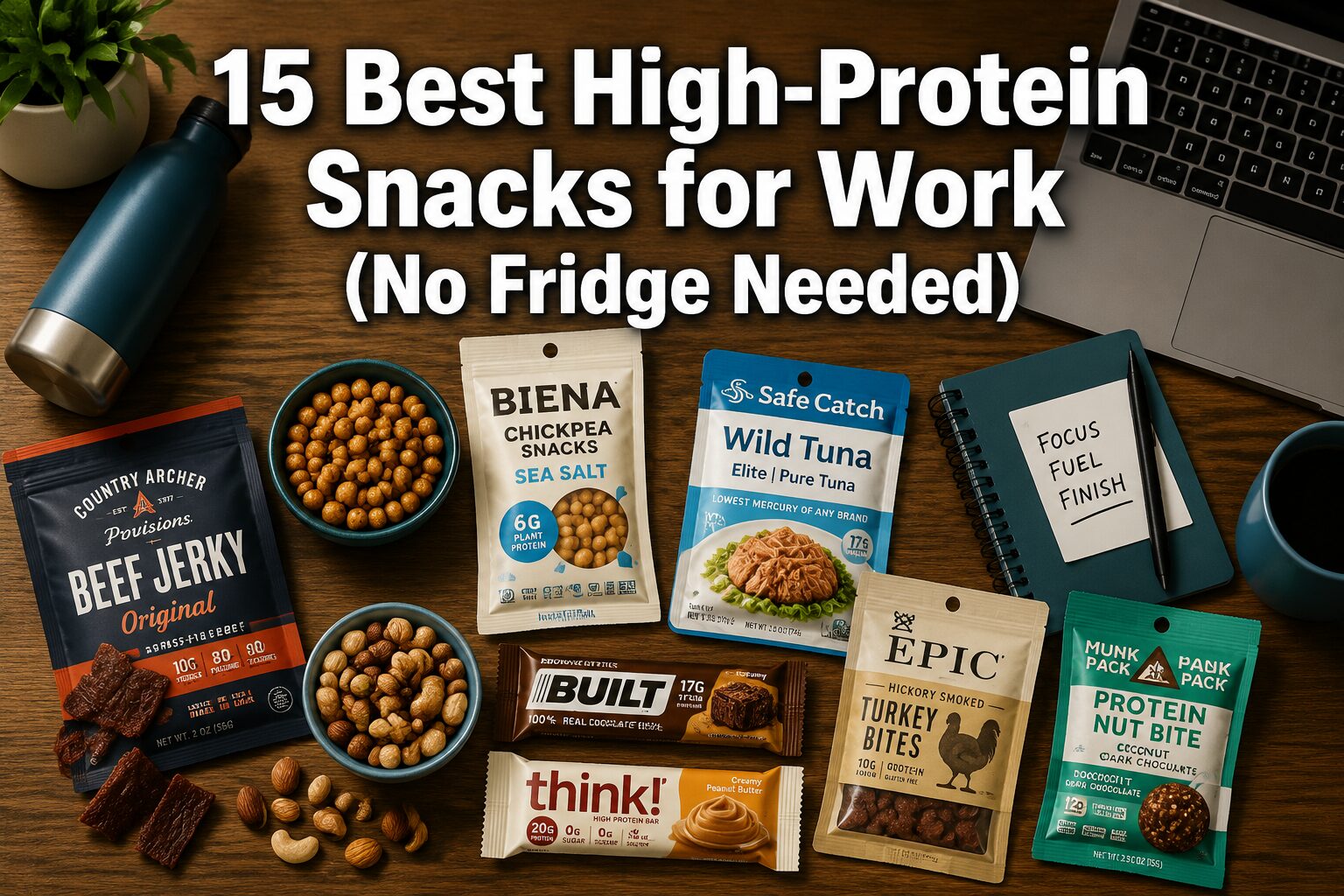
Quick Answer: The best high-protein snacks for work that need no refrigeration include beef jerky, roasted chickpeas, protein bars, tuna pouches, mixed nuts, and edamame crisps. Most of these options deliver 10 to 25 grams of protein per serving, stay shelf-stable for months, and fit easily in a desk drawer or work bag. They’re practical, filling, and require zero prep.
Key Takeaways
- Shelf-stable snacks can deliver 10 to 25g of protein per serving without any refrigeration.
- Beef jerky, tuna pouches, and protein bars are among the highest-protein options per ounce.
- Roasted legumes (chickpeas, edamame, fava beans) offer plant-based protein with added fiber.
- Nut butter packets are portable, calorie-dense, and pair well with fruit or crackers.
- Protein chips and soy crisps are a satisfying crunch alternative to regular snack chips.
- Always check the sodium content on jerky and processed snacks, as some brands run very high.
- Buying in bulk at stores like Costco or Trader Joe’s can cut per-serving costs significantly.
- Variety matters: rotating snacks prevents flavor fatigue and keeps you consistent.
- Most of these snacks cost between $1 and $3 per serving when bought in multipacks.
- Pairing protein with a small amount of fiber or fat helps you stay full longer between meals.
Why Desk Snacks Need to Be High in Protein
Protein keeps you full longer than carbohydrates or fat alone. When you’re sitting at a desk for 6 to 8 hours, blood sugar dips can cause energy crashes and cravings. A protein-rich snack between meals helps stabilize energy, reduce afternoon hunger, and support muscle maintenance, especially if you work out before or after your shift.
The challenge is finding snacks that don’t need a fridge, don’t smell up the office, and actually taste good. That’s exactly what this list solves.

The 15 Best High-Protein Snacks for Work (No Fridge Needed)
Here are the top shelf-stable, high-protein snacks ranked for protein content, taste, portability, and value. Each one works in a desk drawer, work bag, or office pantry.
1. Beef Jerky
Protein per serving: 9 to 15g | Calories: 70 to 130
Beef jerky is one of the most protein-dense snacks you can buy. It’s chewy, savory, and satisfying. Look for brands with less than 600mg of sodium per serving if you’re watching salt intake. Brands like Jack Link’s, Chomps, and Epic offer cleaner ingredient lists.
Choose jerky if: you want a meat-based snack with minimal carbs and no prep.
2. Tuna Pouches
Protein per serving: 17 to 22g | Calories: 70 to 100
Single-serve tuna pouches (not cans) are mess-free and require no utensils if you eat them straight. StarKist and Bumble Bee both make flavored varieties like lemon pepper and ranch that taste good on their own. These are among the highest-protein options on this entire list.
Common mistake: buying tuna in oil when you want a lighter option. Check the label for “in water” varieties.
3. Protein Bars
Protein per serving: 10 to 25g | Calories: 150 to 250
Not all protein bars are created equal. Some are basically candy bars with a protein label. Look for bars with at least 15g of protein and less than 10g of added sugar. Good options include Quest, RXBar, and Barebells. Keep 2 to 3 in your desk at all times.
Edge case: some protein bars contain sugar alcohols that cause digestive discomfort in sensitive people. If that’s you, stick to bars sweetened with dates or honey.
4. Roasted Chickpeas
Protein per serving: 6 to 9g | Calories: 120 to 150
Roasted chickpeas are crunchy, filling, and come in flavors like sea salt, BBQ, and sriracha. They also deliver fiber alongside protein, which makes them more satisfying than most chips. Biena and Saffron Road are reliable brands. You can also find great options when shopping for high-protein snacks at Trader Joe’s.
5. Mixed Nuts
Protein per serving: 5 to 7g | Calories: 160 to 200
Almonds, cashews, and peanuts are the highest-protein nuts. A mixed nut blend gives you healthy fats alongside protein, which slows digestion and keeps you full. Stick to 1-ounce portions (about a small handful) to keep calories in check. Unsalted or lightly salted varieties are best for daily snacking.
6. Edamame Crisps
Protein per serving: 8 to 12g | Calories: 100 to 130
Dried edamame crisps are a shelf-stable version of steamed edamame. They’re light, crunchy, and surprisingly high in protein for a plant-based snack. Seapoint Farms makes a popular version available at most grocery stores and warehouse clubs. If you shop at Costco, check out the best high-protein snacks at Costco for bulk edamame options.
7. Peanut Butter or Almond Butter Packets
Protein per serving: 6 to 8g | Calories: 180 to 200
Single-serve nut butter packets from brands like Justin’s or RX Nut Butter are portable and require no refrigeration until opened. Pair them with apple slices, rice cakes, or eat them straight. They’re calorie-dense, so one packet is usually enough.
8. Turkey or Chicken Meat Sticks
Protein per serving: 6 to 10g | Calories: 60 to 100
Meat sticks made from turkey or chicken tend to be lower in fat than beef jerky while still delivering solid protein. Chomps and Epic both make poultry-based sticks with clean ingredients. These are great for people who want a lighter meat snack.
9. Soy Crisps or Protein Chips
Protein per serving: 7 to 14g | Calories: 100 to 140
Soy crisps and protein chips (like Proti-Thin or Quest Protein Chips) scratch the crunchy snack itch without the empty calories of regular chips. They come in flavors like cheddar, ranch, and BBQ. Look for options with at least 10g of protein per bag.
10. Pumpkin Seeds (Pepitas)
Protein per serving: 7 to 9g | Calories: 150 to 170
Pumpkin seeds are one of the most underrated desk snacks. They’re rich in magnesium and zinc alongside protein. Roasted and salted pepitas are easy to find in small snack bags. They’re also a good option for people avoiding soy or dairy.
11. Sunflower Seed Butter Packets
Protein per serving: 5 to 7g | Calories: 170 to 190
For people with nut allergies, sunflower seed butter packets are a safe alternative to almond or peanut butter. SunButter makes single-serve packets that are school-safe and office-friendly. The protein content is slightly lower than almond butter, but still meaningful.
12. Roasted Fava Beans
Protein per serving: 7 to 9g | Calories: 100 to 130
Roasted fava beans are crunchy, savory, and less common than chickpeas, which makes them a nice change of pace. They’re also higher in protein than most other legume snacks. Look for them at Trader Joe’s, Whole Foods, or online.
13. Hemp Seeds
Protein per serving: 9 to 10g (3 tablespoons) | Calories: 160 to 180
Hemp seeds are a complete protein, meaning they contain all nine essential amino acids. They don’t have much flavor on their own, so they work best stirred into yogurt, oatmeal, or a smoothie you bring from home. Keep a small container at your desk for easy topping.
14. Protein Powder Packets
Protein per serving: 20 to 30g | Calories: 100 to 150
Single-serve protein powder packets (whey, casein, or plant-based) can be mixed with water in a shaker bottle at your desk. This is the highest-protein option on the list per serving. Brands like Optimum Nutrition, Vega, and Orgain all make travel-friendly single-serve pouches.
Choose this if: you need a high-protein option after a morning workout and don’t want solid food right away.
15. Collagen Protein Bites or Balls
Protein per serving: 8 to 12g | Calories: 100 to 150
Collagen-based protein bites are a newer category of shelf-stable snacks. Brands like Vital Proteins and Ancient Nutrition make bite-sized versions that are chewy, lightly sweetened, and easy to grab on the go. They’re not a complete protein source on their own, but they’re a solid mid-morning or mid-afternoon option.
How to Choose the Right No-Fridge Protein Snack for You
The right snack depends on your dietary needs, taste preferences, and how long you need it to last. Here’s a simple decision guide:
| Your Situation | Best Options |
|---|---|
| Meat eater, low carb | Beef jerky, tuna pouches, meat sticks |
| Plant-based or vegan | Roasted chickpeas, edamame crisps, hemp seeds, soy crisps |
| Nut allergy | Sunflower seed butter, roasted fava beans, tuna pouches |
| High protein goal (20g+) | Protein powder packets, tuna pouches, protein bars |
| Budget-focused | Mixed nuts, roasted chickpeas, pumpkin seeds |
| Crunch craving | Soy crisps, edamame crisps, roasted fava beans |
| Post-workout refuel | Protein powder, protein bar, tuna pouch |
Protein Per Dollar: Best Value Desk Snacks
Here’s how the top picks compare on protein per dollar, using standard retail prices at Walmart or Amazon in August 2026. Multipack prices used where available.
| Snack | Specific Product | Price/Serving | Protein/Serving | Protein per $1 |
|---|---|---|---|---|
| Pumpkin seeds (pepitas) | Terrasoul bulk pepitas, 1oz | $0.60 | 8g | 13.3g |
| Tuna pouch | StarKist Tuna Creations, 2.6oz | $1.50 | 20g | 13.3g |
| Protein powder packet | Optimum Nutrition Gold Standard, 1 packet | $2.50 | 24g | 9.6g |
| Protein bar | Quest Chocolate Chip Cookie Dough | $2.75 | 21g | 7.6g |
| Edamame crisps | Seapoint Farms Dry Roasted, 1oz | $1.50 | 11g | 7.3g |
| Mixed nuts | Planters Dry Roasted, 1oz snack bag | $0.85 | 6g | 7.1g |
| Roasted chickpeas | Biena Sea Salt, 1oz | $1.25 | 7g | 5.6g |
| Beef jerky | Jack Link’s Original, 1oz | $2.00 | 11g | 5.5g |
| Nut butter packet | Justin’s Almond Butter, 1.15oz | $1.75 | 7g | 4.0g |
| Turkey stick | Chomps Turkey Stick, 1 stick | $2.50 | 9g | 3.6g |
Prices verified August 2026. Buying in multipacks or bulk reduces per-serving cost by 20 to 40 percent. Convenience store single-serve prices run 30 to 60 percent higher.
How Much Protein Do You Actually Need at Snack Time?
A snack doesn’t need to carry your entire daily protein goal. Most adults benefit from snacks in the 7 to 15g protein range to bridge the gap between meals. If your meals are already protein-rich, a smaller snack works fine. If you’re eating light lunches or skipping breakfast, aim for the higher end.
For context, the Recommended Dietary Allowance (RDA) for protein is 0.8 grams per kilogram of body weight for sedentary adults, according to the National Academies of Sciences (2005). Active adults and those building muscle often need significantly more, closer to 1.2 to 2.0 grams per kilogram, based on research published in the Journal of the International Society of Sports Nutrition (2017).
If you’re building out a full high-protein eating plan, our high-protein meal prep for work guide covers how to structure your meals and snacks around your protein targets.
Where to Buy These Snacks (and How to Save Money)
Most of the snacks on this list are available at major grocery chains. Here’s where to find the best value:
- Costco: Bulk jerky, mixed nuts, protein bars, edamame crisps. See our best high-protein snacks at Costco guide for specific picks.
- Trader Joe’s: Roasted chickpeas, nut butter packets, protein bars at lower prices. Check our best high-protein snacks at Trader Joe’s roundup.
- Walmart or Target: Widely available protein bars, tuna pouches, and meat sticks at competitive prices.
- Amazon Subscribe and Save: Great for stocking up on protein powder packets, jerky multipacks, and nut butter packets.
Buying in bulk typically cuts per-serving cost by 20 to 40 percent compared to single-serve purchases at convenience stores.
If you want to pair these snacks with a full meal prep strategy, our high-protein meal prep on a budget guide is a good starting point.
Common Mistakes to Avoid With Desk Snacks
Even with a solid snack list, a few habits can undermine your goals:
Eating straight from the bag. It’s easy to overeat nuts or chips this way. Pre-portion snacks into small bags or containers on Sunday so you grab a set amount each day.
Ignoring sodium. Jerky, meat sticks, and tuna pouches can be high in sodium. If you’re eating multiple servings a day, total sodium can add up fast.
Choosing bars with more sugar than protein. A bar with 25g of sugar and 10g of protein is closer to a candy bar. Always flip it over and read the label.
Forgetting variety. Eating the same snack every day leads to burnout. Rotate between 3 to 5 options each week.
Skipping snacks entirely. Skipping mid-morning or mid-afternoon snacks often leads to overeating at lunch or dinner. A small, protein-rich snack is almost always better than arriving at a meal ravenous.
For a complete view of high-protein options beyond snacks, our best high-protein snacks guide covers a broader range of formats and meal types.
FAQ: High-Protein Snacks for Work
Q: What is the highest-protein shelf-stable snack?
Tuna pouches and protein powder packets are the highest-protein options, delivering 17 to 30g per serving without refrigeration.
Q: Are protein bars actually healthy?
Some are, some aren’t. Look for bars with at least 15g of protein, less than 10g of added sugar, and a short ingredient list. Quest, RXBar, and Barebells are generally solid choices.
Q: Can I eat beef jerky every day?
You can, but watch the sodium. Many jerky brands contain 500 to 800mg of sodium per serving. Eating multiple servings daily can push you well over the recommended 2,300mg daily limit.
Q: What’s a good vegan high-protein snack for work?
Roasted chickpeas, edamame crisps, soy crisps, hemp seeds, and plant-based protein powder packets are all strong vegan options with meaningful protein per serving.
Q: How do I keep snacks from getting stale at my desk?
Store snacks in airtight containers or resealable bags. Most shelf-stable snacks last 1 to 3 months unopened. Once opened, consume within 1 to 7 days depending on the product.
Q: Are roasted chickpeas filling enough as a snack?
Yes, especially because they contain both protein and fiber. A 1-ounce serving provides roughly 6 to 9g of protein and 5 to 6g of fiber, which is a solid combination for satiety.
Q: What snacks work for people with nut allergies?
Tuna pouches, beef jerky, roasted chickpeas, edamame crisps, sunflower seed butter packets, and soy crisps are all nut-free options. Always check labels for cross-contamination warnings.
Q: How many protein snacks should I eat per day at work?
Most people do well with 1 to 2 protein snacks per workday, typically mid-morning and mid-afternoon. The goal is to bridge the gap between meals, not replace them.
Q: Is protein powder a realistic desk snack?
Yes. Single-serve packets mixed with water in a shaker bottle take about 30 seconds to prepare. It’s not as satisfying as solid food for everyone, but it’s the fastest high-protein option available.
Q: Where can I find these snacks cheaply?
Costco, Trader Joe’s, Walmart, and Amazon are the best sources for value. Buying multipacks almost always costs less than individual servings.
Build Your Desk Snack Stash This Week
The 15 best high-protein snacks for work (no fridge needed) covered in this guide give you real options across every dietary need, budget, and taste preference. You don’t need a refrigerator, a microwave, or a lot of prep time to eat well at your desk.
Here’s what to do next:
- Pick 3 to 5 snacks from this list that match your diet and taste preferences.
- Buy a multipack or bulk version of each to cut costs.
- Pre-portion them into small bags or containers at the start of each week.
- Keep them in your desk drawer, work bag, or office locker so they’re always available.
- Rotate your choices every 2 to 3 weeks to avoid flavor fatigue.
If you want to go beyond snacks and build a full high-protein eating plan for your workweek, start with our high-protein meal prep for work guide or browse our high-protein meal prep ideas for batch cooking inspiration.
Tested in Maya’s kitchen, August 2026. Written by Maya Carter, meal prep writer and home cook at BeefSteakVeg.
Maya Carter | Editorial Policy | Affiliate Disclosure
Nutrition note: BeefSteakVeg shares general food and meal prep information only. This is not medical or nutritional advice. Always check product labels, ingredients, allergens, serving sizes, prices, and storage instructions before buying or eating packaged foods.
References
- National Academies of Sciences, Engineering, and Medicine. Dietary Reference Intakes for Energy, Carbohydrate, Fiber, Fat, Fatty Acids, Cholesterol, Protein, and Amino Acids. National Academies Press, 2005. https://www.nap.edu/catalog/10490
- Stokes, T., et al. “Recent Perspectives Regarding the Role of Dietary Protein for the Promotion of Muscle Hypertrophy with Resistance Exercise Training.” Nutrients, 2018. https://doi.org/10.3390/nu10020180
- Jäger, R., et al. “International Society of Sports Nutrition Position Stand: Protein and Exercise.” Journal of the International Society of Sports Nutrition, 2017. https://doi.org/10.1186/s12970-017-0177-8